

















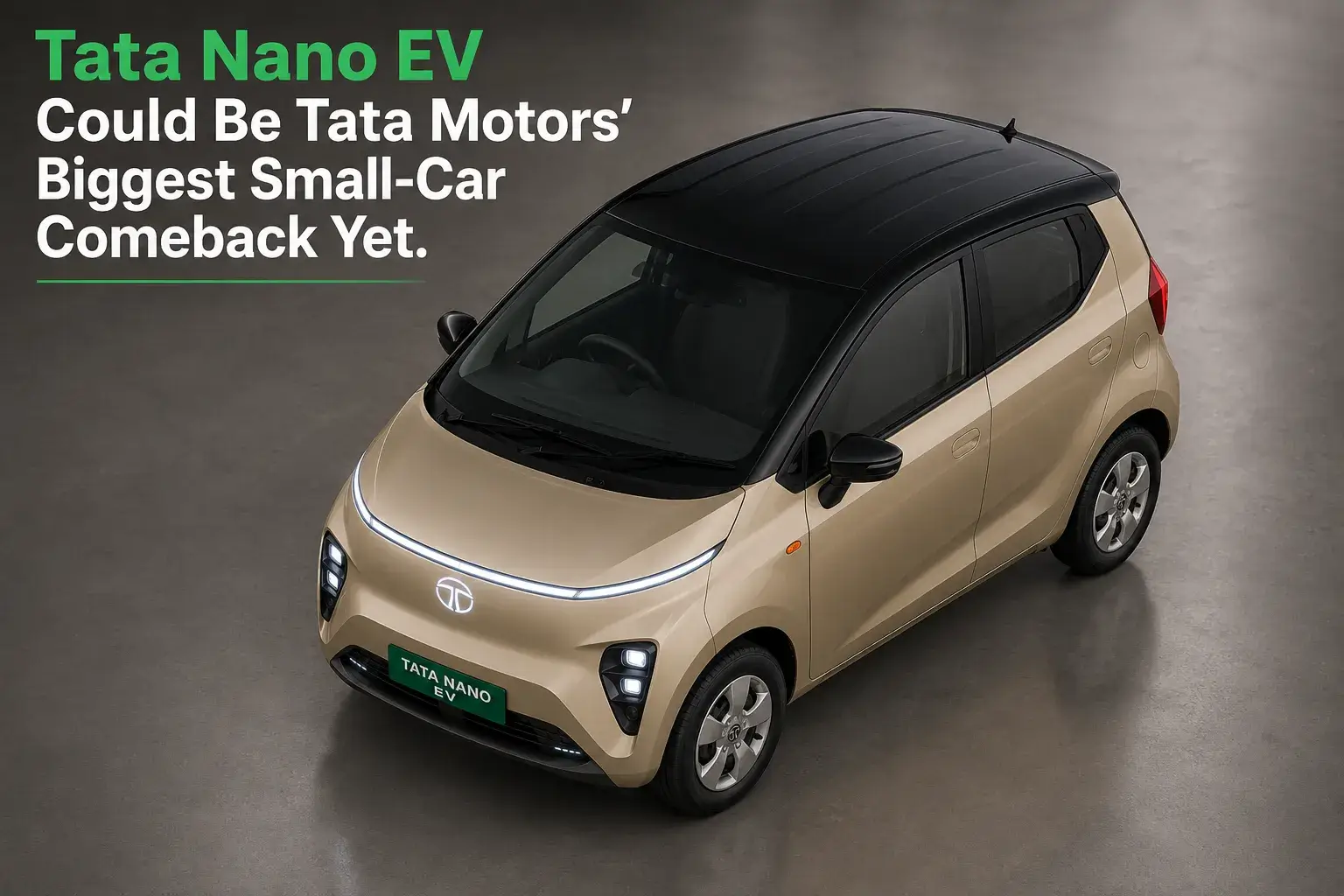
Tata Nano EV Could Be Tata Motors’ Biggest Small-Car Comeback Yet.
By Zeeshan A Aqudus • Published on 11 Aug 2026 • Updated on 10 Aug 2026By Zeeshan Ali Aqudus Co-Founder & Head of Product Design, CarWyapar The Tata Nano had one of the strangest stories in Indian automotive history. It...
By Zeeshan Ali Aqudus
Co-Founder & Head of Product Design, CarWyapar
The Tata Nano had one of the strangest stories in Indian automotive history.
It was designed to put millions of families into cars. It became a global engineering talking point. Then, somehow, the car that was supposed to change Indian mobility became a symbol of being unable to afford a "proper" car.
Now imagine the Nano coming back with an electric motor, a modern cabin and a completely different identity.
That could be a very different story.
Tata Motors' India Design Head Ajay Jain recently hinted at the possibility of bringing the Nano name back in an electric avatar. Speaking about the iconic hatchback, he said, "Try karenge... it would be a pleasure to sit here in a few years and put the Tata Nano on the map again, maybe in an electric avatar."
There is no confirmed Nano EV launch plan yet. But from a product and vehicle design perspective, the idea makes a surprising amount of sense.
In fact, the things that made the original Nano unusual could become some of the biggest advantages of a modern Nano EV.
The Nano Failed, But the Idea Was Not Wrong
The Nano's biggest problem was never the basic concept. A tiny, affordable city car made perfect sense for India.
The problem was how the product was perceived.
Tata Motors famously positioned the Nano around its extremely low price. The "₹1 lakh car" story made international headlines, but it also created a dangerous perception in the Indian market.
Instead of asking, "Is this a clever little car?", many buyers started asking, "Why should I buy the cheapest car?"
That distinction killed the aspiration around the Nano. A car can be inexpensive without looking or feeling cheap. The Nano struggled to communicate that difference.
The "Lakhtakiya" Problem
The Nano effectively became a product category of its own, but the category had an unfortunate name attached to it i.e "Lakhtakiya car".
The phrase became more powerful than the product itself.
For many Indian buyers, owning a car is about more than transportation. It is also about achievement, family progress and social status.
The Nano unintentionally communicated affordability at a time when customers wanted their first car to communicate upward mobility.
That was a brutal positioning problem.
The Original Nano Was Actually a Packaging Masterclass
Forget the jokes about the Nano for a moment and look at its engineering.
The car used a rear-mounted engine and rear-wheel-drive layout. Its compact dimensions allowed Tata engineers to create a surprisingly spacious cabin for such a small footprint.
At the time, this layout was unusual for an affordable Indian hatchback.
Today, the same basic philosophy suddenly looks much more interesting because electric powertrains give designers far greater freedom.
An electric motor is dramatically more compact than a conventional internal-combustion engine and transmission combination. There is no large engine occupying the front of the vehicle. There is no conventional gearbox. There is no exhaust system running under the floor.
That opens up a lot of possibilities. And this is where a Nano EV could turn its old engineering quirk into a design advantage.
The Rear Motor Could Make the Nano's Packaging Brilliant Again
Imagine a small electric motor mounted at the rear axle.
The front of the vehicle could become much simpler. The battery could sit low in the floor, while the cabin could be pushed towards the corners of the car.
That means a car with a tiny exterior footprint could potentially offer much better interior space than its dimensions suggest.
This is exactly the kind of problem transportation designers love solving.
You have a small package.
You have limited space.
So you make every millimetre work harder.
The original Nano already followed that philosophy.
An electric version could take it much further.
And This Time, Nobody Needs to Call It the Cheapest Car
This may be the most important part of the entire Nano EV story.
Tata should avoid repeating the original marketing mistake.
Don't sell it as India's cheapest car.
Don't sell it as a car for people who cannot afford something bigger.
Don't make price the personality.
Sell it as an intelligent urban EV.
Look at how the perception of small cars has changed globally. Compact cars can be positioned around urban convenience, efficiency, clever packaging and technology.
A Nano EV could follow the same route.
The message should be simple:
Small outside. Smart inside. Electric underneath.
That is a much stronger identity than "cheap car."
The MG Comet Has Already Created the Space
The market has also changed since the Nano disappeared.
JSW MG Motor India has already shown that there is a market for extremely compact electric cars with the MG Comet EV.
The Comet is tiny, distinctive and designed primarily for urban use.
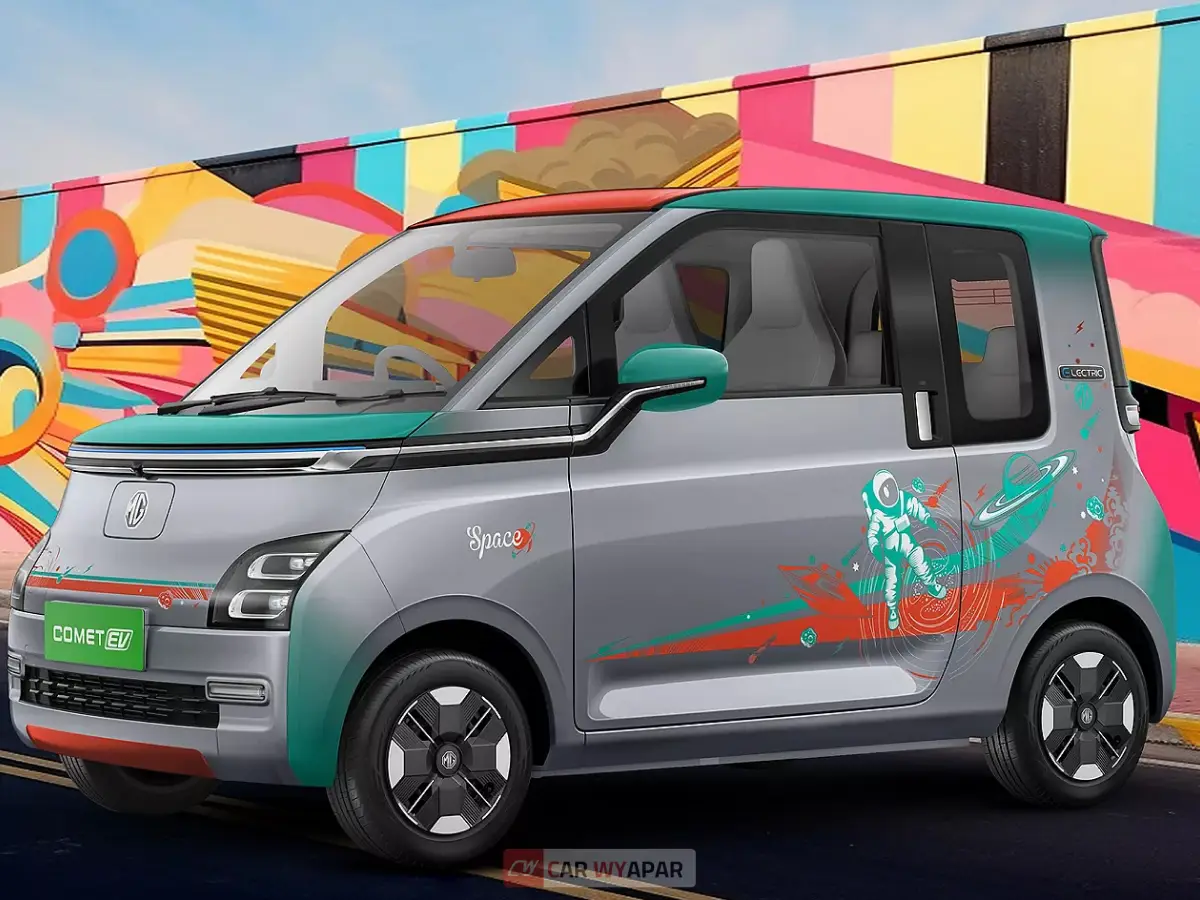
That proves something important.
Indian consumers can accept a small EV if the product has a clear purpose.
A Nano EV could take that idea further by focusing heavily on practicality, affordability and Tata's existing EV ecosystem.
The opportunity would be to position it below the Tiago EV and create a proper entry point into electric mobility.
What Could a Nano EV Look Like?
This is where Tata's current design language becomes particularly interesting.
The modern Tata range has moved a long way from the design language of the original Nano.
The Sierra, Nexon, Punch and Curvv have shown that Tata can create strong visual identities across very different vehicle sizes.
A new Nano should not attempt to copy the old car.
It should reinterpret the Nano's proportions.
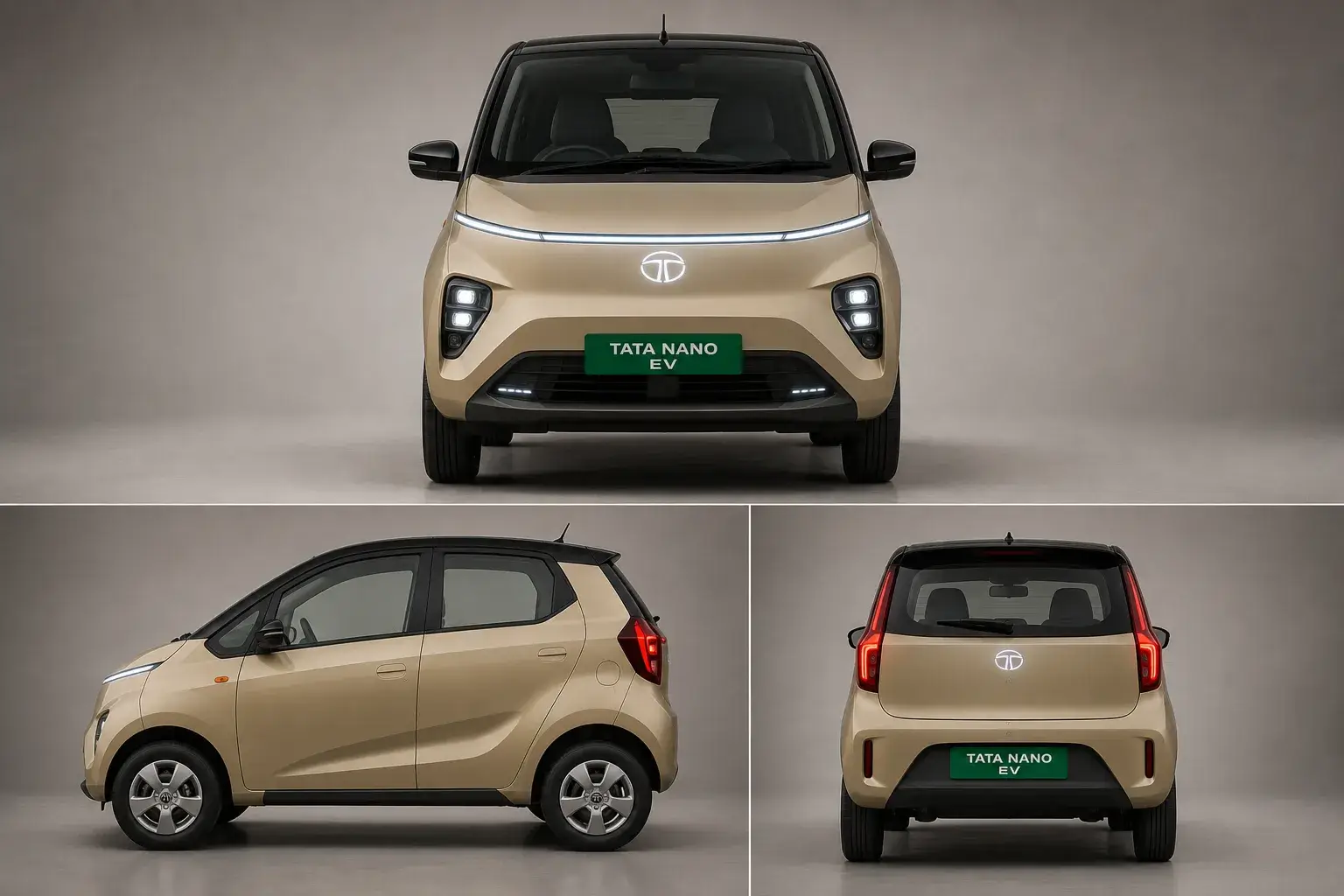
The nano had a length of approximately 3 Meters. So has the MG Comet. But it should be further increased to 3300-3400 mm. This matches the Alto’s length. The width should be around 1550 mm.
The ovalish silhouette made nano look like an egg. This must be eliminated to give a proper car like stance.
Nano is tall enough to get bigger side windows (greenhouse) and keep the interior white to make it look like a roomy vehicle.
Here is an AI Generated view of tata nano:
The Nano EV Could Become the Perfect Second Car
This is probably the biggest change in the Indian market since 2009.
The Nano was originally expected to serve as a family's primary car.
A Nano EV would have a completely different opportunity.
Consider the typical urban household today.
There may already be a larger SUV or sedan sitting in the garage.
That car handles:
Highway trips
Family holidays
Long-distance travel
Large luggage
Weekend journeys
But nobody wants to drive a large SUV through a crowded market every day.
That is where a tiny EV makes sense.
A Nano EV could become the car for:
Office commute. School runs. Grocery trips. Metro station runs. Traffic jams. Narrow streets. Quick errands.
The car does not need to replace the family's main vehicle.
It simply needs to make urban driving ridiculously easy.
The ₹5-6 Lakh Question
This is where things become difficult.
A Nano EV priced around ₹5 lakh to ₹6 lakh would be extremely interesting.
But it would also be extremely challenging to engineer profitably.
Battery costs, safety equipment, electronics, thermal management, software, manufacturing and regulatory requirements all add cost.
So expecting a modern electric Nano to launch at the original Nano's famous price would be unrealistic.
However, if Tata can create a Nano EV around the ₹5-6 lakh ex-showroom zone, it could potentially occupy a very interesting space below the Tiago EV.
The exact price is speculative at this stage, because Tata Motors has not announced production specifications or pricing for a Nano EV.
But the strategic opportunity is obvious.
Nano EV vs MG Comet EV: Where Would Tata Have an Advantage?
|
Feature |
MG Comet EV |
Possible Nano EV |
|---|---|---|
|
Positioning |
Urban micro EV |
Affordable urban EV |
|
Size |
Extremely compact |
Compact but 5-door vehicle |
|
Target user |
City commuter |
City commuter + secondary car |
|
Brand perception |
Modern urban EV |
Could combine Nano nostalgia with Tata EV identity |
|
Expected positioning |
Premium micro-mobility |
Entry-level electric mobility |
|
Price |
Higher than traditional entry hatchbacks |
Potentially positioned below Tiago EV |
|
Rear motor |
No |
Could be explored |
|
Family appeal |
Limited |
Could be stronger with better packaging |
The Nano would not need to beat the Comet on every specification.
It would need to beat it on value and emotional connection.
That is a very different game.
The Tata Nano Name Is Still Powerful
There is another advantage that Tata Motors would get for free.
Recognition.
People remember the Nano.
Even people who never owned one know what it was.
That gives Tata something most new entry-level EVs do not have: a story.
The Nano became part of Indian automotive culture.
Its comeback would instantly attract attention from existing Tata customers, EV buyers, enthusiasts and an entire generation that grew up hearing about the "₹1 lakh car."
But Tata has to be careful.
Nostalgia can get people to click on an article.
It cannot make them buy a car.
The new product has to stand on its own.
Safety Will Be Non-Negotiable
There is one area where a new Nano cannot compromise.
Safety.
The original Nano belonged to a very different automotive era. A modern Nano EV would have to meet current safety and regulatory requirements.
That means the new car would need a properly engineered structure, airbags, electronic safety systems and the required crash performance for its category.
The car can be tiny.
It cannot feel flimsy.
That distinction will decide whether the Nano name becomes cool again or gets dragged back into its old image.
Tata Should Not Make the Nano Too Cute
There is also a design trap here.
If Tata brings back the Nano, it may be tempted to make it look like a cute little city car.
I would avoid that.
The new Nano needs some attitude.
The current Tata design language gives the company plenty of room to do this.
Imagine a compact body with a wide stance, sharp LED lighting, chunky wheels and a clean EV face.
Not aggressive for the sake of being aggressive.
Just confident.
The Nano should look like it knows exactly why it is small.
That is an important psychological shift.
The Original Nano Was Too Early
This may ultimately be the simplest explanation for the Nano's strange history.
The product arrived before the market was ready for its positioning.
India in 2009 was still moving rapidly from two-wheelers to entry-level cars.
Today, the urban mobility problem looks different.
Traffic is worse.
Parking is harder.
Fuel costs matter.
EV adoption is growing.
Second-car ownership is common in many urban households.
And consumers are increasingly comfortable with small electric vehicles.
The same basic idea now has a much better environment.
The Nano EV Could Be Tata's Most Interesting Small Car
Tata Motors already has products across much of India's EV market.
But an ultra-compact electric car could fill a different role.
It could become the gateway to Tata's EV ecosystem.
A first EV.
A second car.
A city runabout.
A college commute car.
A household's backup vehicle.
A delivery-friendly urban car.
The possibilities are much larger than the old Nano's original positioning.
And there is one more thing.
A small EV does not need a huge battery to be useful.
If the Nano is designed primarily for urban driving, Tata could potentially focus on a smaller battery, lower weight and lower energy consumption rather than chasing massive range numbers.
That could help keep the vehicle lighter and, potentially, more affordable.
The Nano's Second Act Could Be Better Than Its First
The first Nano tried to democratise car ownership.
The second Nano could democratise electric mobility.
That is a much more powerful story.
The original car was judged largely by what it lacked compared with bigger hatchbacks.
A Nano EV could instead be judged by what it does better:
It is tiny.
It is easy to park.
It is cheap to run.
It could be spacious for its size.
It could be electric.
And it could look genuinely desirable.
That last part matters more than people think.
If Tata Motors gets the design, pricing and positioning right, the Nano name could move from a symbol of cheap motoring to something completely different.
A smart little urban machine.
And honestly, that would be one hell of a comeback.
The Nano failed once.
The Nano EV could return with an entirely different reason to exist.**
 (1).webp)