


















Ignis Was an SUV Before a Hatchback. Maruti Should Bring It Back with Jimny like looks
By Zeeshan A Aqudus • Published on 11 Aug 2026 • Updated on 10 Aug 2026The Ignis is dead. But Maruti Suzuki may have killed the wrong version of it. Maruti Suzuki stopped production of the Ignis in early 2026, with repor...
 (1).webp)
The Ignis is dead. But Maruti Suzuki may have killed the wrong version of it.
Maruti Suzuki stopped production of the Ignis in early 2026, with reports emerging in April that dealers were selling the remaining stock and were being asked to focus on the Baleno and Fronx instead. The Ignis had been struggling for years, with February 2026 sales falling to 1,902 units.
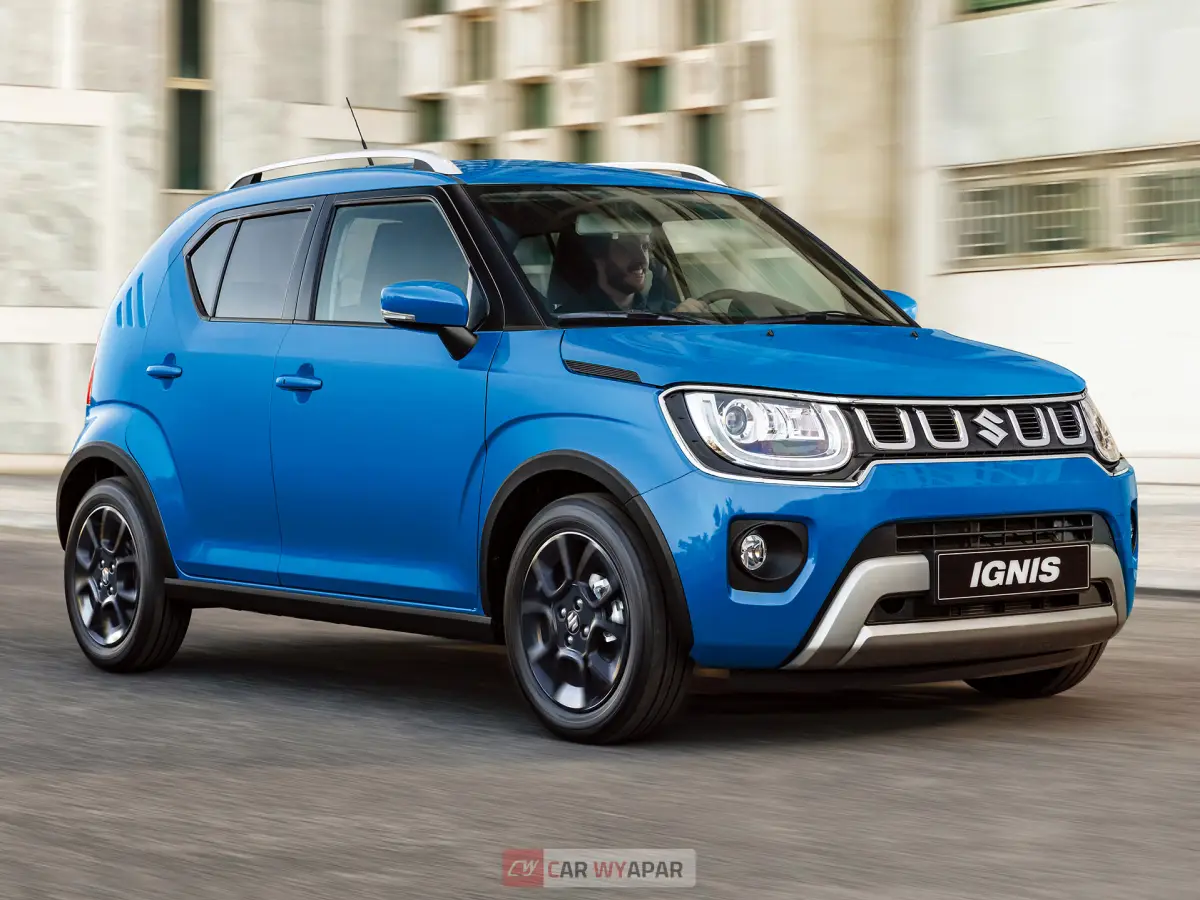
But the Ignis had a strange problem from day one in India. It sat too close to the Swift. At 3,700mm long, 1,690mm wide and with a 2,435mm wheelbase, it was a small, upright hatchback with SUV-like proportions. The Swift, meanwhile, measured 3,860mm long with a 2,450mm wheelbase. The two were different in character, but close enough for a buyer to ask a simple question: "Why not buy the Swift?"
Maruti had faced a similar problem before with the Ritz. Launched in 2009, the Ritz sold around four lakh units before being discontinued in 2017. At the time, Maruti had the Swift, Ritz, Celerio, Baleno and other compact cars fighting for overlapping customers.
That is the bigger lesson. Ritz and Ignis were both reasonably good cars, but neither had enough distance from the Swift to build a clear identity. Maruti ended up trimming the portfolio while the Swift remained one of its strongest names.
Then came another problem: Baleno.
The Baleno had something the Ignis never really built, legacy. It was an established Maruti name, looked more premium, offered more space and quickly became a strong Nexa seller. Today, even after years in the market, Baleno remains one of Maruti's major volume products. Maruti's own sales data continues to group Baleno, Swift, WagonR, Celerio, Dzire and Ignis in the compact-car segment.
So the Ignis was squeezed from both sides. The Swift had the name. The Baleno had the premium hatchback legacy. The Ignis had quirky styling, but not enough market space.
But Maruti Has One Big Opportunity Now
India has moved on.
The Tata Punch and Hyundai Exter have shown that buyers are willing to pay for a small car that looks and feels like an SUV. The Punch alone crossed 21,000 units in July 2026, while the segment has become a major battleground.
Maruti has Fronx and Brezza, but neither is a direct replacement for the Ignis-sized urban SUV. The Fronx is larger, at almost four metres, while the Brezza sits in a more expensive compact-SUV space.
That leaves an interesting hole.
Maruti should bring back the Ignis, but completely change what the name means in India.
And there is historical justification for doing exactly that. The original Suzuki Ignis was a small, tall, crossover-like vehicle and was even offered with four-wheel drive in some markets. The Indian 2017 model moved the name towards a premium urban hatchback instead.
.webp)
Maruti could now take the name back to its roots.
Give the New Ignis a Turbo
This is where things could get properly interesting.
Imagine a new Ignis sitting below the Fronx, with a short, upright body, chunky proportions, high ground clearance and a proper SUV stance. Then give it Maruti's 1.0-litre Boosterjet turbo-petrol.
The engine already exists in the Maruti ecosystem. The Fronx gets the 1.0-litre Boosterjet with 100 PS and 147.6 Nm, paired with a 5-speed manual or 6-speed automatic.
Maruti has now even put the Boosterjet into the 2026 Brezza, where it produces 110 PS and 170 Nm.
That makes a turbo Ignis far more interesting than another 80-90 PS small SUV.
A lightweight Ignis with roughly 100 PS, strong low-end torque and a 6-speed automatic could be seriously quick for its size. It would give the Punch, Exter and other small SUVs something they would have to worry about, especially among buyers who care about driving fun.
And Maruti would not even need to create a completely new engine.
There Should Also Be a Simple Naturally Aspirated Version
For buyers who want low running costs and simple ownership, Maruti already has another answer.
The 1.2-litre K12N naturally aspirated petrol engine used by the WagonR makes around 91 PS and 113.7 Nm.
Put that engine in a compact Ignis SUV and Maruti gets a sensible everyday version.
So the recipe could be simple:
Ignis 1.2 NA: affordable, efficient and easy to own.
Ignis 1.0 Turbo: sporty, quick and more aspirational.
That gives Maruti two very different reasons to buy the same car.
The first Ignis failed to find enough space between the Swift and Baleno. A new Ignis should avoid that mistake completely.
Don't make another small hatchback.
Make the Ignis the small SUV Maruti should have built in the first place.
Make It a Mini Monocoque Jimny
.webp)
The new Ignis could take another route, a mini monocoque Jimny. The Jimny looks fantastic, but for most Indian buyers, its ladder-frame setup, cramped rear seat and proper 4x4 hardware make it harder to live with every day. Most buyers who like the Jimny probably want the shape and attitude more than its off-road ability. That is exactly where an Ignis could fit. Keep the boxy body, upright stance, round headlamps and chunky proportions, but build it on a monocoque platform and make it easier to use in the city. Maruti already knows that familiar design cues work. The Swift is often seen as having a Mini Cooper-like character, while the Brezza has a Range Rover-like look. That is simply how people read these cars, not a joke or a criticism. The Ignis could do the same with the Jimny, giving buyers the Jimny's visual appeal in a smaller, more practical and affordable package.
.webp)