













JSW MG Starlight 560 Could Be India’s Next Big SUV Disruptor, and the XUV700 Has a Problem
By Gaurav Cyril • Published on 9 Aug 2026What if the next big threat to the Mahindra XUV700 and Tata Safari does not come with a diesel engine at all? That is exactly where the reported JSW ...
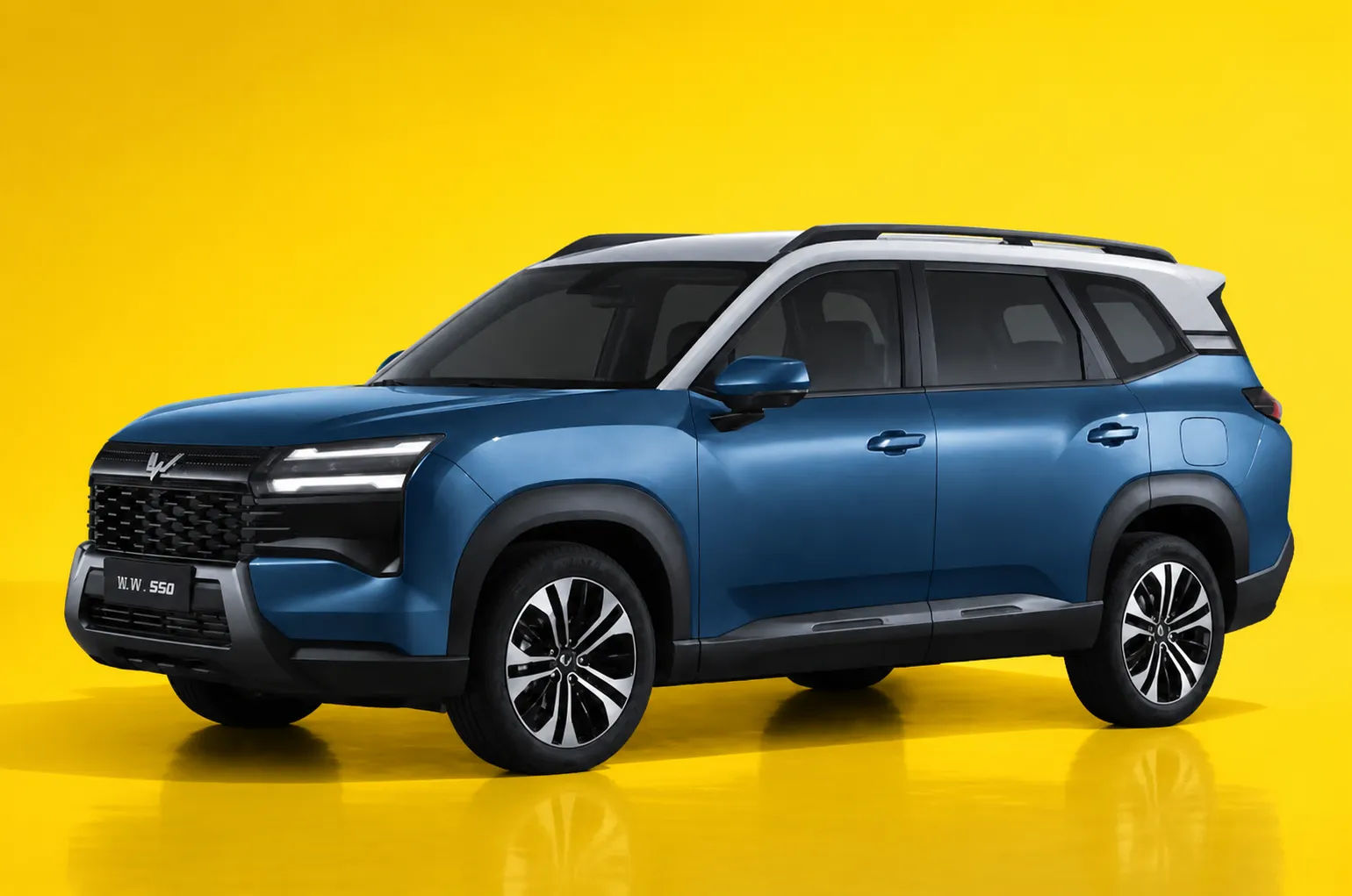
What if the next big threat to the Mahindra XUV700 and Tata Safari does not come with a diesel engine at all?
That is exactly where the reported JSW MG Starlight 560 becomes interesting.
MG appears to be preparing a new three-row SUV based on SAIC-GM-Wuling's global vehicle portfolio, with the model expected to bring plug-in hybrid technology, a large battery, strong electric performance and a feature-loaded cabin to a segment still dominated by conventional petrol and diesel SUVs.
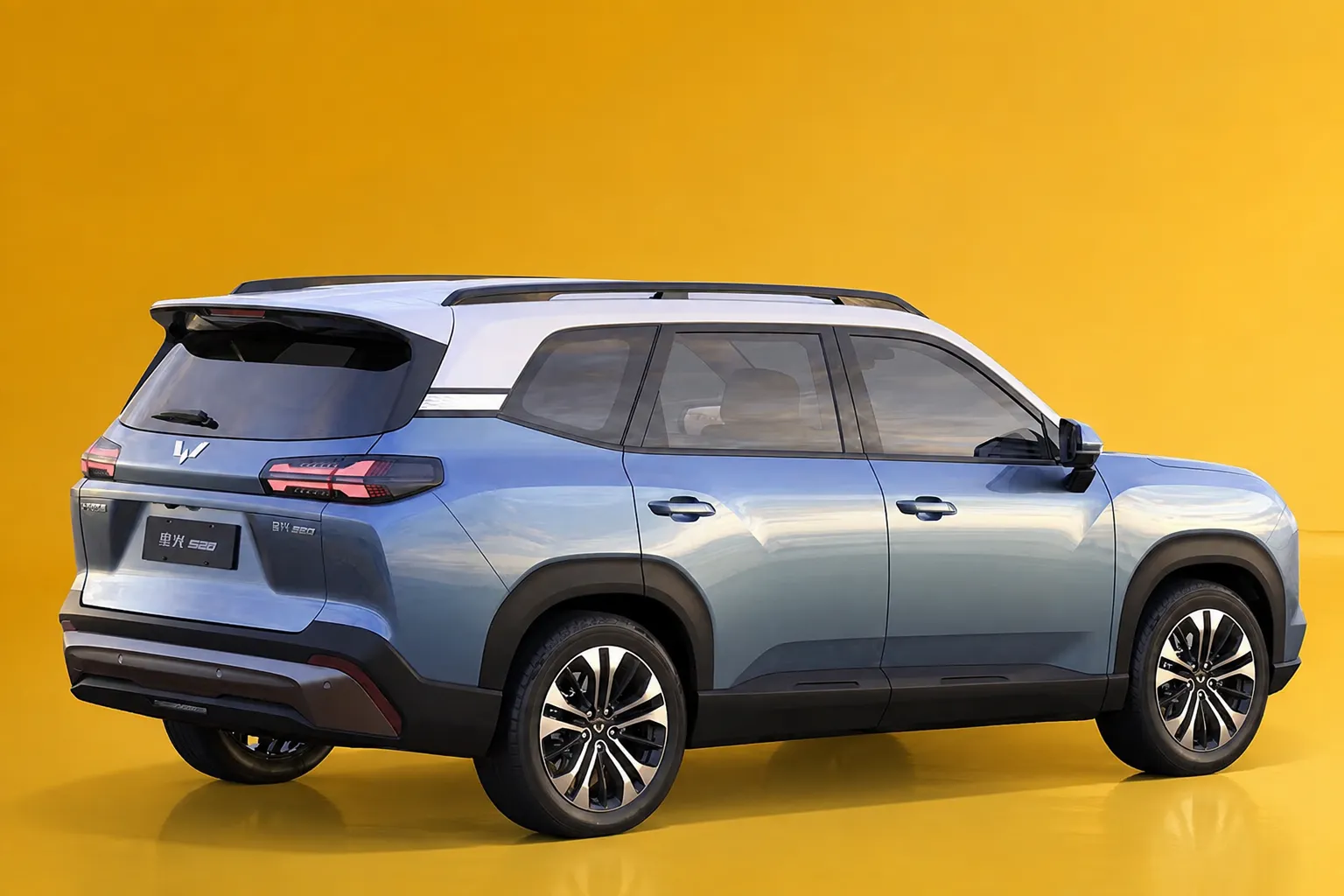
If the reported specifications make it to India, the Starlight 560 could attack the XUV 7XO and Tata Safari from an unusual direction.
It would not try to beat them with a bigger diesel engine.
It would try to make the diesel engine look old-fashioned.
These figures should be treated as reported or expected specifications until JSW MG Motor India officially confirms the India-spec SUV.
What is the MG Starlight 560?
The Starlight 560 is expected to be a three-row SUV positioned in the same broad territory as the XUV700 and Safari.
The interesting part is its powertrain.
Instead of using the familiar formula of a 2.0-litre turbo-diesel engine, the SUV is expected to use a 1.5-litre petrol engine combined with a plug-in hybrid system and a 20.5 kWh battery pack.
That changes the entire driving experience.
A conventional SUV burns fuel every time you drive it.
A plug-in hybrid can potentially handle a large part of daily city driving using electricity, while the petrol engine remains available for longer journeys.
That is a very different proposition for a large family SUV.
MG Starlight 560 vs XUV700 vs Safari
|
SUV |
Powertrain approach |
Key advantage |
|---|---|---|
|
MG Starlight 560 |
1.5L petrol + PHEV |
Electric driving + long combined range |
|
Mahindra XUV700 |
Petrol/Diesel |
Performance + established SUV package |
|
Mahindra XUV 7XO |
Petrol/Diesel |
Newer technology and premium positioning |
|
Tata Safari |
2.0L diesel |
Strong highway ability + rugged character |
The biggest question is not whether the Starlight 560 can produce enough power.
It is whether Indian buyers are ready to plug in their family SUV every night.
100 km of EV range could change the equation
The reported 100 to 125 km electric-only range is arguably the most important number associated with the Starlight 560.
Think about a typical urban owner.
Office commute.
School runs.
Grocery shopping.
Gym.
Dinner.
Most daily trips may easily fall inside that range.
If the SUV can genuinely deliver around 100 km or more of usable electric range, many owners could potentially complete their weekday driving without starting the petrol engine.
The petrol engine then becomes the road-trip insurance policy.
This is where a PHEV can make more sense than a pure EV for some large-SUV buyers.
You get electric driving for the city without having to plan every highway trip around charging stations.
And then there is the 1,000 km range claim
A reported combined range of more than 1,000 km sounds almost ridiculous for a large three-row SUV.
That is precisely why it needs context.
The figure would depend heavily on the test cycle, battery state, fuel tank capacity, driving conditions and how much of the journey is completed using electric power.
Real-world range will obviously vary.
Still, the basic concept is powerful.
Imagine starting a road trip with a fully charged battery and a full fuel tank.
You could potentially drive hundreds of kilometres before range anxiety even enters the conversation.
For Indian buyers who want an EV experience but are not ready to give up the freedom of petrol, this could be the sweet spot.
The real enemy is not the Safari
It is tempting to compare the Starlight 560 with the Tata Safari only because both are large three-row SUVs.
But their philosophies are very different.
The Safari is built around a traditional SUV formula.
Strong diesel torque.
Large body.
Highway stability.
Rugged styling.
A spacious family cabin.
The reported Starlight 560 formula is closer to:
electric torque + petrol backup + technology + comfort.
That makes the comparison much more interesting.
The question becomes:
Do you still need a diesel SUV if your large family SUV can complete most of your daily driving on electricity?
That is a question Tata and Mahindra cannot ignore.
MG's biggest advantage could be refinement
The Hector already showed what MG understands about Indian SUV buyers.
A large SUV does not always need to feel heavy and agricultural.
The Hector became known for its comfortable ride, light steering and well-insulated cabin.
A PHEV powertrain could push that character even further.
Electric motors produce torque almost instantly and operate with far less mechanical noise than a diesel engine.
At low speeds, the difference could be dramatic.
Instead of hearing a diesel engine clatter while moving through traffic, occupants could experience a much quieter electric drive.
For families, that matters.
A quiet cabin makes a large SUV feel considerably more expensive.
XUV700 has the performance advantage, but MG could attack elsewhere
The Mahindra XUV700 has already established itself as one of the strongest performers in this segment.
Its turbo-petrol and diesel engines provide strong acceleration, while its technology package helped raise expectations for Indian SUVs.
The upcoming XUV 7XO also gives Mahindra another opportunity to strengthen its position.
But MG does not necessarily need to beat Mahindra on outright acceleration.
It can attack the ownership experience.
Imagine two large SUVs sitting in a traffic jam.
One is idling its combustion engine.
The other is moving silently using electric power.
That difference could become a powerful selling point.
Chinese automotive technology is the elephant in the room
There is another reason the Starlight 560 could create a lot of noise in India.
Its technology is linked to China's rapidly developing automotive ecosystem.
China has become one of the world's biggest centres for batteries, electric motors, power electronics and plug-in hybrid technology.
That gives Chinese automotive groups access to a huge technology and supply-chain ecosystem.
MG can potentially use that ecosystem while adapting products for India.
This is similar to the strategy MG has followed with several products already sold in the country.
And that creates a difficult question for Indian manufacturers.
Can Indian automakers develop similar technology at the same price?
That is where the real competition begins.
MG's feature-loaded strategy is already familiar
Look at the MG Gloster.
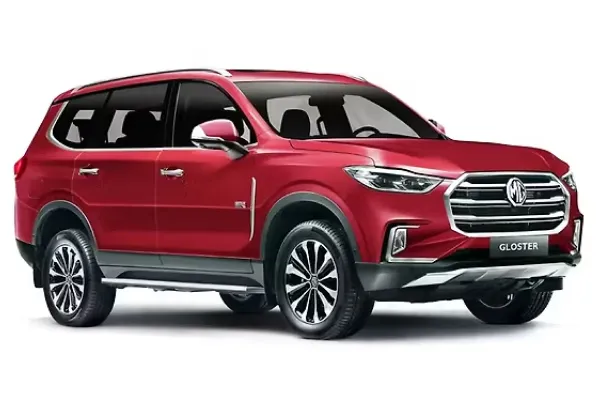
When it entered the premium SUV space, MG attacked established players with an aggressive equipment list.
Features such as advanced driver assistance, premium seats, multiple-zone climate control and other technology helped the Gloster stand apart.
The formula was simple:
Give buyers more technology for their money.
The Starlight 560 could use the same strategy in the three-row SUV segment.
Expect the technology list to be one of its biggest weapons if the vehicle eventually comes to India.
A large touchscreen.
Digital instrumentation.
Connected-car technology.
ADAS.
Premium cabin equipment.
Multiple drive modes.
And potentially a sophisticated hybrid management system.
The Indian SUV buyer loves features.
MG knows it.
Why the PHEV could be more important than another EV
India's EV market is growing rapidly, but the country still has a major problem with charging infrastructure on long-distance routes.
A plug-in hybrid tries to solve that problem differently.
The formula is:
Electricity for the city.
Petrol for the highway.
That could make PHEVs particularly attractive for buyers who want lower urban running costs without changing their entire travel behaviour.
There is also another advantage.
A 20.5 kWh battery is considerably smaller than the battery used by many large pure electric SUVs.
That can reduce weight, cost and dependence on large battery packs.
The challenge, of course, is price.
A PHEV combines a combustion engine, electric motor, battery, electronics and charging hardware.
That is not cheap engineering.
Will the Starlight 560 actually be affordable?
This could decide everything.
Technology alone does not make a successful Indian SUV.
Price does.
The XUV700 and Safari have already trained customers to expect a lot of equipment for their money.
If MG launches the Starlight 560 at a significantly higher price, the PHEV technology may become a novelty rather than a mass-market advantage.
But if JSW MG Motor India manages substantial localisation, the story changes.
A locally assembled or manufactured PHEV with competitive pricing could put enormous pressure on existing players.
This is why manufacturing strategy will be just as important as the vehicle itself.
CKD first, localisation later?
One possible route is to initially bring the vehicle through a knocked-down kit or CKD-style manufacturing strategy, followed by increasing localisation if demand proves strong.
This approach allows an automaker to test a new segment without immediately building an entirely local supply chain.
If Indian customers respond positively, localisation can increase over time.
That is particularly important for an advanced PHEV because batteries, motors and electronic control systems can significantly affect the final vehicle cost.
The more components MG can localise, the more competitive the SUV could become.
But can India simply stop Chinese technology?
This is where the debate becomes more complicated.
There is often a simple assumption that India can completely block Chinese automotive technology because of geopolitical tensions.
Reality is much messier.
Modern vehicles have global supply chains.
Batteries use materials and components sourced from multiple countries.
Electric motors require specialised components.
Power electronics depend on semiconductor and electronics supply chains.
Even manufacturers that are not Chinese can have some level of exposure to Chinese suppliers.
A blanket ban would therefore have consequences far beyond one MG SUV.
It could also affect the cost and speed of India's EV transition.
The more realistic approach is likely to be local manufacturing, supply-chain diversification, investment screening and increasing domestic component production.
JSW MG changes the equation
The partnership between JSW and MG Motor India is important because it gives the brand a stronger Indian industrial base.
JSW's involvement also gives MG access to a major Indian business group with ambitions across manufacturing and energy.
That could become increasingly valuable as India moves toward electrification.
For MG, the long-term game is therefore bigger than launching another SUV.
It is about building an ecosystem around electric and hybrid mobility in India.
The biggest question: Will Indians buy a Chinese-origin PHEV?
This is where the Starlight 560 could face its toughest battle.
Indian consumers are becoming increasingly comfortable with Chinese-developed automotive technology.
MG's EV products have already helped normalise the idea that advanced electric technology can come from Chinese automotive platforms.
But a large PHEV SUV is a different proposition.
Buyers will ask about:
Battery warranty
Long-term reliability
Service costs
Battery replacement costs
Resale value
Charging requirements
Spare parts
Software updates
Service network
Real-world fuel economy
And that is where MG will have to prove itself.
A 1,000 km claimed range looks fantastic on a brochure.
A reliable SUV that still feels great after 1,00,000 km is what sells the second one.
MG Starlight 560: What could make it a hit?
The formula is surprisingly clear.
If MG gets these five things right, the Starlight 560 could become a serious disruptor:
Competitive pricing
Real-world electric range close to the claimed figure
Strong battery and hybrid warranty
High localisation
A wide service network
Miss two or three of these and the SUV could become another interesting product that people discuss online but rarely buy.
Get them right and Tata and Mahindra will have a serious problem.
MG Starlight 560 vs XUV700 and Safari: Who has the advantage?
Right now, the answer depends on what you want.
Choose the XUV700 if you want:
Strong petrol and diesel performance
Established market acceptance
Powerful highway performance
A proven SUV package
Strong Mahindra brand appeal
Choose the Safari if you want:
A rugged three-row SUV character
Strong highway manners
A familiar diesel powertrain
Spacious family-oriented packaging
Tata's SUV design language
The Starlight 560 could make sense if you want:
Electric driving for daily use
Petrol backup for long trips
High technology content
Quiet urban driving
Potentially lower city fuel consumption
A different ownership experience
The bigger threat to Tata and Mahindra
The Starlight 560 matters because it represents a change in the question Indian car buyers are asking.
Until now, the discussion around large SUVs has mostly been:
Petrol or diesel?
Then came:
Hybrid or EV?
The next question could be:
Why not both?
That is exactly where a PHEV becomes dangerous for traditional powertrains.
If an SUV can offer electric driving during the week, petrol-powered long-distance freedom on weekends, strong performance and a premium cabin, the old petrol versus diesel argument starts looking rather outdated.
And that is the real threat posed by the MG Starlight 560.
It does not have to destroy the XUV700.
It only has to convince buyers that their next three-row SUV should work differently.
If MG gets the price right, the Starlight 560 could be one of the most disruptive SUVs to enter India's mid-size three-row segment in years.