




















Toyota Innova Crysta Review: Who Should Buy It in 2026?
By Nitesh Yadav • Published on 22 Sept 2026The Toyota Innova Crysta is in a strange place in 2026. It feels like an old-school MPV in a market obsessed with hybrids, automatic gearboxes, giant ...
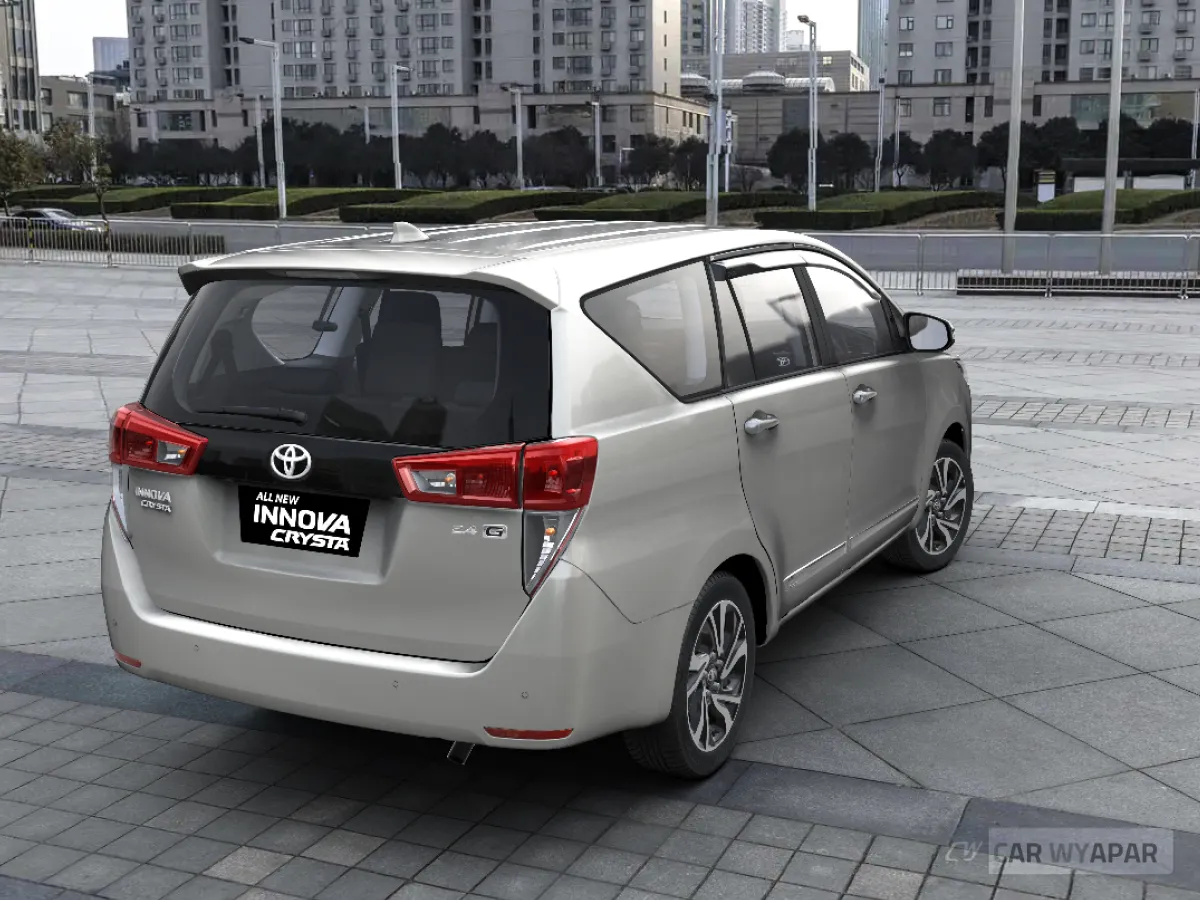
The Toyota Innova Crysta is in a strange place in 2026. It feels like an old-school MPV in a market obsessed with hybrids, automatic gearboxes, giant screens and feature lists, yet people are still buying it for one simple reason: it does the boring things extremely well.
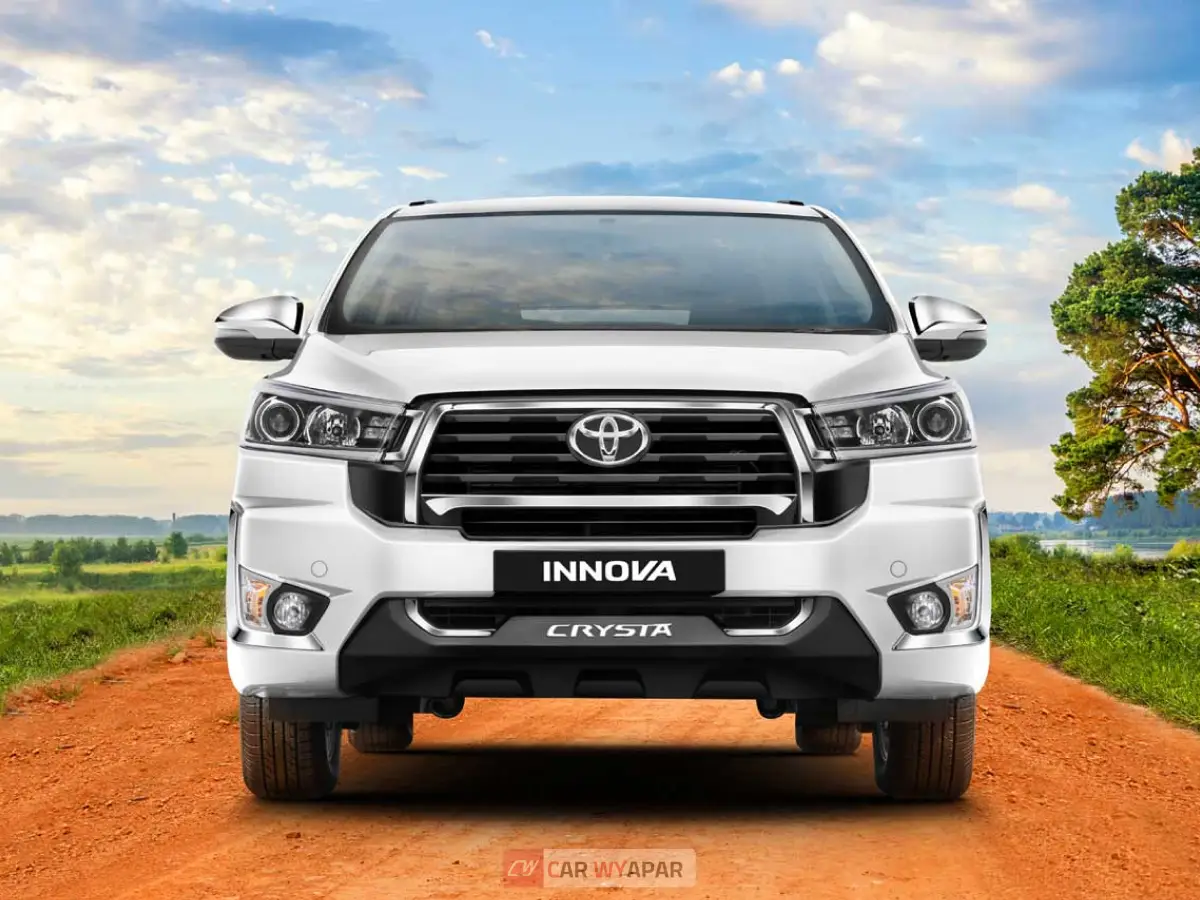
There is also a bigger question around its future. Reports in early 2026 suggested that Toyota could discontinue the diesel Innova Crysta around 2027 because of tighter CAFE III efficiency norms. Toyota later said the discontinuation reports were speculation and that the diesel Crysta remains an important part of its portfolio.
So, should you buy one now?
Let's find out.
Is the Toyota Innova Crysta Being Discontinued?
This needs some clarification.
The Innova Crysta was expected to eventually make way for newer, more efficient powertrains, especially as emission and fuel-efficiency rules become stricter. Autocar India reported that Toyota could end Crysta production around March 2027.
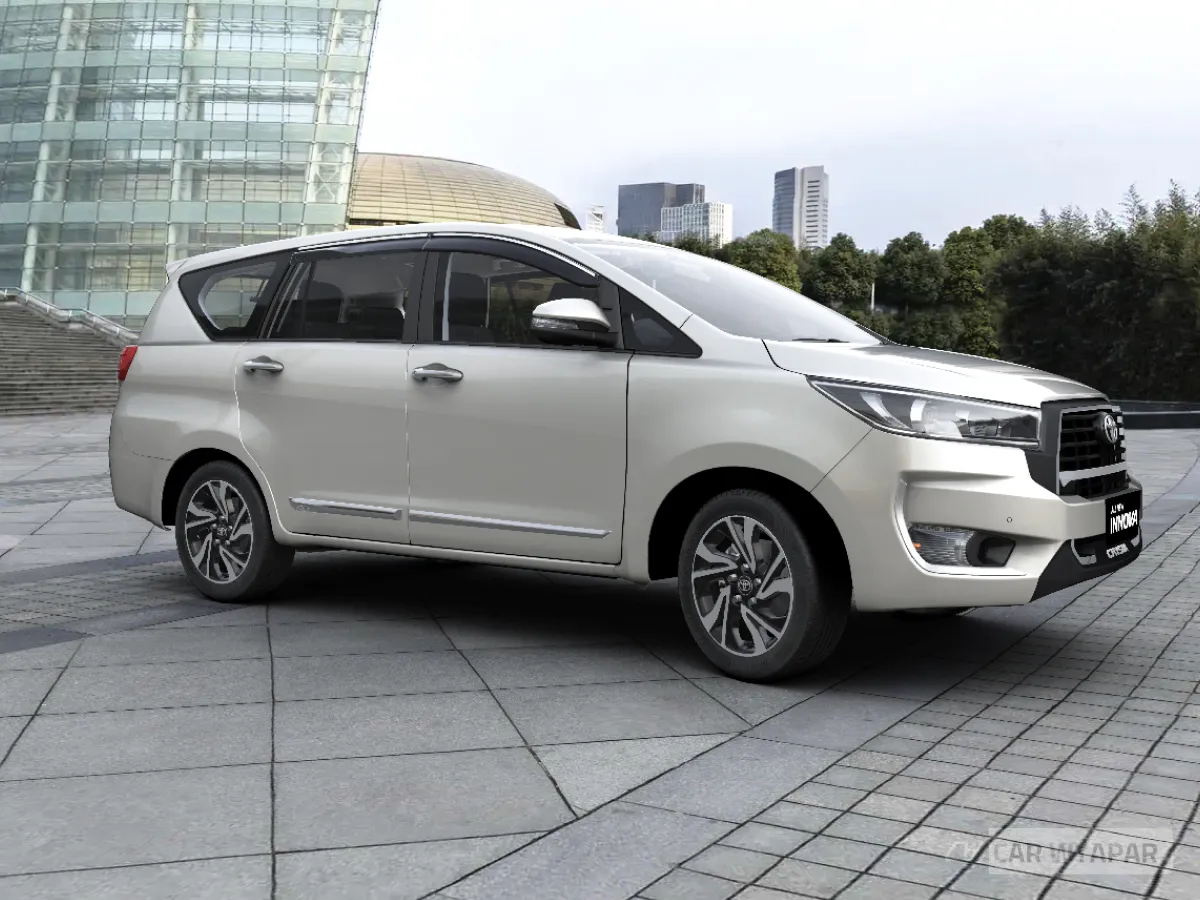
However, Toyota has not officially announced that the Crysta will be discontinued. In June 2026, Toyota executive Vikram Gulati dismissed the discontinuation reports as speculation and said the diesel MPV continues to have an important place in the company's portfolio.
And Toyota has actually launched a 2026 model-year update.
That is an important clue.
The 2026 Crysta gets a revised grille, new bumper detailing, updated interior finishes, wireless charging on VX and ZX variants and TPMS on the ZX. Mechanically, however, it remains the same.
So don't buy the Crysta because someone told you, "Last chance, production band hone wala hai."
Buy it because you actually need what it does well.
What Makes the Innova Crysta Different?
The Crysta is built on a ladder-frame chassis and uses rear-wheel drive.
Under the bonnet sits a 2.4-litre four-cylinder diesel producing 150hp and 343Nm. It is paired with a five-speed manual gearbox. There is no automatic option in the current Crysta.
That sounds rather old-school in 2026.
And it is.
But there is a reason this formula still works.
The Crysta is designed around durability, load carrying, long-distance travel and rough-road ability rather than chasing the latest technology.
You can fill it with people.
You can fill the boot.
You can drive it for hours.
And you can do it without constantly worrying about whether the road ahead deserves a vehicle with low-profile tyres.
The Crysta Is a Proper Family Workhorse
This is where the Innova Crysta makes a lot of sense.
It is available in seven- and eight-seat configurations. The seven-seater gets captain chairs in the second row, while the eight-seater gets a bench arrangement.
For a large Indian family, that matters.
Parents.
Grandparents.
Children.
Cousins who somehow appear five minutes before departure.
The Crysta can accommodate them all.
The third row is also more usable than the third row in many SUVs because the vehicle was designed around people carrying rather than simply adding two emergency seats at the back.
Where the Innova Crysta Shines
Highway driving
This is probably its strongest area.
The 2.4-litre diesel has 343Nm of torque, and the rear-wheel-drive layout gives the Crysta a planted character on highways.
It is not a performance car.
You don't buy an Innova to race a Virtus at the next traffic light.
You buy it to maintain a comfortable pace for hundreds of kilometres.
Bad roads
The ladder-frame chassis and suspension setup give the Crysta the ability to deal with rough roads, broken patches and loaded driving without feeling fragile.
Toyota's own technical material highlights its robust chassis and suspension, along with pitch and bounce control aimed at reducing cabin movement over rough roads.
This makes particular sense for buyers who regularly travel outside major cities.
Long-term ownership
The Crysta has built its reputation around durability and predictable ownership.
That reputation is one of its biggest selling points, especially for people who plan to keep their car for many years rather than replace it every four or five years.
This is also why fleet operators and commercial users have traditionally been such an important part of the Innova story.
But the Crysta Has Some Big Problems
The biggest issue is not reliability.
It is age.
The Crysta's basic formula works, but the cabin does not feel as modern as several newer vehicles.
You don't get the kind of flashy technology now expected from a ₹25 lakh-plus vehicle.
And then there is the gearbox.
Only a five-speed manual is available.
For someone driving mostly on highways, that may be perfectly fine.
For someone spending two hours every day in bumper-to-bumper traffic, it can become tiring.
The hydraulic steering also feels heavier than what you get in many newer cars. The Crysta is built around an older mechanical philosophy, and you feel it.
The Crysta Is Also Expensive
The 2026 Crysta starts at ₹19.72 lakh ex-showroom and goes up to ₹26.63 lakh for the ZX 7-seater.
Once you add registration, insurance and other costs, the top variants move well beyond ₹30 lakh on-road in many cities.
At that money, you can find SUVs with:
Automatic gearboxes
ADAS
Larger infotainment screens
More premium interiors
More powerful petrol engines
Hybrid powertrains
More modern cabin technology
So the question becomes:
Why spend this much on an old-school diesel MPV?
Because none of those features replace the Crysta's core strengths if your priority is carrying people over long distances year after year.
Who Should Buy the Innova Crysta?
Buy it if you have a large family
If six or seven people regularly travel together, the Crysta starts making more sense than a five-seat SUV.
Especially if those people include elderly parents.
Buy it if you travel long distances frequently
If your family regularly drives 300, 500 or 700 km in one trip, the Crysta's highway character becomes valuable.
This is where the car earns its keep.
Buy it if your roads are bad
If your life involves highways followed by 20 km of broken village roads, the Crysta's tough construction makes more sense than buying a soft urban SUV and praying every time you see a pothole.
Buy it if you want to keep your car for 10 years or more
The Crysta makes more sense as a long-term ownership product than as a gadget-packed purchase.
Buy it if you don't care about having an automatic
This is important.
If you absolutely need an automatic gearbox, cross the Crysta off your list.
There is no automatic option in the current model.
Who Should Avoid the Innova Crysta?
Avoid it if you mostly drive alone
Buying a large seven or eight-seater diesel MPV for one or two people is difficult to justify.
A smaller SUV or sedan will be easier to live with.
Avoid it if 90% of your driving is in the city
The Crysta can obviously handle city driving.
But a large RWD MPV with a manual gearbox is not the easiest tool for daily urban traffic.
Avoid it if you want modern features
The Crysta's cabin feels functional rather than futuristic.
If your buying checklist begins with panoramic sunroof, ADAS, connected features and a giant touchscreen, there are newer options that will satisfy you better.
Avoid it if you want an automatic
This deserves repeating.
There is no automatic Crysta.
That alone can eliminate it for many urban buyers.
Avoid it if you are buying it because of the discontinuation rumours
This is perhaps the worst reason to buy one.
The future of the diesel Crysta is being discussed, but Toyota has not officially confirmed its discontinuation.
/Alto VXI Plus 6.webp)