



























Toyota Hyryder Mileage Dropping? 5 Reasons Your 27 km/l Feels Like Gaya Tel Lene
By Nitesh Yadav • Published on 24 Mar 2026You bought the Hyryder Strong Hybrid because you believed in Toyota's legacy. You thought, "Yeh log jhooth thodi bolenge?" The showroom guy showed you...
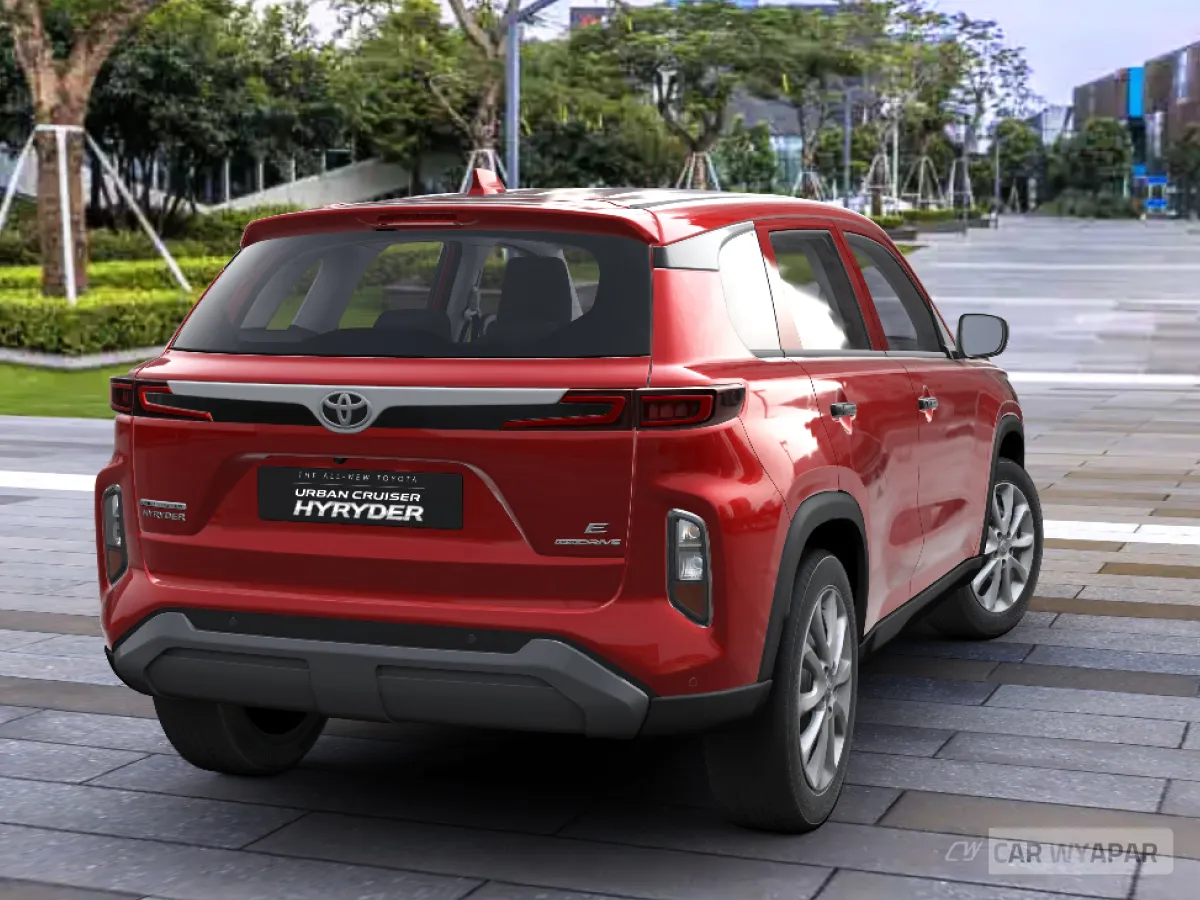
You bought the Hyryder Strong Hybrid because you believed in Toyota's legacy. You thought, "Yeh log jhooth thodi bolenge?" The showroom guy showed you that shiny brochure—27.97 km/l. You imagined yourself gliding through traffic in silent EV mode, laughing at every fuel station you passed. "Petrol daalna? Kya zaroorat hai? Abhi toh 500 km aur chalega!"
And why wouldn't you believe it? Under the hood sits Toyota's legendary Atkinson cycle 1.5-litre engine—a 3-cylinder unit designed specifically for efficiency, not ego. Paired with a 79 bhp electric motor and a lithium-ion battery pack neatly tucked under the rear seats, this system is supposed to be the pinnacle of self-charging hybrid technology . The e-CVT transmission ensures buttery-smooth transitions between petrol and electric power. It's sophisticated. It's Japanese engineering. It's the future.
But lately, your MID is displaying numbers that make you want to drive straight to the dealership and ask for a refund. 17 km/l? 18 km/l? Barely 20? Your Hyryder is drinking fuel like it's a thirsty turbo-petrol at a wedding after-party.
What went wrong? Here are 5 reasons your 27 km/l dream has become a dukh ka rishta.
1. You're Driving It Like a Fortuner
The Hyryder Hybrid is not a performance SUV. It has a combined output of just about 114 bhp—enough to be adequate, not exciting . If you're flooring the accelerator at every green light, expecting instant jhatka like a turbo-diesel, you've missed the point entirely.
The hybrid system rewards smoothness. Gentle acceleration keeps the car in EV mode. Aggressive throttle? The engine screams, the battery drains, and the fuel economy plummets. One owner put it perfectly: "To get mileage >20 kmpl, you need to be over-conscious and meticulous like a machine—gradual acceleration, slow braking, and drive below 80 km/h at all times" . If you wanted performance, you should have bought something else.
2. The Battery Vent Is Blocked—Zara Dekho
The hybrid battery has a cooling vent located near the rear seats . In India, we treat the rear footwell like a personal storage unit. Gym bags, grocery hauls, woh purana sweater jo kabhi phenkna hai—sab kuch wahan hota hai.
Block that vent, and the battery overheats. When the system detects excessive heat, it restricts EV mode to protect itself. Suddenly, you're driving a heavy 3-cylinder petrol car with zero electric assistance. Mileage? Gaya. Check under your seats. Clear the clutter. Let the battery breathe.
3. Tyre Pressure: The Silent Killer
The Hyryder Strong Hybrid is significantly heavier than its mild-hybrid sibling because of that battery pack. Toyota recommends 33 PSI for all tyres on this variant . But at the local hawa wala, uncle fills it to 30 PSI "standard" and sends you on your way.
Low tyre pressure increases rolling resistance. The electric motor has to work harder to push the car. The battery drains faster. The engine kicks in more often. Your mileage drops faster than the temperature in a Shimla winter. Keep it at 33 PSI, and thank me later.
4. The AC Is on Full Punjabi and It's Garmi Ka Mausam
If you're driving with the AC set to "Low" and the blower at max, the engine refuses to shut off. It needs to run to power the compressor. Your hybrid becomes a regular petrol car. Set it to 24-25 degrees with recirculation on. Your mileage—and your wallet—will thank you.
5. Short Trips: The Thanda Engine Problem
The Atkinson cycle engine needs to warm up to operate efficiently. If your daily routine is a 2 km drive to the mandir or the chai ki tapri, the engine barely reaches operating temperature before you turn it off.
The system keeps the engine running just to heat itself, and you never get the benefit of silent EV mode. On short trips, that 27 km/l promise is a myth. This car is meant for longer commutes where the hybrid system can actually do its job.
Here's what nobody tells you: the real-world mileage of the Hyryder Strong Hybrid is 20–23 km/l in the city and 22–25 km/l on the highway . Some owners report as low as 17–18 km/l if they drive aggressively or have mechanical issues .
A long-term test of a Hyryder with 32,000 km on the odometer returned 22 km/l in the city and even better on the highway . That's still excellent for an SUV of this size. But it's not the 27.97 km/l dream.
The Strong Hybrid variant costs a whopping ₹3.9 lakh more than the mild-hybrid. At current fuel prices, you'd need to drive over 3.5 lakh km just to break even . So if you bought this for savings, you've made a mistake. You bought it for the smooth, silent, premium experience.
A Note to the Disappointed
If you're seeing mileage below 18 km/l consistently, check for mechanical issues. Some owners have reported problems with the headlights lacking intensity, squeaky plastic interiors, and poor lumbar support on long drives . One user even said the car forces you to drive like a disciplined citizen because overtaking requires planning .
But here's the thing—the Hyryder Hybrid is still one of the most fuel-efficient SUVs on Indian roads. It just demands a specific driving style and proper maintenance.
So go ahead. Check your tyre pressure. Clear that battery vent. Drive like a sanskaari human being. And maybe—just maybe—you'll see that 27 km/l again.
Or you'll accept that 22 is pretty damn good and move on with your life.
Strong Hybrid Mileage Recovery Checklist
|
Category |
Item to Check |
Ideal Condition / Action |
Impact on Mileage |
|---|---|---|---|
|
Driving Style |
Throttle Input |
Gentle acceleration. Use "pulse and glide" technique—accelerate moderately, then ease off to coast in EV mode. |
Aggressive driving drops mileage from 27 → 14–16 km/l |
|
Braking |
Brake early and gently to maximize regenerative braking. Hard braking wastes kinetic energy that could recharge the battery. |
Poor regen = battery stays low = engine runs more | |
|
Speed |
Maintain under 80 km/h for optimal EV usage. High speeds force the engine to stay on continuously. |
Highway speeds above 100 km/l reduce mileage to 18–20 km/l | |
|
Battery System |
Rear Battery Vent Location |
Left side of rear seat (behind the seatback or near the footwell). Ensure it is not blocked by seat covers, luggage, or gym bags. |
Blocked vent causes battery overheating → EV mode disabled → mileage drops 30-40% |
|
Vent Cleaning |
Vacuum the vent grille monthly to remove dust and debris. |
Prevents system from restricting EV mode | |
|
Tyres |
Tyre Pressure (Cold) |
33 PSI for all tyres (front and rear). Check weekly. |
Low pressure (30 PSI) increases rolling resistance → mileage drops by 2–4 km/l |
|
Tyre Condition |
Check for uneven wear, cracks, or bulges. Rotate every 10,000 km. |
Worn tyres reduce grip and efficiency | |
|
Air Conditioning |
AC Temperature Setting |
Set to 24–25°C with recirculation mode ON. Avoid "Low" setting with max blower. |
High AC load keeps engine running → EV mode disables → mileage drops 3–5 km/l |
|
AC Usage in Traffic |
In stop-and-go traffic, consider switching to fan-only mode when possible to let EV mode take over. |
Maximizes silent EV operation in city conditions | |
|
Engine & Warm-Up |
Trip Length |
Avoid frequent short trips under 5 km. The engine needs time to warm up for optimal efficiency. |
Cold engine runs constantly—no EV benefit on short trips |
|
Warm-Up Period |
Drive gently for the first 5–10 minutes to allow the Atkinson cycle engine to reach operating temperature. |
Prevents prolonged cold-engine inefficiency | |
|
Mechanical Health |
Fuel Injectors |
If you notice rough idling, jerking, or smoke, get injectors inspected. Some owners have reported faulty injectors causing sudden mileage drops. |
Faulty injectors can drop mileage to 12–15 km/l |
|
EGR Valve |
If mileage drops suddenly with rough running, the EGR valve may be stuck. Get it cleaned or replaced if necessary. |
Stuck EGR causes poor combustion and fuel waste | |
|
Engine Oil |
Use the recommended 0W-16 or 0W-20 low-viscosity oil designed for hybrids. Thicker oil increases friction. |
Wrong oil can reduce mileage by 1–2 km/l | |
|
e-CVT Transmission |
Ensure transmission fluid is at correct level. No aggressive "shifting" needed—it's a CVT, not a manual. |
Neglected transmission affects overall drivetrain efficiency | |
|
Load & Weight |
Cargo |
Remove unnecessary weight from the boot. The battery already adds significant weight to the car. |
Extra 50 kg reduces mileage by 1–2% |
|
Roof Load |
Avoid roof carriers or boxes unless absolutely necessary. They destroy aerodynamics. |
Roof load can reduce highway mileage by 5–8 km/l | |
|
Fuel |
Fuel Quality |
Use high-quality petrol (premium fuel recommended). Poor fuel can cause knocking and inefficient combustion. |
Bad fuel affects the finely tuned Atkinson cycle efficiency |
|
Fuel Type |
Both hybrids run on normal petrol. E20 (20% ethanol) fuel may slightly reduce mileage compared to pure petrol. |
Ethanol blends have lower energy density | |
|
Electronics & Software |
MID Reset |
Reset the Multi-Information Display (MID) after every fuel fill to track accurate tank-to-tank mileage. |
Relying on "since start" figures can be misleading |
|
Software Update |
Ask your service center if any ECU updates are available for the hybrid system. |
Updates may optimize battery management and EV logic |
 (1).webp)