


















Tata Aeris: The Genius of Tata Motors’ Marketing Psychology
By Eram Warsi • Published on 26 Sept 2026The fear of death caused due to an accident will make you prioritize safety to such an extent that you will barely care about how annoying service cen...
The fear of death caused due to an accident will make you prioritize safety to such an extent that you will barely care about how annoying service center experience is! That’s a very jaan hai toh jahaan hai thing.
Safety is a difficult thing to sell.
You cannot show a customer what will happen in an accident they have not experienced. You can list airbags, ESC, body structure and crash-test ratings, but these are technical concepts.
When a buyer sits down to compare cars, two completely different parts of the brain fight for control:
The Logical Mind: "Maruti gives better fuel efficiency, costs less to maintain, and has a hassle-free service network."
The Survival Mind: "What if a truck loses control next to my family on the highway?"
In a logical battle, a clunky service center experience, panel gaps, or a slightly lower fuel efficiency would easily lose Tata a customer to Maruti or Hyundai. However, Tata doesn't fight on logic. They bypass it entirely and speak directly to your survival instinct.
An annoying service center experience ruins a Saturday morning. A fatal accident ruins a lifetime. When framed against the existential fear of losing a family member, every other flaw—from iffy after-sales service to extra maintenance costs—suddenly feels like a trivial trade-off.
"Demonstrate, Don't Talk": Tata Way of Marketing
The human brain responds more strongly to something it can see than to a claim written in a brochure. A 5-star crash-test rating is useful, but it remains an abstract number. Watching a car physically withstand extreme force creates a much stronger mental image.
Tata has used this idea through dramatic demonstrations of structural strength:
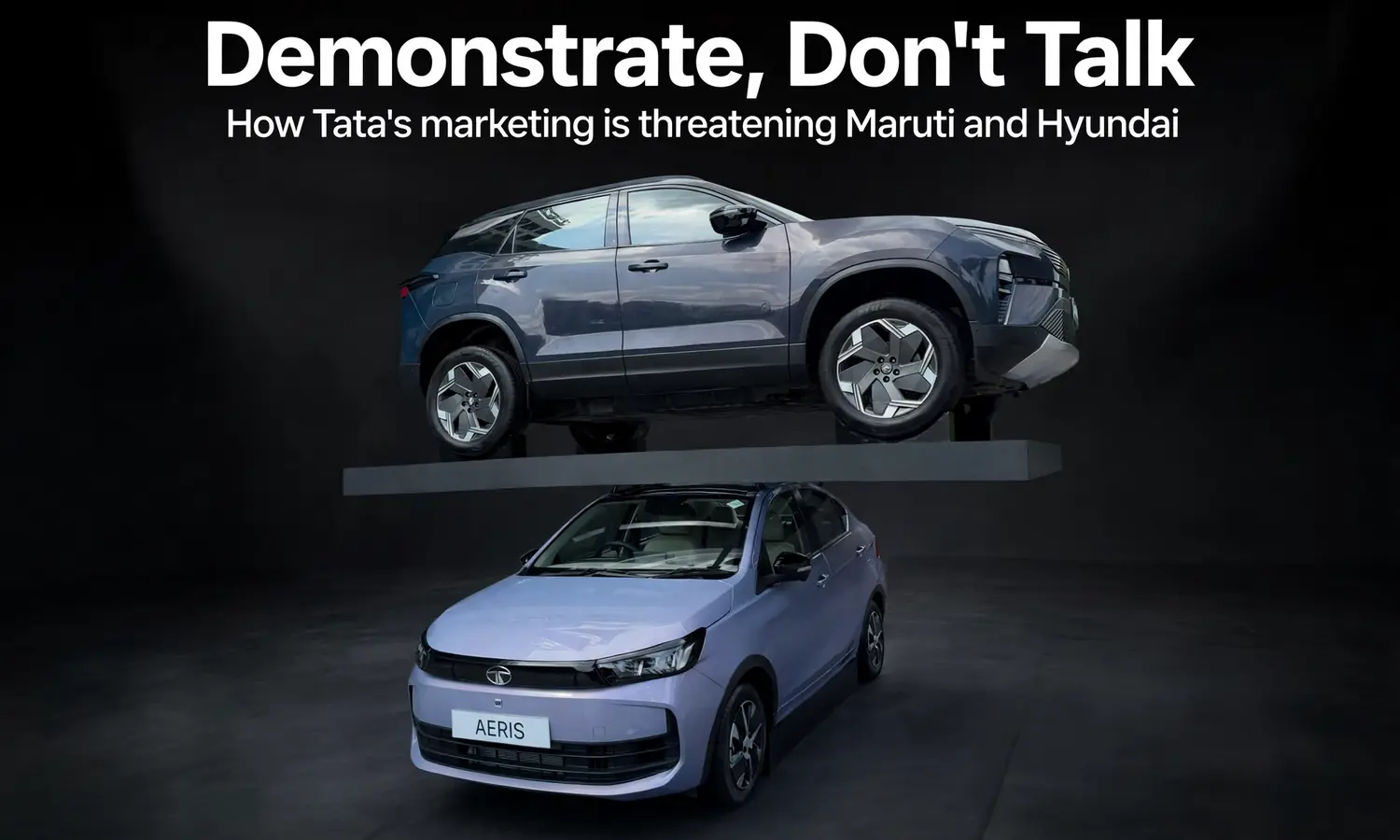
The Roof Crush Test: Placing a heavy vehicle or enormous load on another car's roof demonstrates how the passenger compartment handles extreme pressure. The message is simple: the structure is built to protect the occupants.
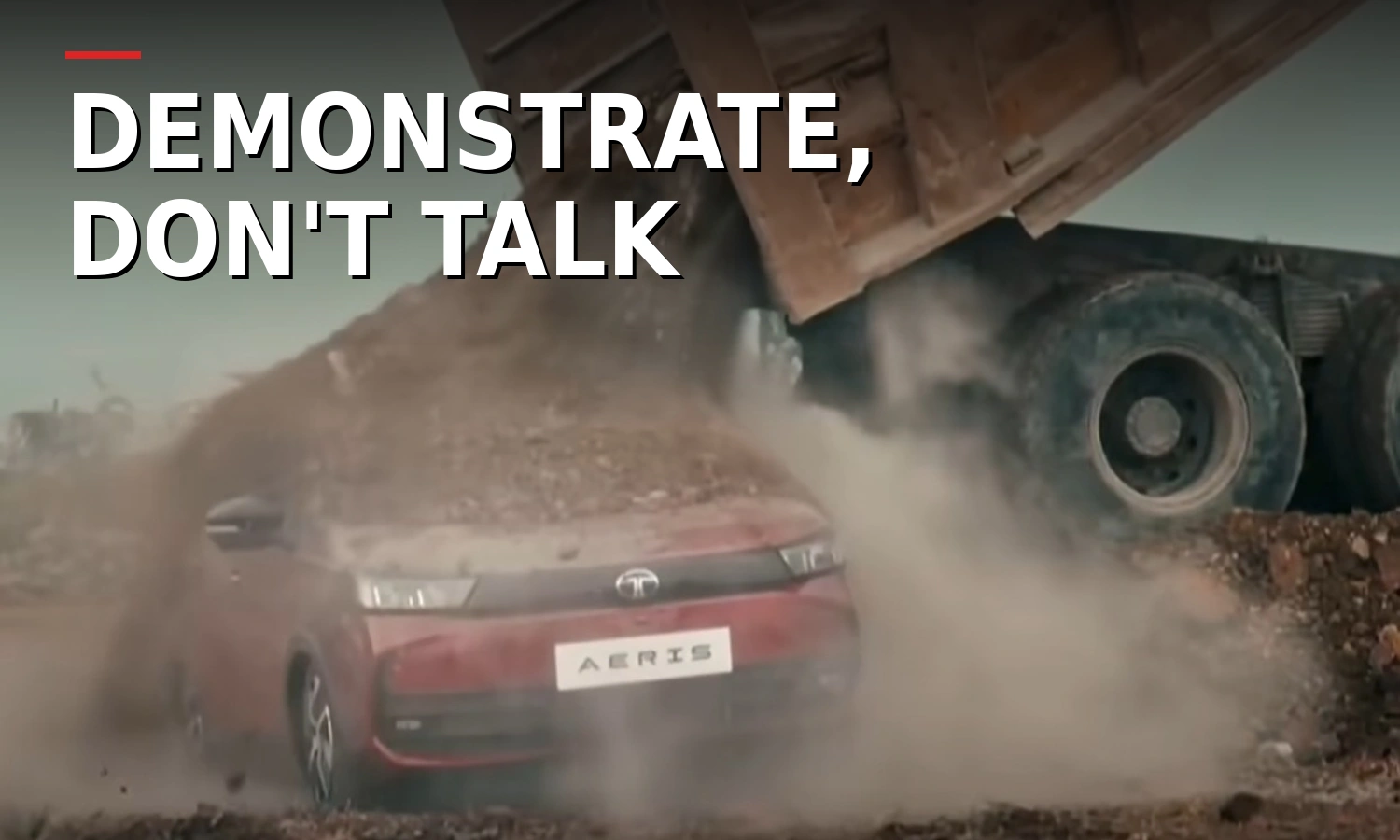
The 20-Tonne Gravel Dump: Dumping a huge quantity of gravel onto a car and showing the cabin remain intact turns structural strength into something anyone can understand without knowing the engineering behind it.
These demonstrations create a direct association between the car and protection. The customer does not need to remember the technical explanation. They remember the image of the car taking an extreme load while the cabin remains intact.
The message reaches the survival instinct directly:
"This metal cage can protect my family when things go wrong."
/Alto VXI Plus 6.webp)