























Kia Syros EV Review: Brilliant EV, Wrong Body? Here’s Why I Think Kia Missed the Point
By Zeeshan A Aqudus • Published on 8 Aug 2026Some cars make you fall in love at first sight. Some make you understand the engineering after a test drive. And then there is the Kia Syros EV, a c...
Some cars make you fall in love at first sight.
Some make you understand the engineering after a test drive.
And then there is the Kia Syros EV, a car that makes you say, “Bhai, this is actually very good... but why did Kia do this?”
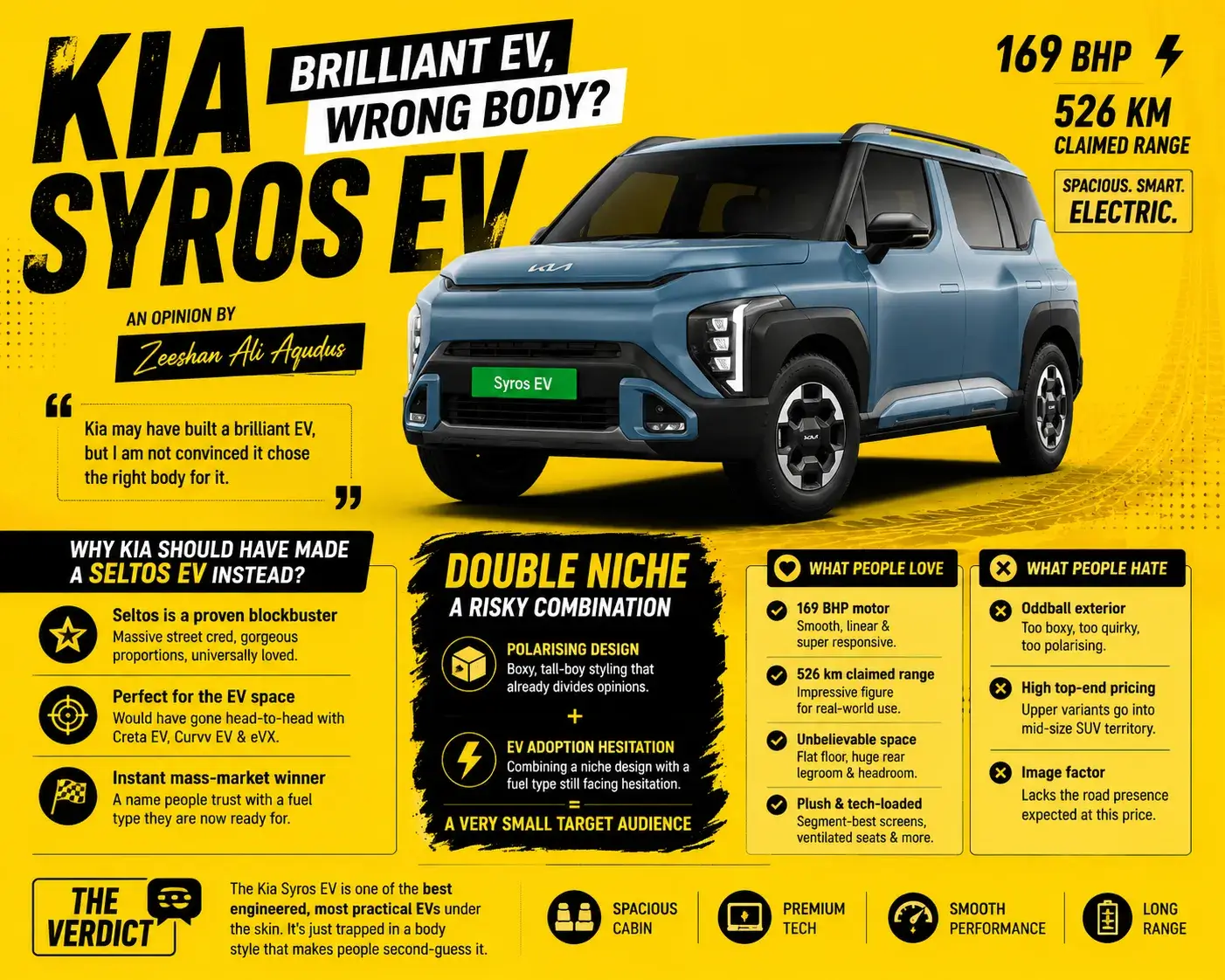
That is my biggest problem with the Syros EV. Looking at it purely as a machine, there is a lot to like. The 169 bhp electric motor, claimed range of up to 526 km, spacious rear seat and technology-loaded cabin make a strong case for the car.
But cars are not sold as spreadsheets.
People buy them with their eyes first, then their wallets, and finally their brains.
And at what could be a near ₹20 lakh price point, I think Kia has put some genuinely impressive EV engineering inside a body that may struggle to convince enough buyers.
Kia Syros EV: The Problem Is Not the Engineering
Let's get one thing clear.
I don't think the Syros EV is a bad car.
In fact, I think the opposite.
The electric powertrain looks very promising. A 169 bhp motor should give it more than enough performance for everyday Indian driving, while the large claimed range makes it considerably easier to imagine using the car for both city and highway travel.
Then there is the cabin.
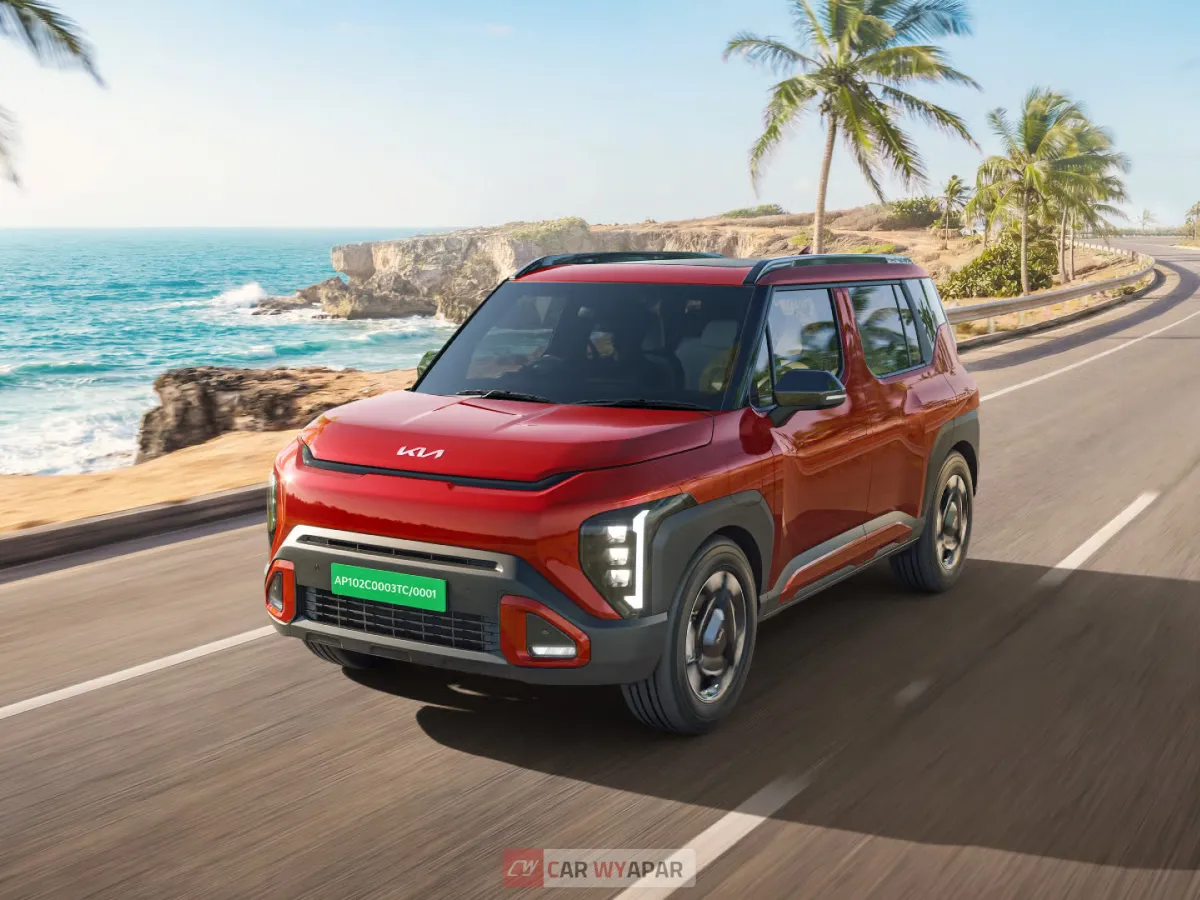
The Syros already has one major advantage because of its tall and boxy proportions. There is plenty of headroom and a lot of usable space inside.
Add an electric powertrain and you get an even more interesting package.
The absence of a traditional transmission and the packaging advantages of an EV can make the cabin feel exceptionally roomy.
On paper, this sounds like a winner.
Then you look at the car.
And that's where my doubts begin.
Why Didn't Kia Make a Seltos EV?
This is probably the biggest question I have about Kia's EV strategy in India.
Why the Syros EV when the Seltos was sitting right there?
The Seltos already has something the Syros is still trying to build, identity.
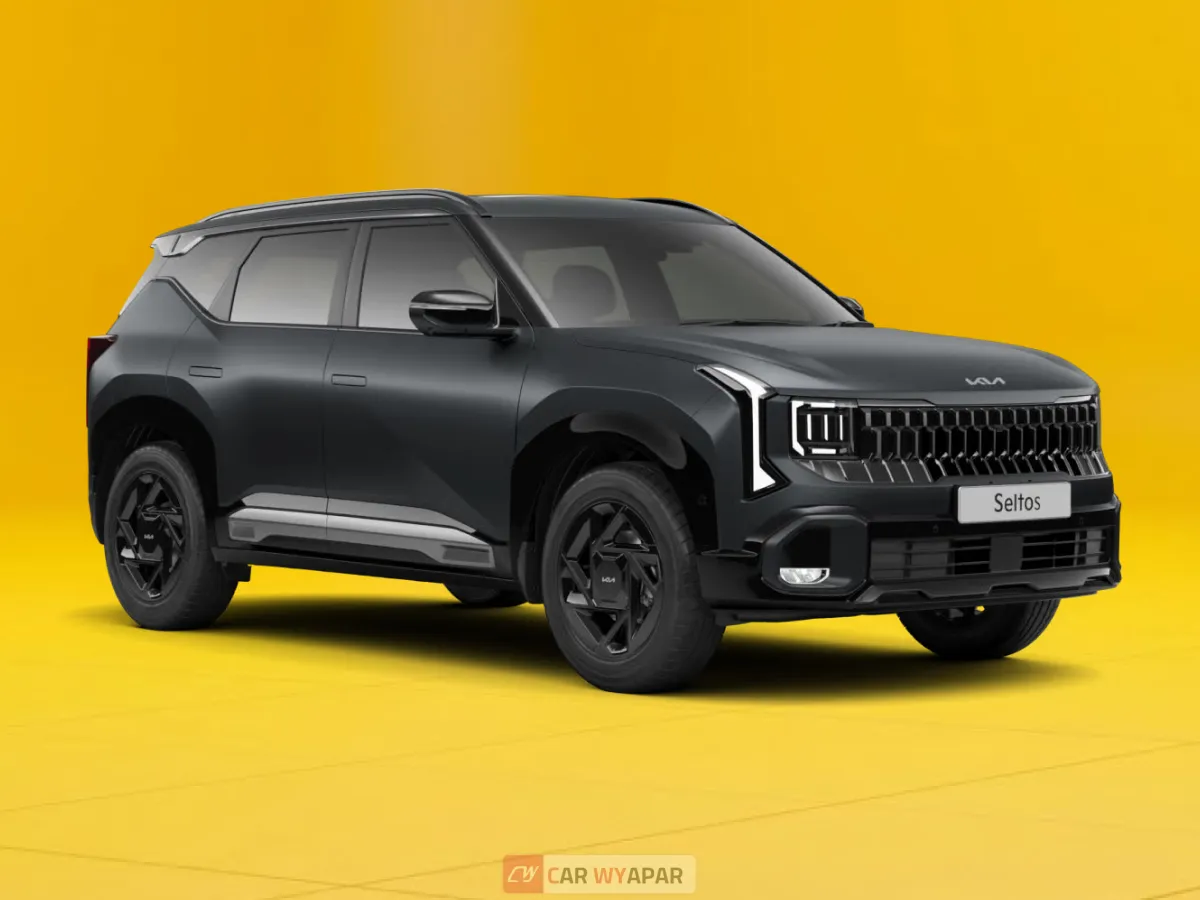
It has established itself as a proper mid-size SUV. Buyers understand its proportions. They understand where it sits in the market. It has the visual presence expected from a vehicle in the ₹18 lakh to ₹22 lakh space.
Now imagine that formula with an electric powertrain.
A Kia Seltos EV could have been positioned directly against other electric SUVs such as the Creta Electric, Tata Curvv EV and upcoming mainstream electric SUVs.
It would have made immediate sense to a large group of buyers.
The Syros EV, on the other hand, asks buyers to first understand the product and then accept its design.
That is a much harder job.
The Syros Has a Design Problem
Let's be honest.
The Syros design is not for everyone.
Its tall-boy proportions, upright body, unusual lighting arrangement and geometric styling make it look very different from conventional SUVs.
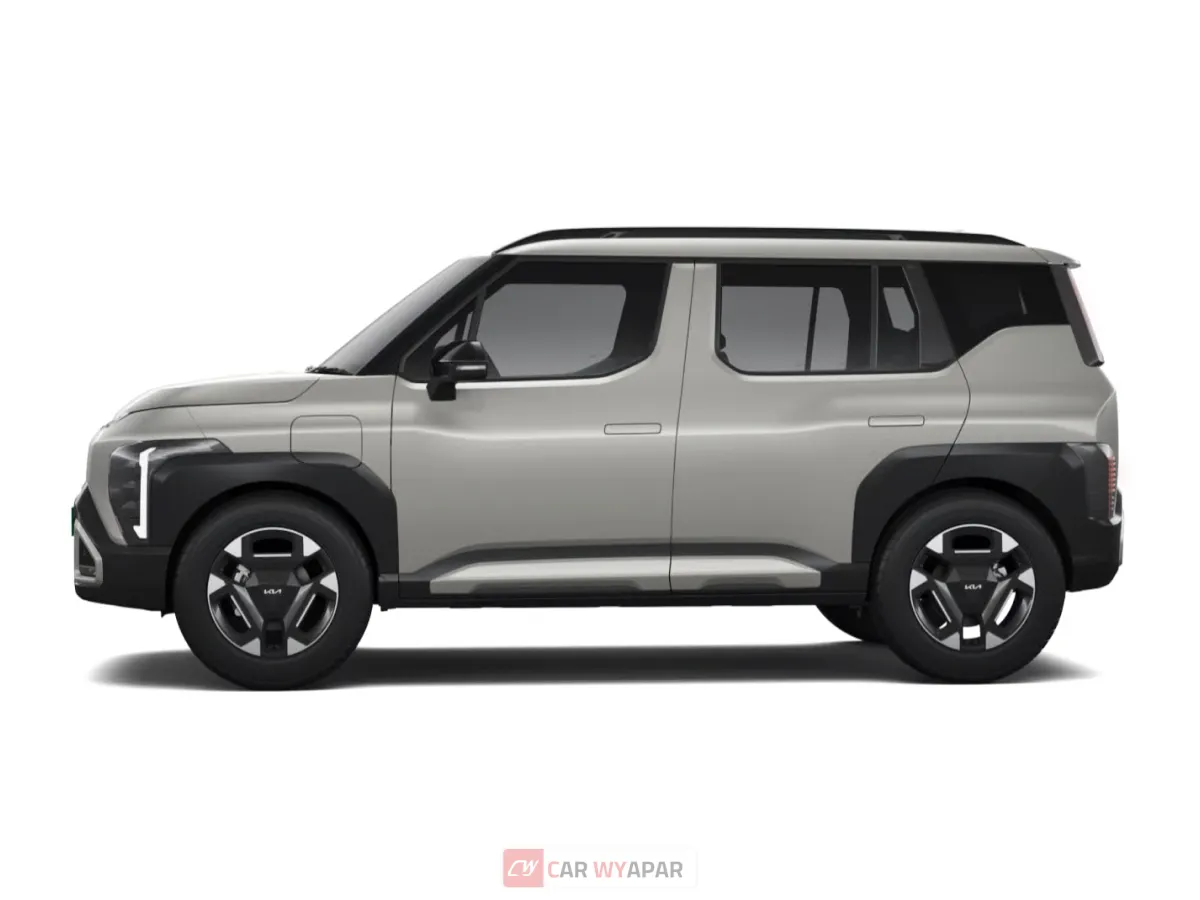
Some people will love that.
Others will look at it and wonder why Kia decided to design a car after someone said:
"Make an SUV, but don't make it look like an SUV."
And that becomes even more important when you convert it into an EV.
The EV market is already going through an image transition.
Many buyers still want their electric car to visually communicate that they have bought something modern and premium.
Look at the kind of vehicles people associate with the premium EV space.
They tend to have:
Strong road presence
Wide stance
Sleek proportions
Premium styling
A clear SUV identity
The Syros takes a different route.
It is tall.
It is upright.
It is boxy.
And it looks more practical than aggressive.
That is great for the people sitting inside it.
It may not be great for the person looking at it from outside.
The Syros EV Has a "Double Niche" Problem
This is where I think Kia's decision becomes particularly interesting.
The Syros already occupies a slightly unusual position because of its design.
Now add an electric powertrain.
You are effectively combining:
A polarising design + an EV powertrain + a potentially ₹20 lakh price tag.
That creates a much smaller target audience.
Someone who wants an affordable EV may look at smaller electric cars.
Someone who wants a premium electric SUV may look at larger, more conventional SUVs.
Someone spending around ₹20 lakh may ask a simple question:
"Why should I buy this instead of a conventional-looking electric SUV?"
Kia needs a very good answer.
The Syros EV's answer is likely going to be its space, technology, efficiency and practicality.
Those are strong arguments.
But they are not arguments people notice while the car is parked outside a restaurant.
The Rear Seat Could Be Its Secret Weapon
There is one area where the Syros EV could genuinely surprise buyers.
Space.
The tall body gives Kia plenty of room to work with.
For Indian buyers, rear-seat space matters enormously.
A car that looks smaller from the outside but offers generous legroom and headroom inside can make a very strong practical argument.
This could actually become the Syros EV's biggest advantage.
You might not buy it because it looks beautiful.
You might buy it because your parents can sit comfortably in the back.
Or because your children have enough space.
Or because you can fit luggage without turning the cabin into a game of Tetris.
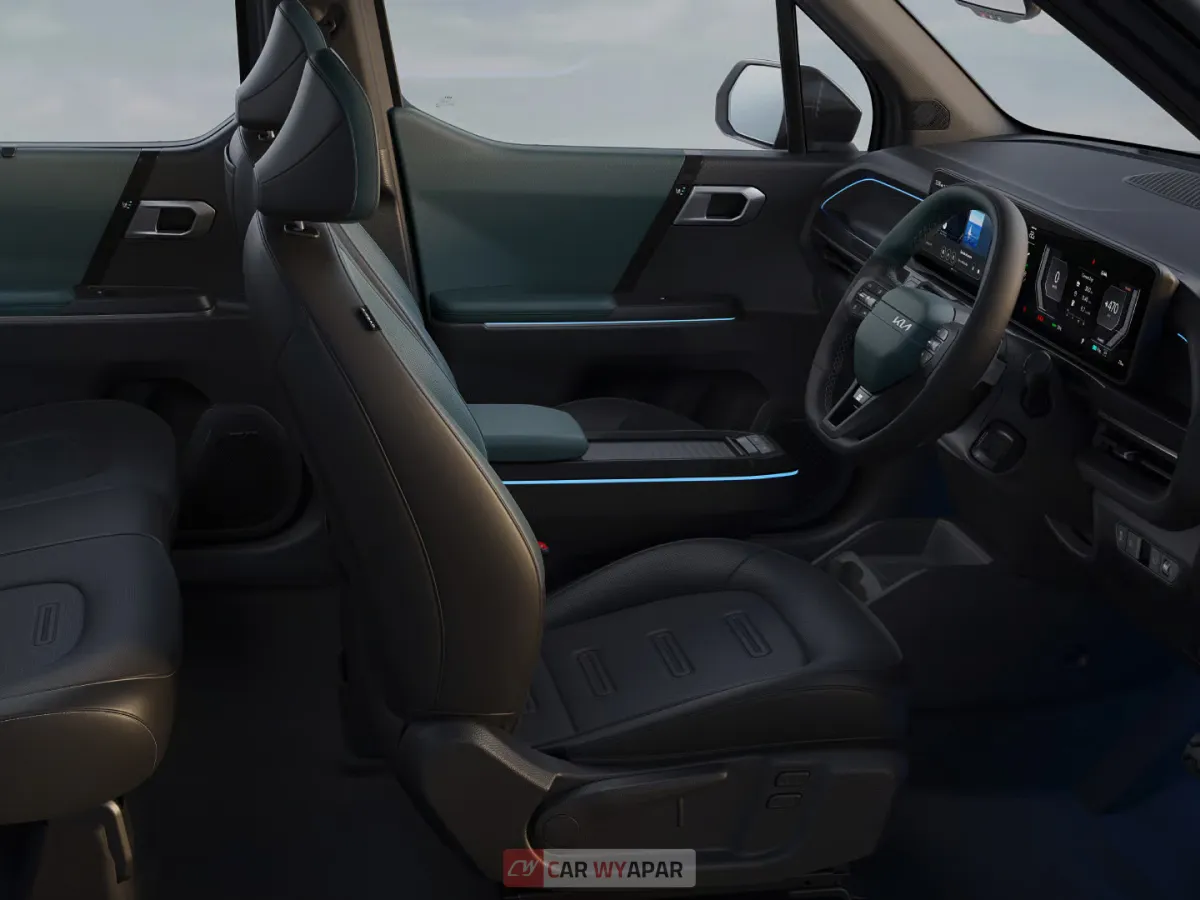
That is a very different selling point from traditional SUV appeal.
The 169 BHP Motor Makes the Syros EV Interesting
The claimed 169 bhp output gives the Syros EV enough firepower to feel properly quick for Indian roads.
Electric motors also deliver torque almost instantly.
That means the driving experience should feel:
Smooth
Quick
Linear
Easy to control
Effortless in traffic
You don't need to wait for a turbocharger to wake up.
You press the accelerator and the car responds.
For city driving, this is exactly what makes EVs so enjoyable.
And if the claimed 526 km range translates into a strong real-world range, the Syros EV could also become a capable highway car.
But again, this is where I think Kia has created an unusual contradiction.
The mechanical package may be more convincing than the exterior.
The Cabin Could Make You Forget the Exterior
If Kia gets the cabin right, the Syros EV could become one of those cars that makes much more sense after you sit inside it.
A spacious cabin combined with modern screens, connected features, premium materials and comfort-focused equipment can change the perception of the car.
The exterior may say:
"What exactly is this?"
The interior could respond:
"Sit down first."
And that is probably the Syros EV's strongest trick.
It does not need to win a beauty contest.
It needs to convince buyers that its unusual shape has a purpose.
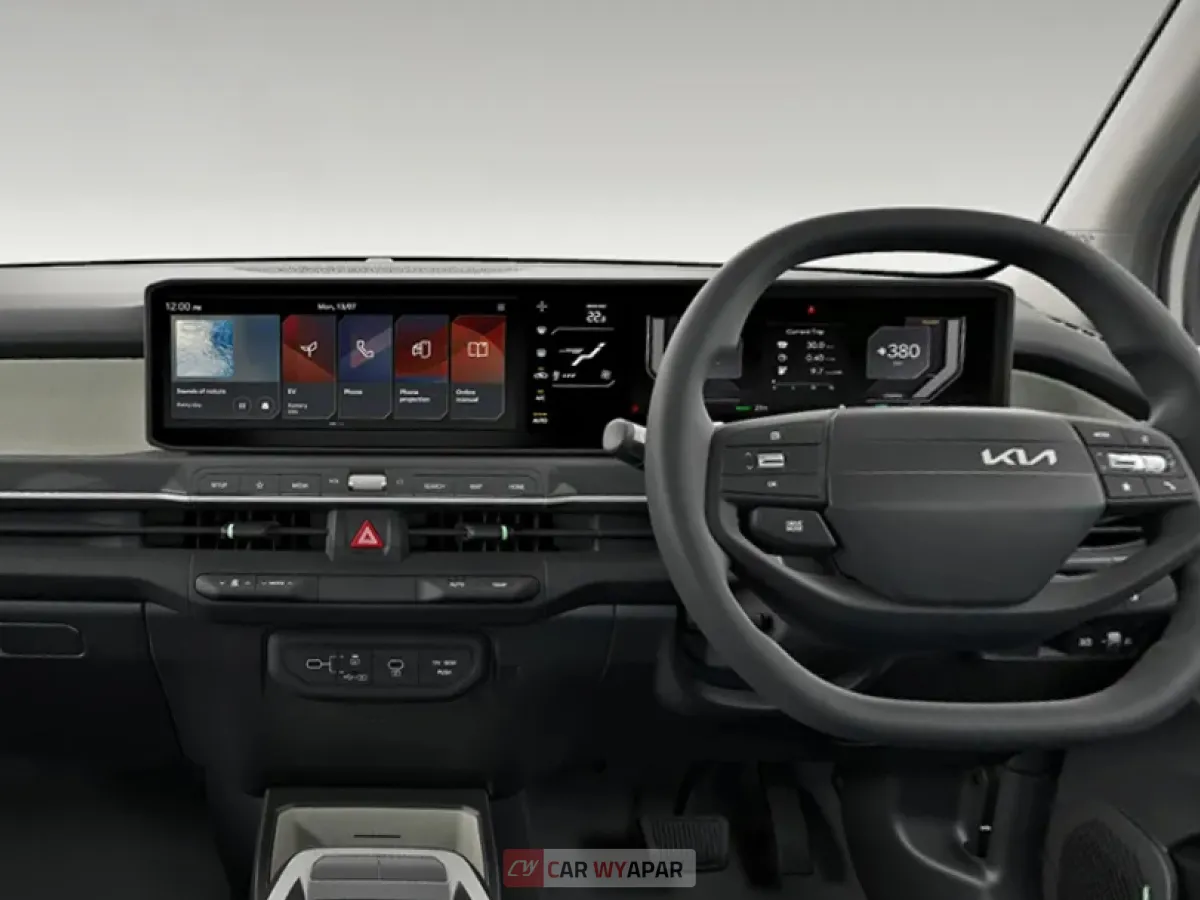
Kia Syros EV: What I Like vs What I Don't
|
What I like |
What bothers me |
|---|---|
|
169 bhp electric motor |
Polarising exterior design |
|
Claimed range up to 526 km |
Tall-boy proportions |
|
Excellent cabin space |
Limited traditional SUV presence |
|
Spacious rear seat |
Potentially high pricing |
|
Premium cabin technology |
Difficult positioning |
|
Practical urban packaging |
Could struggle against conventional SUVs |
|
Smooth EV performance |
Seltos EV feels like the more obvious product |
The Price Could Decide Everything
This is where Kia needs to be careful.
If the Syros EV enters at an aggressive price, the unusual design becomes easier to forgive.
Let's say a buyer gets:
Good range + strong performance + excellent space + premium cabin + competitive pricing.
Suddenly the Syros makes sense.
But push the price too close to established mid-size electric SUVs and the conversation changes.
At that point, buyers are not simply comparing specifications.
They are asking:
"What do I get for my ₹20 lakh?"
And that is where road presence starts becoming important.
People buying a ₹10 lakh car may forgive an unusual design because practicality wins.
People spending ₹20 lakh often want practicality and status.
That's the difficult part.
Should Kia Have Made a Seltos EV Instead?
In my opinion, yes.
A Seltos EV would have been the more obvious product.
The Seltos already has:
Strong brand recognition
Established SUV proportions
A proven customer base
Good road presence
A premium image
Familiarity among Indian buyers
Electrifying that package would have created a much easier proposition.
Kia could have said:
"You already know the Seltos. Now it's electric."
Simple.
Easy to understand.
Easy to market.
The Syros EV requires Kia to explain why its unusual shape is actually an advantage.
That is a tougher sales pitch.
But There Is One Thing Kia Got Absolutely Right
The Syros EV does something that many manufacturers struggle with.
It focuses heavily on space efficiency.
Instead of making an EV look futuristic for the sake of looking futuristic, Kia has a chance to use the tall body to create a genuinely practical cabin.
That could make the Syros EV particularly attractive to families.
And frankly, that matters more than having a fake spaceship dashboard.
Give me comfortable rear seats over a giant screen showing an animated welcome message any day.
Kia Syros EV Verdict: Brilliant Car, Strange Choice
The Kia Syros EV is a strange product.
Not because it is technically weak.
Quite the opposite.
The combination of electric performance, claimed range, cabin space and technology makes it one of the more interesting EV concepts in its price bracket.
My problem is with the wrapper and positioning.
Kia appears to have built a very capable electric car around a body style that already divides opinion.
That makes the Syros EV a niche product inside an already developing EV market.
And I keep coming back to one question:
Why wasn't this the Seltos EV?
A Seltos with the Syros EV's electric technology could have been a serious mass-market product.
The Syros EV, meanwhile, feels like Kia is asking Indian buyers to take a slightly unusual leap.
Maybe they will.
Maybe the practicality will win.
Maybe the spacious cabin and electric performance will make the styling irrelevant.
But if you ask me today, my view is simple:
Kia may have built a brilliant EV, but I am not convinced it chose the right body for it.
And that makes the Syros EV one of the most interesting, and slightly confusing, cars in Kia's Indian portfolio.
Opinion by Zeeshan Ali Aqudus