


















Dark Side of Roadside Assistance: Convenience or a Costly Trap?
By Gaurav Cyril • Published on 22 Apr 2026Your RSA provider usually does not own trucks. Not even one. They are not a fleet company. They are a middleman. A broker. When you call, your proble...
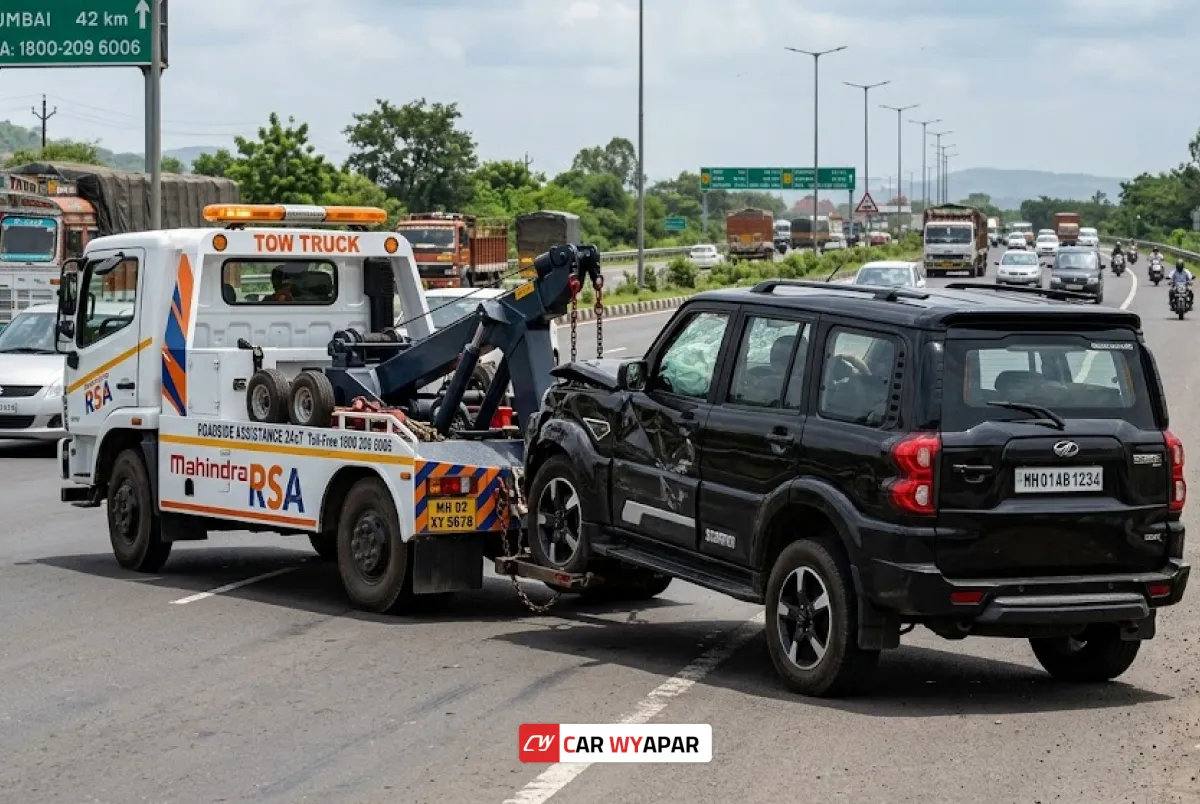
Your RSA provider usually does not own trucks. Not even one.
They are not a fleet company. They are a middleman. A broker. When you call, your problem gets pushed into a system. That system sends your request to local drivers. Then it becomes a bidding game.
Whoever agrees for the lowest payout takes your case.
The driver is not your provider’s employee. He is a freelancer trying to make his day work. And the payout he gets for your “emergency rescue” is often between ₹300 and ₹500.
That is less than what many people spend on dinner.
Now think from his side. Would you drive 25 km in traffic, late at night, for ₹400? Probably not. So what happens?
Drivers reject the job.
Your request keeps bouncing.
You are not being rescued. Instead, You are being circulated.
2. That ETA on Your App Is Hope, Not Data
“Technician arriving in 23 minutes.”
This line should come with a warning label.
Because that ETA is not based on reality. It is based on ideal conditions. Empty roads, perfect weather, and a driver magically waiting nearby.
In real India, that does not exist.
What actually happens is simple.
The system assigns your case. The driver checks distance, traffic, and payout. If it does not make sense, he ignores it. The system then looks for another driver.
Meanwhile, your app still shows a neat countdown.
In cities, wait time can stretch to 60 to 90 minutes.
In highways or rural areas, it often becomes 2 to 3 hours.
And here is the part that hurts.
Every time a new driver accepts your case, your ETA resets. So when you call support and they say, “Sir, help is 20 minutes away,” what they really mean is, “We found someone new, again.”
You are not waiting for help. You are waiting for acceptance.
3. Distance Is Where the Truth Comes Out
Let’s talk numbers, because this is where most people get surprised.
Drivers are usually paid ₹20 to ₹35 per km just to reach you. This is called a dead run. They are not even towing yet. They are just coming to you.
So if you are 30 km away, the driver earns maybe ₹600 to ₹1,000 just to show up.
Now remember, the total payout per job is still low.
So drivers avoid long distance calls. Or they delay them. Or they pick shorter jobs first.
This is why your “priority” case does not feel like priority.
Distance is not just geography. It is economics.
4. “Unlimited Towing” Is a Cute Joke
If you read the brochure, it sounds amazing.
Unlimited towing. Full support. Zero worry.
Now read the fine print.
Most policies cover free towing up to 20 to 50 km. And that too, only to their partner garage.
Anything beyond that, you pay per km.
Rates usually fall between ₹50 and ₹80 per km.
Let’s do simple math.
Your car breaks down 100 km from your home.
Free towing is 20 km.
Remaining distance is 80 km.
You end up paying ₹4,000 to ₹6,400.
That “unlimited” word suddenly feels very limited.
Also, you usually cannot choose your own garage. They will take your car where they have tie ups. That might not be where you trust.
So you are not just paying more. You are also giving up control.
5. Battery Jump Starts Are Not Always Safe
This one is risky and often ignored.
Many RSA partners use low cost portable jump starters. These are easy to carry and cheap to buy. But they are not always handled properly.
A wrong connection can cause a voltage spike. Reverse polarity can damage electronics.
Modern cars are not simple machines anymore. They have ECUs, sensors, and sensitive wiring.
One bad jump can damage your alternator or ECU.
Repair cost can go from ₹25,000 to ₹60,000.
And guess what.
The jump start is covered.
The damage is not.
Because in the agreement, liability is limited. You probably accepted it without reading.
So your “free help” can become a very expensive mistake.
6. Accident Recovery Sounds Strong, Until You Need It
You might have seen “accident recovery” as an add on.
It feels reassuring.
But here is the catch.
Basic RSA usually covers simple towing after a breakdown. Not complex recovery.
If your car goes into a ditch, or off a slope, or needs a crane or winch, that is heavy recovery.
And heavy recovery is often not included.
Charges can go from ₹5,000 to ₹15,000 or more.
Also, if airbags are deployed, many providers classify it as a major accident. That can change how your case is handled.
So in your worst moment, you may hear, “Sir, this is not covered.”
Not what you want to hear when your car is half hanging somewhere.
7. The Call Center Knows Less Than You Think
When you call support, you expect control, clarity, and tracking.
Reality is different.
Most call centers do not have live GPS of the driver.
They rely on updates from the same system that is already struggling.
So when you ask, “Where is the driver?”, the answer is often generic.
“On the way.”
“Reaching soon.”
“Just 15 minutes.”
These are safe replies, not accurate ones.
And since drivers are independent, communication is not always smooth.
Sometimes your best source of truth is the driver’s own phone call, not the official app.
8. Payment Games Can Catch You Off Guard
Some RSA services work on reimbursement.
That means you pay first, then claim later.
Sounds fine, until you need it.
You are already stressed. Now you need to negotiate with a local driver, pay cash or UPI, keep bills, take photos, fill forms later, and hope the claim gets approved.
This is not assistance. This is paperwork with stress.
Always check this before buying.
Because in the moment, you will not have the patience for process.
9. Why the System Works Like This
Now you might ask, if everything is so messy, why does RSA exist like this?
Simple answer.
Margins are low.
You pay maybe ₹800 to ₹2,500 per year.
From that, the provider needs to cover operations, call center, tech, and payouts.
So they keep costs tight.
They do not own fleets because that is expensive.
They rely on local networks because that is flexible.
It is not designed for perfection. It is designed for scale.
Most people will never use RSA in a year. So the system works on average, not on worst cases.
The problem is, when you need it, you are the worst case.
10. What You Should Actually Do Before Buying RSA
This is where you take control.
Do not just tick the add on box during insurance purchase.
Ask questions. Real ones.
What is the exact free towing distance?
What is the per km charge beyond that?
Is there a total cap on towing cost?
Do they have owned fleet in your region?
Can you choose your own garage?
Is payment direct or reimbursement?
Do they cover waiting time for delays?
If answers are vague, that is your signal.
Clarity now saves stress later.
11. Smart Backup Plan, Because RSA Alone Is Not Enough
Think of RSA as one layer, not the whole safety net.
Keep a few local tow numbers saved in your phone. Especially if you travel highways often.
Join car owner groups in your region. People share trusted contacts.
Carry a good quality jump starter if you can. Learn basic usage.
Keep emergency cash or UPI ready.
And most important, keep your car maintained. Many breakdowns are preventable.
RSA should be your backup, not your only hope.
Final Reality Check
RSA is not fake. It does work. Many people get help on time and move on.
But it is not the hero shown in ads.
It is a system built on low cost networks, variable quality, and practical compromises.
You pay a small fee.
The provider manages thousands of calls.
Drivers work on tight margins.
Delays happen.
Extra charges appear.
That is the real trade off.
So next time you see that perfect rescue ad, remember something simple.
They cut the scene before the waiting started.
And sometimes, before help arrived, the system already decided your case was closed.
“System mein aapka case band ho gaya.”
Not a line you forget easily.
And definitely not what peace of mind sounds like.