










Can Nissan Tekton Revive Nissan? A Detailed Analysis by CarWyapar's Co-founder
By Zeeshan A Aqudus • Published on 12 Jul 2026The Renault Duster wasn't an emotional icon like the Ambassador or Maruti 800. But for a specific generation of SUV buyers, it was a game-changer. Be...
The Renault Duster wasn't an emotional icon like the Ambassador or Maruti 800. But for a specific generation of SUV buyers, it was a game-changer.
Before the Duster, you had two choices: a comfortable hatchback/sedan that struggled on bad roads, or a rugged body-on-frame SUV that drank fuel like a thirsty camel. The Duster said "why not both?" It offered a monocoque ride quality, high ground clearance, and car-like handling in one package.
Duster was a market shaper. Renault sold nearly 40,000 units in its first year and eventually crossed 2 lakh sales. More importantly, it proved that Indians would spend over ₹10 lakh on a crossover that looked tough, drove well daily, and handled broken roads without complaint.
For about three years, the Duster owned the segment. Then Hyundai launched the Creta in 2015, and the game changed. The Creta brought more features, a plusher cabin, and a more premium feel. It didn't kill the Duster overnight, but it gradually became the segment king. Still, credit where it's due: the Duster created the appetite; the Creta just served a more polished meal.
Given the Renault-Nissan alliance, it was inevitable that Nissan would get its own Duster sibling. That was the Terrano.
It got a different front end, a slightly nicer interior, and Nissan branding. But underneath, it was essentially the same car. The problem? The Duster had already built a stronger brand identity. The Terrano always felt like the backup dancer and not the lead. It sold in decent numbers but never escaped the Duster's shadow.
Then came the part that disappointed many SUV enthusiasts.
Despite its strong reputation, the Duster was beginning to show its age. Customer expectations had changed rapidly. Buyers now wanted panoramic sunroofs, connected car technology, ADAS, larger touchscreens, premium interiors, six airbags, automatic transmissions, and higher safety ratings. The Duster continued to shine where it always had, ride quality, handling and mechanical robustness, but it started falling behind on features.
There was another challenge. The Indian market had moved to stricter BS6 emission norms, and updating the ageing platform to meet future safety and emission regulations would have required significant investment. Renault had a choice: heavily re-engineer an old product or move to an all-new generation.
The company chose the latter.
Production of the first generation Duster in India ended in 2022 after a successful run of around a decade. It marked the end of one of the most influential SUVs India has seen, but it also left a noticeable gap in Renault's lineup.
For Nissan, the decision was even more straightforward.
The Terrano existed because the Duster existed. Both SUVs shared the same B0 platform, powertrains, manufacturing line, and much of their engineering under the Renault-Nissan Alliance. Once Renault decided to retire the Duster, the business case for the Terrano disappeared as well.
Unlike the Magnite, which was developed as a distinct Nissan product, the Terrano never had an independent identity. It depended almost entirely on the Duster for its existence. Without its French sibling, the Japanese cousin had nowhere to go.
For the next few years, both brands were missing from one of India's most important segments. Renault no longer had the SUV that had built its reputation, and Nissan had no direct rival to the Hyundai Creta, Kia Seltos, Maruti Grand Vitara, Toyota Hyryder, Volkswagen Taigun, Skoda Kushaq, Honda Elevate, or MG Astor.
That absence was expensive.
The midsize SUV segment kept growing while Renault and Nissan watched from the sidelines. Every year they stayed away, rivals strengthened their products, improved technology, expanded dealer networks, and built stronger customer loyalty.
Now, both brands are preparing for a second innings.
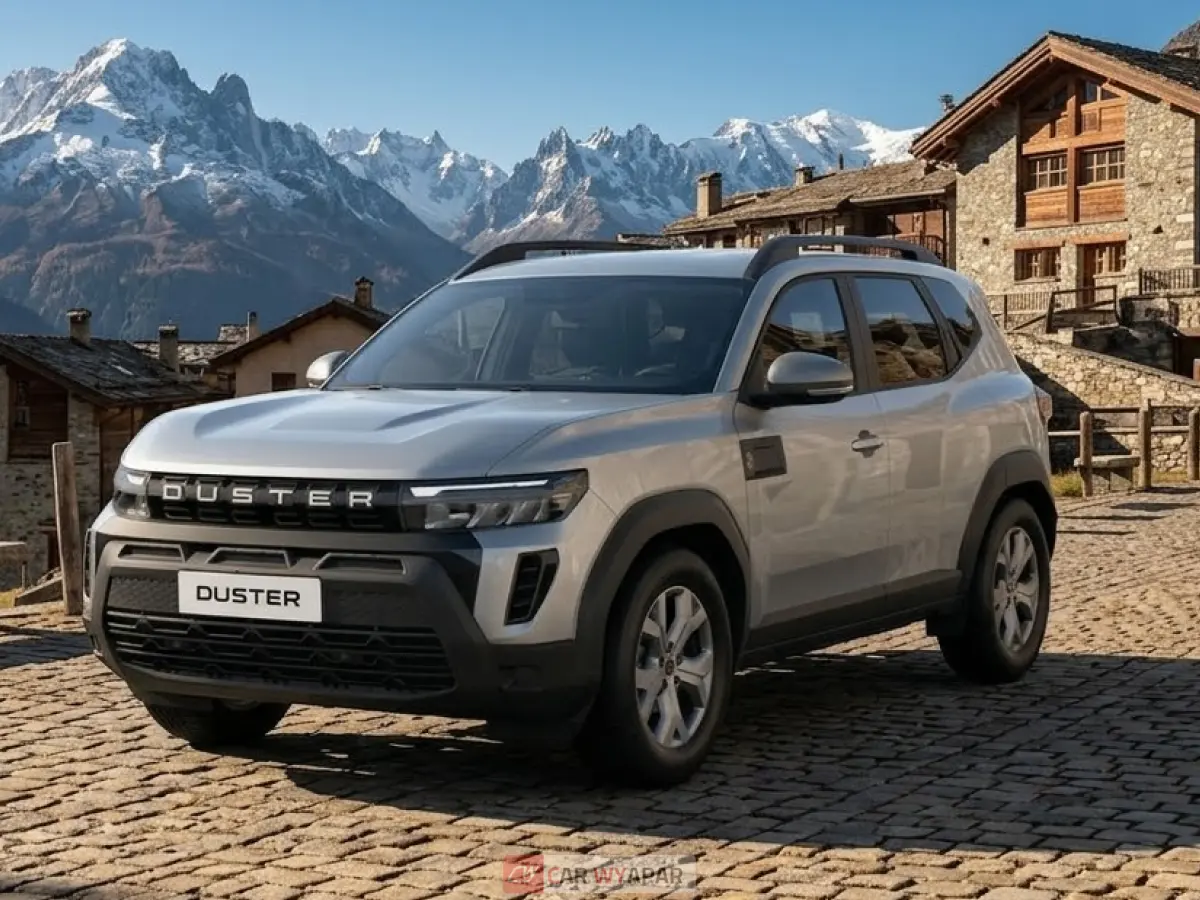
The second innings of the Duster is very different from the first.
When Renault first launched the Duster in 2012, the market was still discovering the midsize SUV. Today, the same segment is crowded with products like the Hyundai Creta, Kia Seltos, Maruti Grand Vitara, Toyota Hyryder, Honda Elevate, Volkswagen Taigun and Skoda Kushaq. Simply bringing back an old name was never going to be enough.
Renault knew that.
The new Duster has been re-engineered from the ground up on the Renault Group Modular Platform (RGMP), the India-specific version of the CMF-B architecture. Compared to the old B0 platform, the new architecture is stiffer, lighter and designed for electrification, future safety regulations and cleaner emissions.
The biggest change lies under the bonnet.
Renault is offering three powertrain options, each aimed at a different buyer. The range starts with the 1.0-litre Turbo TCe 100, producing 100 PS and 166 Nm, paired with a 6-speed manual. Buyers looking for stronger performance get the 1.3-litre Turbo TCe 160, delivering 163 PS and 280 Nm, available with either a 6-speed manual or a 6-speed dual-clutch automatic. Later this year, Renault will also introduce the Strong Hybrid E-Tech 160, which combines a 1.8-litre petrol engine with two electric motors and a 1.4 kWh battery pack, making the Duster one of the few strong hybrid SUVs in its class.
The 1.3-litre turbo deserves a special mention.
It is based on the HR13DDT engine, jointly developed by the Renault-Nissan Alliance and Mercedes-Benz. Indian buyers have already experienced versions of this engine in the earlier Renault Duster Turbo, Nissan Kicks and Mercedes-Benz A-Class, GLA and CLA. It has earned a reputation for being smooth, refined and effortlessly strong in the mid-range, exactly the kind of character enthusiasts appreciated in the original Duster.
Renault has also ensured that the new Duster is ready for the next decade. The SUV is compatible with E20 petrol, complies with the latest BS6 Phase 2 emission norms, and has been engineered keeping future regulations in mind.
Then comes safety, something Indian buyers no longer treat as a luxury.
A decade ago, buyers asked about alloy wheels and touchscreens. Today, they ask about crash ratings before signing the cheque. Renault says the new platform has been engineered with a 5-star crash safety target, while the SUV also packs a comprehensive ADAS suite, multiple airbags, electronic stability control and other active safety systems. In today's market, these are no longer premium features, they are the minimum expectation for a family SUV.
Thankfully, Renault has not forgotten the Duster's biggest strength, its personality.
Instead of chasing the soft, urban crossover look, the company has retained the Duster's rugged DNA. The upright stance, muscular wheel arches, chunky body cladding, generous ground clearance and squared-off proportions immediately remind you that this is meant to look like an SUV first and a family car second. That visual toughness was one of the reasons buyers fell in love with the original Duster, and Renault has wisely chosen not to dilute it.
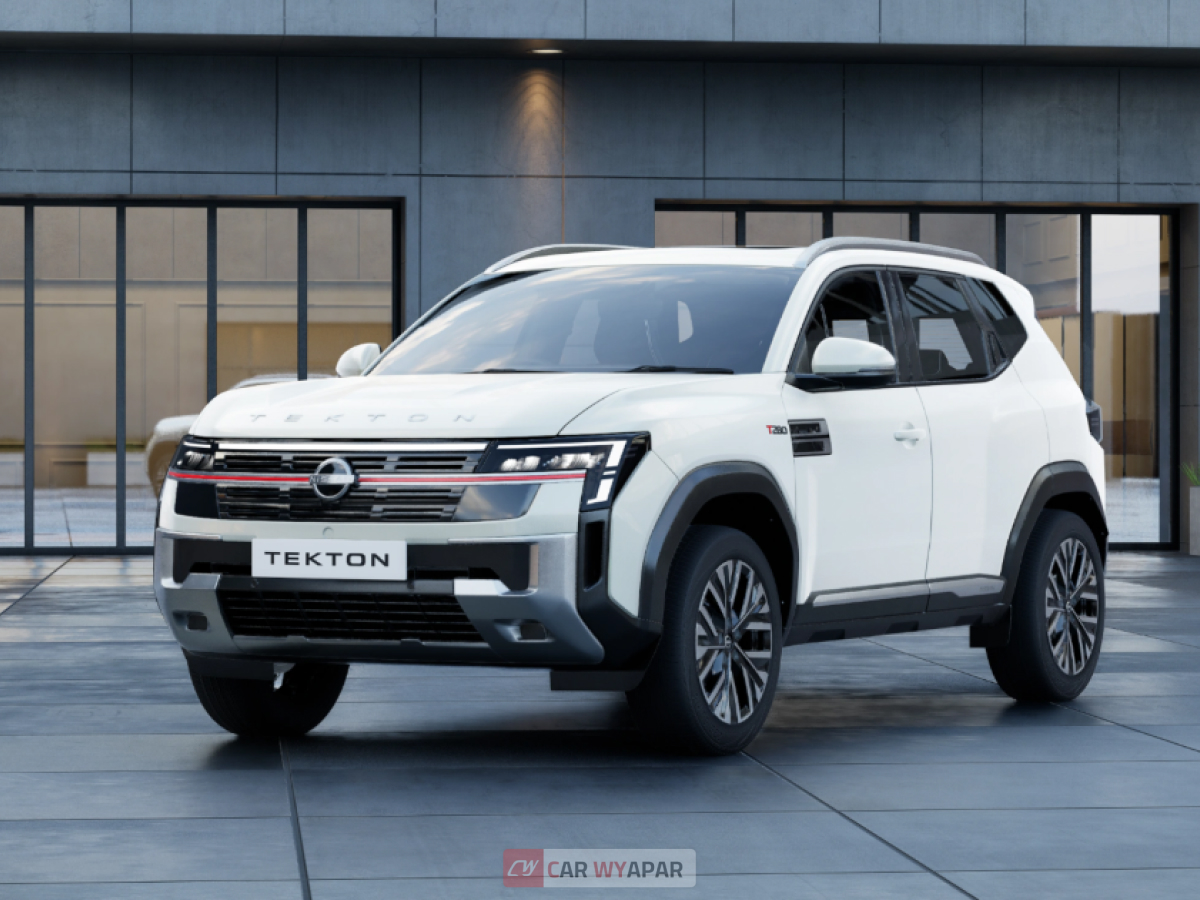
Nissan Still Lives in the Duster's Shadow, Can the Tekton Finally Step Out?
This is where Nissan faces its biggest challenge, and it has very little to do with the product itself.
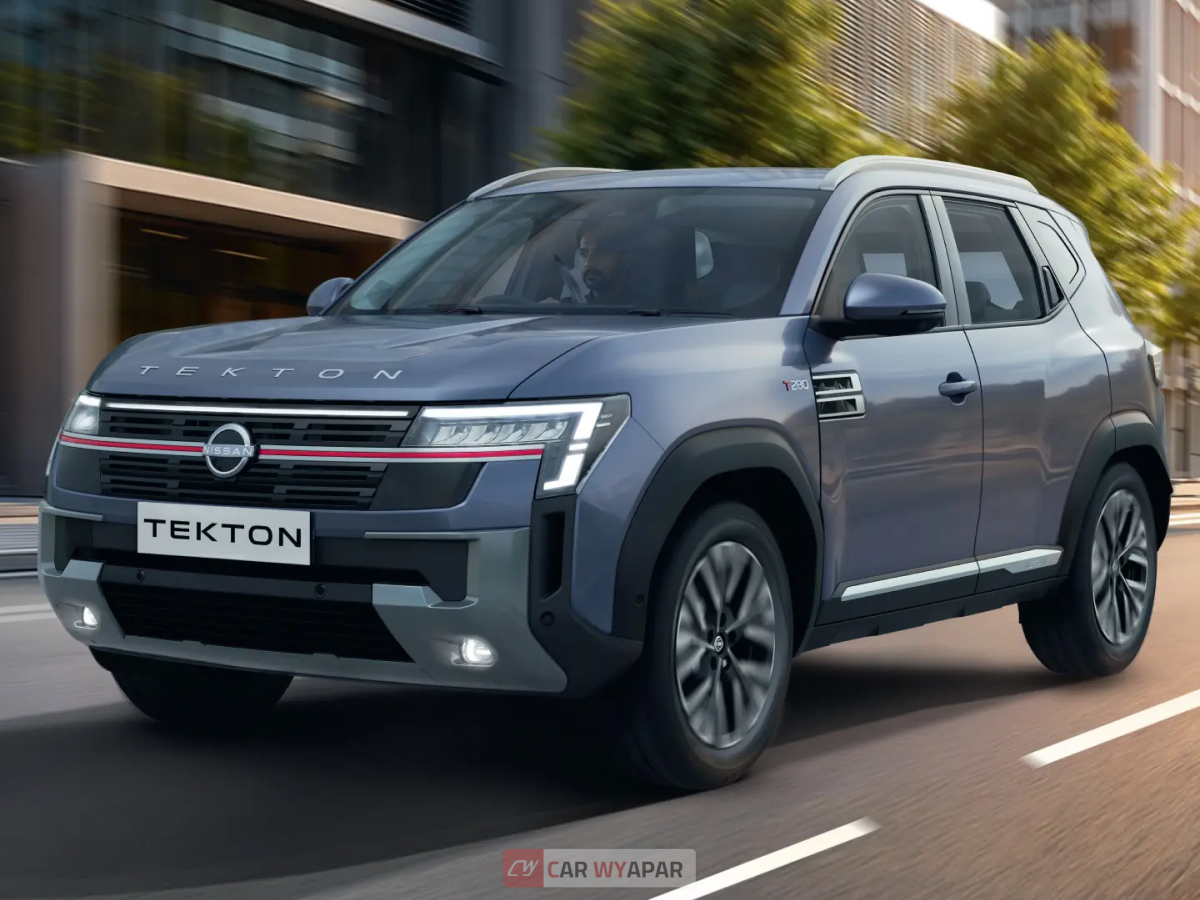
On paper, the Nissan Tekton and the Renault Duster are remarkably similar. They share the same platform, similar powertrains, comparable dimensions and are expected to be priced in almost the same bracket. In other words, Nissan is once again following the same playbook that gave birth to the Terrano.
The difference is that the market has changed, and so has buyer psychology.
Renault has spent over a decade building the Duster name in India. Even after it disappeared from showrooms, enthusiasts continued asking for its return. The Duster carries nostalgia, credibility and a proven track record. Buyers know what it stands for.
The Tekton, on the other hand, starts with a clean slate.
That is both an advantage and a disadvantage.
Nissan's footprint in India is relatively small compared to Hyundai, Kia, Tata, Mahindra and even Renault. Its portfolio has largely depended on the Magnite in recent years, while products like the Kicks and Terrano quietly exited the market. Fewer dealerships, lower brand visibility and limited mindshare mean many buyers simply don't walk into a Nissan showroom first.
Now imagine a customer with a budget of around ₹15 to ₹20 lakh.
They discover that both the Duster and Tekton offer similar engines, similar dimensions, similar safety credentials and nearly identical pricing. Their first question is unlikely to be, "Which one has the better grille?" Instead, it will be, "Why should I buy the Nissan over the Duster?"
That is a difficult question to answer if both products deliver almost the same value.
Most buyers naturally gravitate towards the familiar name. The Duster has years of goodwill behind it. The Tekton has to earn that trust from day one.
This is exactly what happened with the Terrano. It was not a bad SUV. In fact, it inherited all the strengths of the Duster. But when customers realised both vehicles shared the same mechanicals, most chose the original because it had already established itself as the authentic product.
The Tekton cannot afford to repeat that story.
Nissan must convince buyers that the Tekton is more than a badge-engineered Duster. Whether that comes through a more premium interior, better feature packaging, exclusive technology, superior after-sales experience or a stronger ownership proposition, there has to be a compelling reason to choose the Nissan.
Otherwise, history may repeat itself, and once again, the Duster could end up becoming the default choice while the Tekton remains in its shadow.
The Tekton Isn't Fighting Just the Duster, It Is Fighting Established Habits
If competing with the Duster wasn't difficult enough, the Tekton enters one of the toughest segments in the Indian automotive market.
Every major manufacturer already has a strong contender, and more importantly, each one owns a clear space in the buyer's mind.
The Hyundai Creta has become the default choice for many families. It is known for its premium cabin, feature-loaded variants, wide service network and strong resale value.
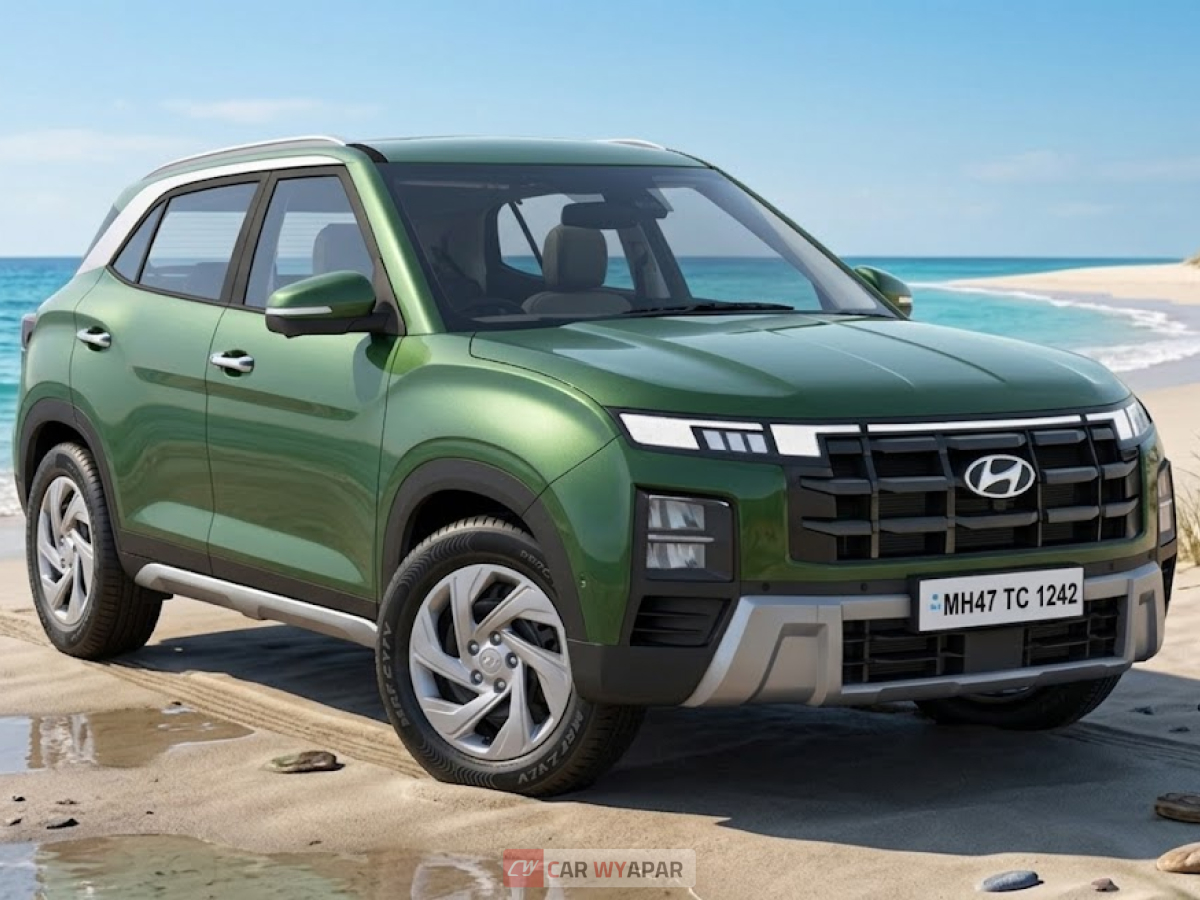
The Kia Seltos appeals to buyers looking for sporty styling, modern technology and a premium ownership experience. Over the years, Kia has built a strong identity in this segment instead of being seen as just Hyundai's cousin.
The Maruti Grand Vitara has become the obvious choice for buyers who prioritise fuel efficiency and long-term running costs. Its strong hybrid powertrain consistently delivers excellent mileage, backed by Maruti Suzuki's unmatched service network and resale value. Even if the Tekton offers a more exciting turbo-petrol engine, a buyer whose first priority is fuel economy is likely to walk straight into a Maruti showroom.
Then comes the Tata Sierra, another SUV carrying decades of nostalgia. While the new Sierra is an entirely modern product, the name itself already resonates with Indian buyers. Tata also enjoys a significantly stronger market presence today than Nissan, giving the Sierra a head start even before customers compare specifications.
This is where buyer psychology becomes fascinating.
Very few customers buy a ₹15 to ₹20 lakh SUV after comparing engine output, suspension geometry or chassis architecture. Most buy a story.
They buy the confidence of a familiar brand, a trusted service network, recommendations from friends, higher resale value and the comfort of choosing a name they have heard for years.
That is where Nissan has the biggest mountain to climb.
There is little doubt that the Tekton is a capable product. On paper, it matches its rivals in performance, technology, safety and overall quality. In several areas, especially driving dynamics and turbo-petrol performance, it may even have an edge.
But buying decisions are rarely made on specifications alone.
The question is not whether the Tekton has the features.
The question is whether the Nissan badge has enough pull to convince a customer to overlook the familiarity of a Creta, the fuel-saving reputation of a Grand Vitara, the premium image of a Seltos, the nostalgia of a Sierra, or even the legacy of the Duster.
That, more than horsepower or touchscreen size, may decide whether the Tekton becomes Nissan's comeback story or another excellent SUV that struggled to find enough buyers.
Footnotes: Duster Vs Tekton