









After MG Motors, Chinese Giant Chery Enters India
By Nitesh Yadav • Published on 6 Mar 2026For years, MG Motors stood as the primary bridge between Chinese automotive innovation and Indian roads. But the landscape is shifting. In a move that...
For years, MG Motors stood as the primary bridge between Chinese automotive innovation and Indian roads. But the landscape is shifting. In a move that mirrors the strategic entry of MG, another global powerhouse—Chery Automobile—has officially set its sights on India.
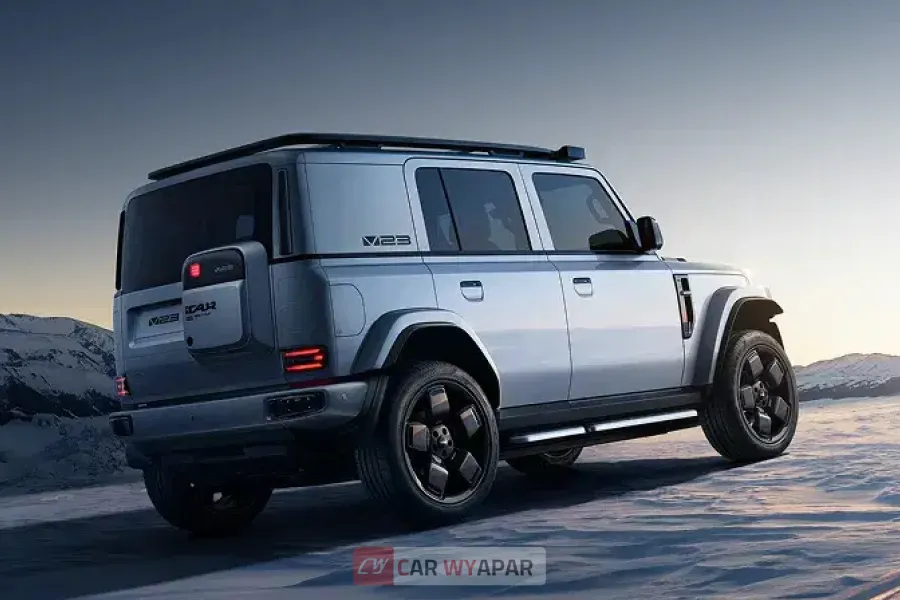
Through a massive collaboration with the JSW Group, Chery isn't just bringing cars; they are bringing a "neo-retro" revolution. Leading the charge is the Chery iCar V23 (spotted testing at ARAI Pune just this week), a boxy, all-electric SUV that looks like a Land Rover Defender had a child with a Mercedes G-Wagon.
But why now? And can this JSW-Chery alliance replicate the "Hector effect" that put MG on the map?
For years, the Indian automotive market was a fortress dominated by domestic and Japanese-Korean giants. The very idea of Chinese cars entering the fray was met with skepticism, if not outright resistance. Yet, in a quiet but determined campaign, Chinese automakers have not only entered the market but are now on the cusp of redefining it. The story of this gradual conquest is a masterclass in strategy, adaptation, and understanding the Indian consumer—a story that began in earnest with MG and is now entering a thrilling new chapter with Chery.
When MG (Morris Garages) Motor India launched its first car, the Hector, in June 2019, it was a gamble. The brand, though British by birth, was owned by China's SAIC. The question loomed: Would India welcome a Chinese-backed SUV? The answer came resoundingly in the form of over 21,000 bookings within its first month.
Having established trust with the Hector, MG began its slow but deliberate pivot towards its true ambition: electrification. The strategy was to move step-by-step, introducing electric vehicles (EVs) not as a shock to the system, but as a natural evolution.
The journey began with the ZS EV, India's first pure-electric internet SUV, which offered a premium, long-range option . But the real game-changer was the two-pronged approach with the Comet EV and the Windsor.
MG understood the two biggest hurdles for Indian EV buyers: range anxiety and battery life, especially in extreme Indian weather. To solve this, they did something unprecedented. They invested in a state-of-the-art in-house battery assembly plant at their Halol facility in Gujarat . Here, in a facility run predominantly by women, Lithium Iron Phosphate (LFP) cells are meticulously tested, wrapped in insulating foam, and assembled into battery packs designed specifically for Indian conditions .
The BaaS Revolution: Redefining Ownership
MG's masterstroke wasn't just technological; it was financial. With the launch of the Windsor, and later extending it to the Comet and ZS EV, MG introduced the Battery-as-a-Service (BaaS) program . This model decoupled the battery cost from the car, slashing the upfront purchase price dramatically.
For instance, the Comet EV became accessible for just ₹4.99 lakh (excluding battery rental), with a usage fee of ₹2.5 per kilometer . The ZS EV followed suit with an entry price of ₹13.99 lakh and a rental of ₹4.5 per km .
This was a masterstroke. It addressed the core fear of battery degradation and high replacement costs. To further sweeten the deal, MG offered an industry-first assured 60% buyback value after three years . This gave customers an unprecedented level of confidence, transforming the EV from a speculative purchase into a sound financial decision.
The result has been phenomenal. The Windsor has become the fastest-selling EV in India, leading MG's portfolio with over 3,500 units sold monthly, while the Comet has seen a massive 63% year-on-year growth, signaling a deep and growing trust in the brand and its technology .
Chery Partners with JWC
Just as JSW MG Motor India—now a powerful joint venture between JSW Group and SAIC—cements its place in the market, a new dragon is ready to land. Chery, another Chinese automotive giant, has entered the fray through a strategic partnership with the JSW Group to launch vehicles under the JSW Motors brand .
And this time, they're not here to just participate; they're here to disrupt the status quo with a two-pronged attack launching around Diwali 2026 .
1. The Jetour T2 i-DM: The Premium PHEV Pioneer
The first salvo will be the Jetour T2 i-DM, a rugged, boxy, premium mid-size SUV that will be introduced exclusively as a Plug-in Hybrid Electric Vehicle (PHEV) . This is a bold move in a market where the PHEV segment is virtually non-existent. With its imposing design reminiscent of off-road icons, it will measure over 4.7 meters in length, making it larger than a Tata Safari .
Powered by a 1.5-litre turbo-petrol engine mated to a strong hybrid system and a 26.7 kWh battery pack, it promises a pure electric range of 139 km . Expected to be priced around ₹35 lakh, the T2 will offer a unique proposition: the everyday efficiency of an EV with the range confidence of a petrol SUV, directly challenging the dominance of diesel SUVs in the premium segment .
2. The Chery iCar V23: The Retro-Modern EV for the Masses
Hot on the heels of the T2 will be the Chery iCar V23 . This compact electric SUV sports a trendy, retro-modern design inspired by classic off-roaders like the Toyota Land Cruiser. With a length of around 4.2 meters, it will compete directly with the upcoming wave of mass-market electric SUVs like the Maruti Suzuki e Vitara and the Hyundai Creta Electric .
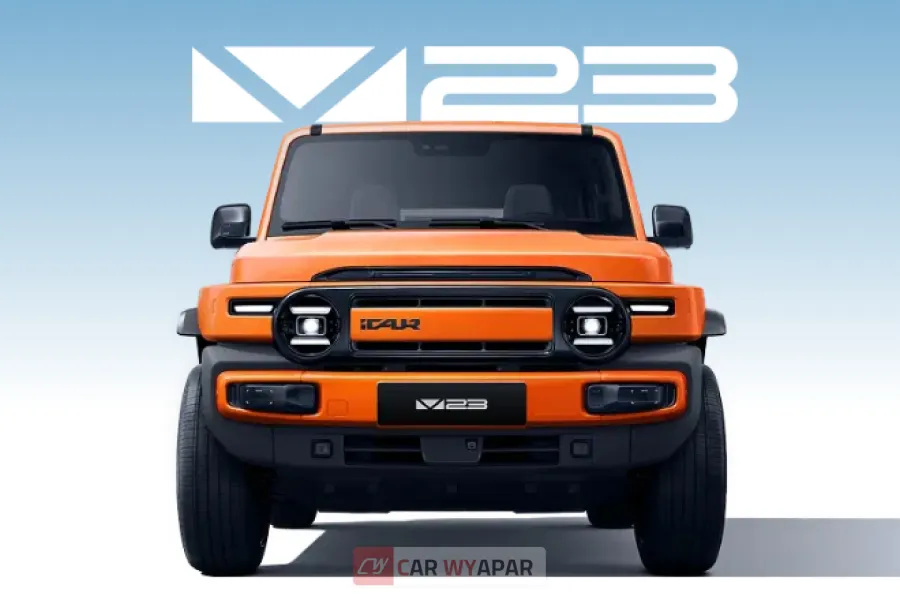
Globally, it is offered with multiple battery and motor options, including a dual-motor all-wheel-drive version, promising a range of over 400 kilometers . Its 5-star ASEAN NCAP safety rating and modern, tech-loaded cabin make it a formidable contender that could finally make electric mobility aspirational and accessible to the Indian middle class.