
















2026 Hyundai Verna Facelift Review: The New "HX" King Dethrones the Virtus?
By Gaurav Cyril • Published on 10 Mar 2026Hyundai is currently on a tech-blitzkrieg, and honestly, as an automotive journalist, it feels like they’re mainlining caffeine shots directly into th...
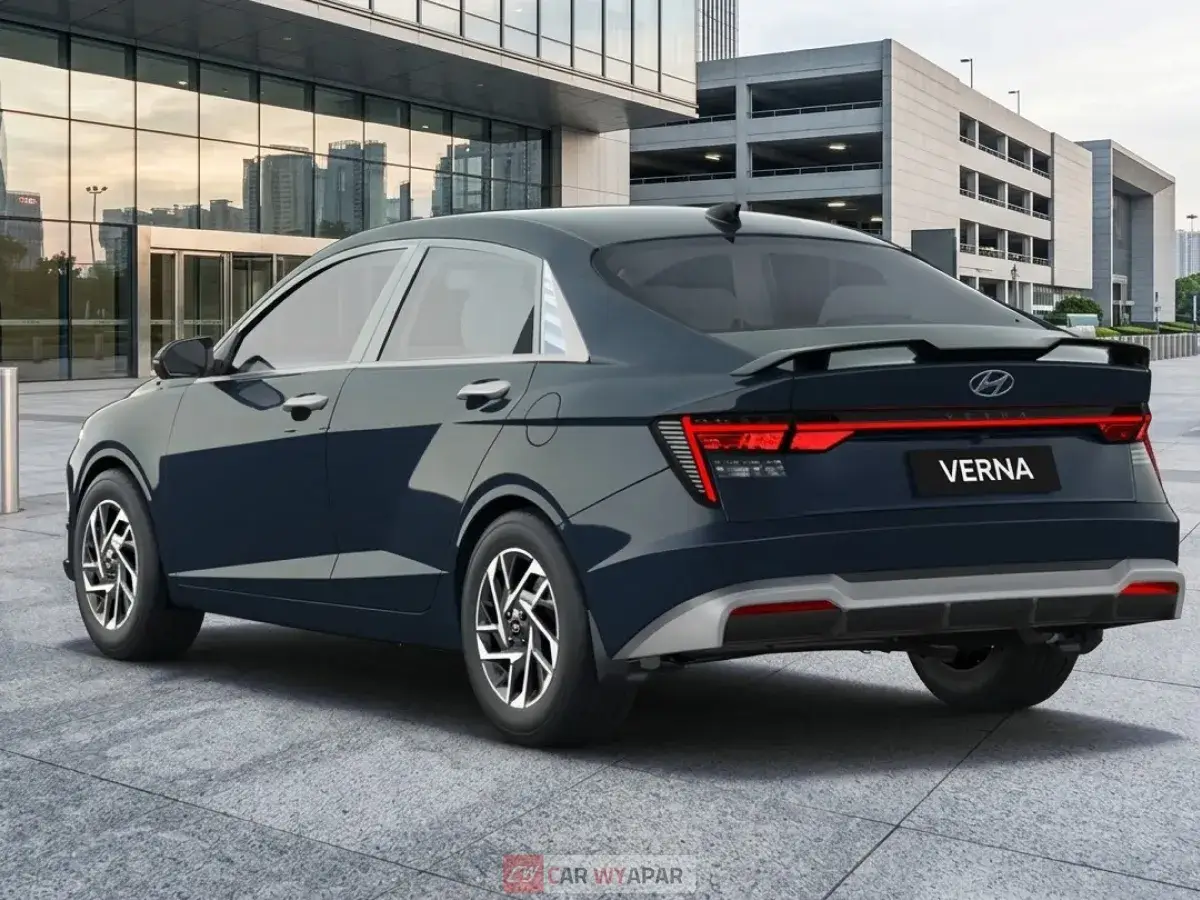
Hyundai is currently on a tech-blitzkrieg, and honestly, as an automotive journalist, it feels like they’re mainlining caffeine shots directly into their ECU software. It started with the new-gen Venue, which arrived with a feature list so long it needed its own ISBN number, and now, finally, the wait is over for sedan loyalists. The 2026 Verna facelift has stepped into the ring, and it’s brought along that same dizzying array of gadgets and a completely new identity. To prove they’ve been watching too much "Silicon Valley" (affectionately), Hyundai has decided to ditch the old-school jargon for their trims. Say goodbye to SX and Asta; we now live in a world of alphanumeric soup where the Verna is coded with HX names like HX2, HX4, and the flagship HX10 . It sounds less like a car variant and more like a serial number for a forgotten droid in Star Wars.
Decoding the Verna Matrix: HX 2 to HX 10 Explained
If you thought Hyundai was done playing games with the new HX nomenclature, buckle up, because the lineup is deeper than a philosopher’s podcast. The 2026 Verna isn’t just a car; it’s a six-course meal with options for every appetite. Based on the official brochure that just landed on my desk, the Verna is available in six distinct trims, and just to keep us on our toes, they’ve mixed in some powertrain plot twists that would make a thriller writer proud.
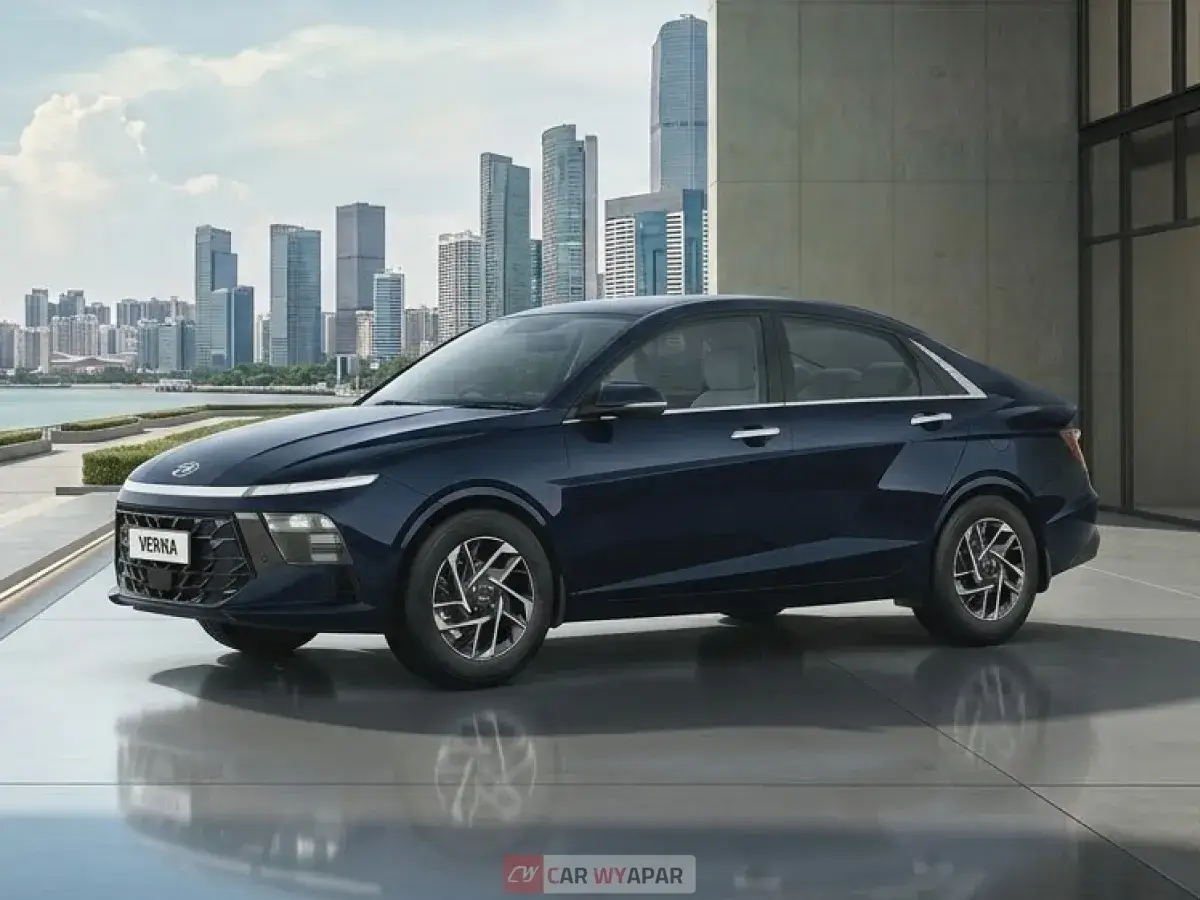
Here is the complete lineup of variants you can walk into a showroom and order:
HX 2
HX 4
HX 6
HX 6+
HX 8
HX 10
Now, before you ask, no, there isn’t an HX 12 or HX 1—at least, not yet. But what’s interesting is how these alphanumeric badges align with your ambition... and your budget. The lineup is cleverly split between the sensible 1.5 MPI petrol and the feisty 1.5 Turbo GDi petrol.
The naturally aspirated 1.5 MPI (115 PS) is your go-to for variants HX 2 through HX 8, available with either a 6-speed manual or an Intelligent Variable Transmission (IVT). But if you want the full 160 PS party piece from the Turbo GDi, you’ll have to start at HX 8, which offers a manual gearbox, or jump straight to the flagship HX 10 if you want that slick 7-Speed DCT.
Hyundai Verna Variants: Standout Features at a Glance
|
Variant |
Engine Options |
Transmission |
Standout Exterior Features |
Standout Interior & Comfort Features |
Standout Tech & Safety Features |
|---|---|---|---|---|---|
|
1.5 MPI Petrol |
6-Speed MT |
• Projector Headlamps |
• Dual-Tone Interiors |
• Dual Airbags (Driver & Passenger) | |
|
1.5 MPI Petrol |
6-Speed MT / IVT |
• R15 Silver Alloys |
• 8-inch Touchscreen System |
• Rear View Camera | |
|
1.5 MPI Petrol |
6-Speed MT / IVT |
• Dual LED Projector Headlamps |
• Electric Sunroof |
• Side & Curtain Airbags | |
|
1.5 MPI Petrol |
6-Speed MT / IVT |
(Adds to HX 6 features) |
• Rear Center Armrest |
• Front Row Ventilated Seats | |
|
1.5 MPI Petrol |
6-Speed MT / IVT (MPI) |
• Dark Grey Alloys (Turbo) |
• 10.25" Digital Instrument Cluster |
• Bluelink Connected Car Technology | |
|
1.5 MPI Petrol |
IVT (MPI) |
• (All HX 8 features) |
• Electric 8-Way Driver Seat with Memory |
• Level 2 ADAS (Hyundai SmartSense) |
Now for the million-rupee question that every sedan enthusiast is asking: how does this feature-packed, tech-loaded Verna stack up against the old guards—the Volkswagen Virtus and the Maruti Suzuki Ciaz? I spent some time poring over the brochures and the latest comparison data, and here is the reality check.
Comparision of Verna, Virtus and and Ciaz
Let's start with the elephant in the room: the Ciaz. To put it politely, this comparison is a bit of a mismatch . The Maruti Suzuki Ciaz is the value-for-money champion of the segment, starting at a tempting ₹9.09 lakh, and it sips fuel like a monk drinks water with its claimed 20.04 kmpl . But in every other measurable parameter, the Verna simply runs away with the trophy. The Ciaz's 1.5-litre K15 engine produces a modest 103 bhp, which is 57 bhp shy of the Verna's turbo petrol . More importantly, the safety gap is a chasm. While the Verna now offers seven airbags (including a segment-first centre airbag) and Level 2 ADAS as standard on top trims, the Ciaz still makes do with just two airbags and no ADAS . It's like comparing a smartphone to a feature phone—both make calls, but only one can run your entire life.
The battle with the Volkswagen Virtus (and its cousin, the Skoda Slavia) is far more interesting and intellectually stimulating . This is where philosophy clashes. The Virtus is the enthusiast's darling, built on the legendary MQB-A0-IN platform that offers that solid "European" feel, precise steering, and a chassis that loves a twisty road. Its 1.5-litre TSI engine produces 150 PS, which is just 10 PS shy of the Verna's 160 PS . However, where the Verna fights back is with its torque figure—253 Nm compared to the VW's 250 Nm, and crucially, the Verna's peak torque kicks in earlier, from just 1,500 rpm, making it feel more urgent in city traffic.
Here is how the segment's heavyweights compare at a glance:
|
Feature |
2026 Hyundai Verna (Turbo) |
Volkswagen Virtus 1.5 TSI |
Maruti Suzuki Ciaz |
|---|---|---|---|
|
Max Power |
160 PS |
150 PS |
103 bhp |
|
Max Torque |
253 Nm |
250 Nm |
138 Nm |
|
Airbags |
Up to 7 (including centre) |
Up to 6 |
2 |
|
ADAS (Level 2) |
Yes (on HX10) |
No |
No |
|
Key Differentiator |
Tech & Feature Richness |
Driving Dynamics & Feel |
Value & Fuel Efficiency |
So, where does the Verna stand? It has successfully carved a unique identity for itself. It is the undisputed "Tech King" of the segment, offering features like a built-in dashcam, rear sunshade, and a 360-degree camera that the Germans don't . It's also the performance king on paper, with the highest power and torque figures . The Virtus and Slavia still hold the crown for steering feel and that intangible "involving" drive experience . The Ciaz, meanwhile, continues to cater to the budget-conscious buyer who prioritizes low running costs above all else .
 (1).webp)