

















2026 Hyundai Tucson Review: It's Boxy Art of Steel
By Gaurav Cyril • Published on 19 Aug 2026The 2026 Hyundai Tucson completely breaks away from soft curves, introducing a boxy design language built on Hyundai’s new "Art of Steel" styling dire...
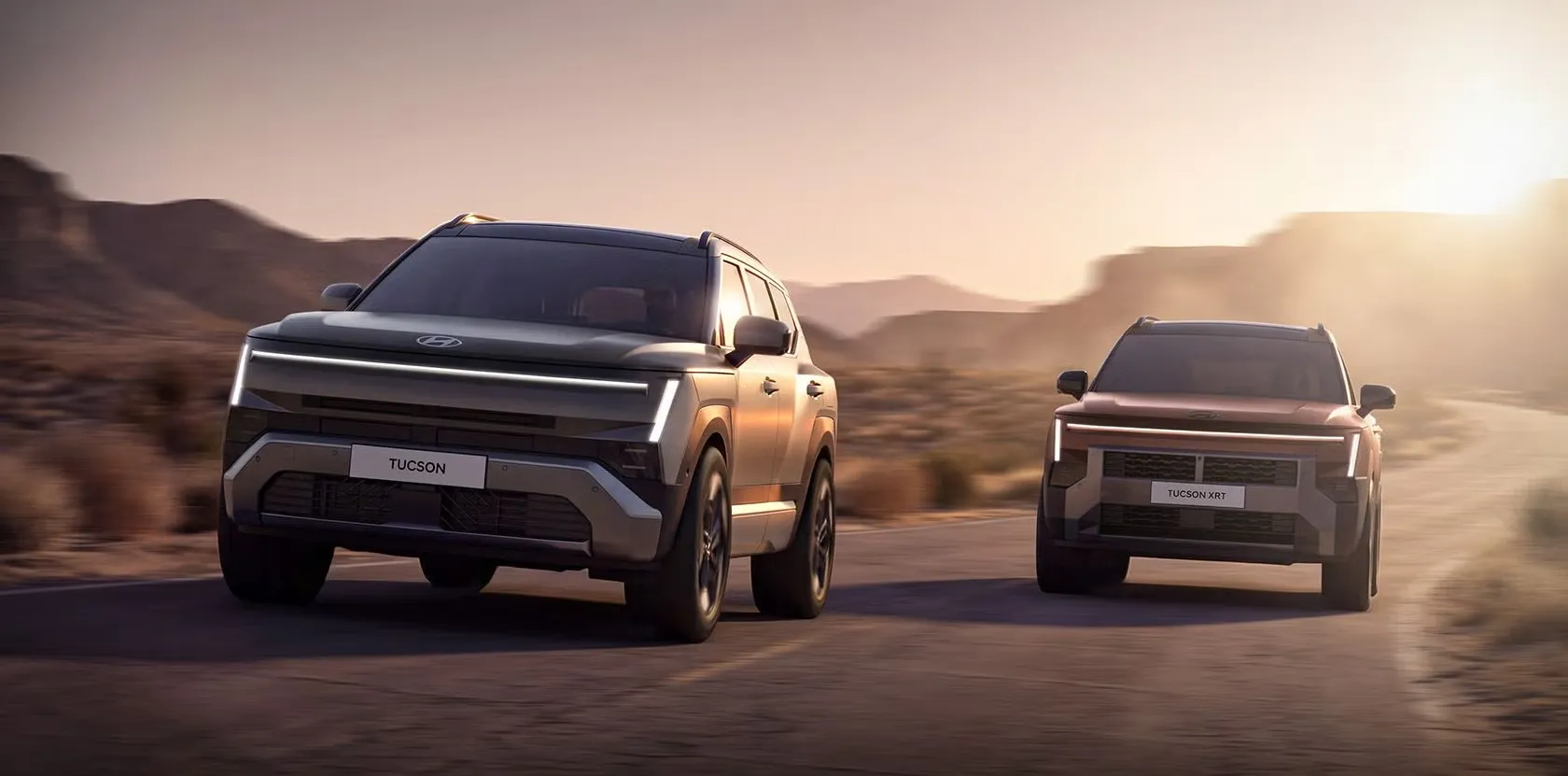
The 2026 Hyundai Tucson completely breaks away from soft curves, introducing a boxy design language built on Hyundai’s new "Art of Steel" styling direction. Inspired by futuristic blocky architectures, retro low-poly aesthetics, and the brand's rugged "chess piece" design philosophy led by Global Design Head SangYup Lee, the new Tucson Trades its predecessor's organic, jewel-patterned face for chiseled, upright proportions. This shift shapes Hyundai's evolving identity—moving from delicate, sweeping curves toward an assertive, utilitarian, and high-tech SUV lineup alongside the Santa Fe.
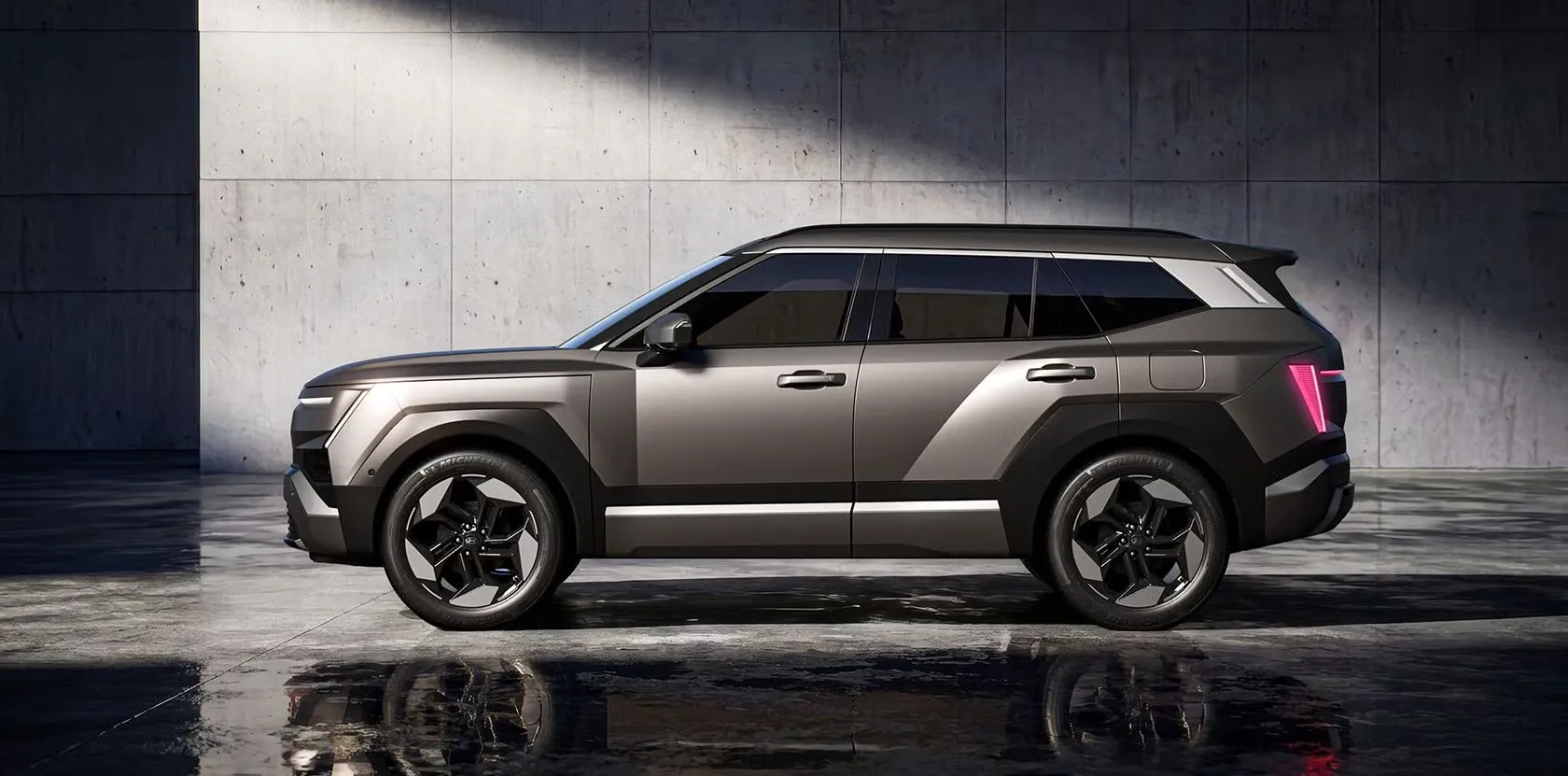
2026 Hyundai Tucson: What Has Changed?
The biggest change is the design.
The previous-generation Tucson followed Hyundai’s Sensuous Sportiness design philosophy. Its grille, lighting and body panels used flowing surfaces and complex geometric detailing.
The 2026 Tucson takes a more upright and architectural approach. Hyundai calls this direction Art of Steel. The design draws inspiration from blocky architecture, low-poly forms and the brand’s newer rugged SUV design direction.
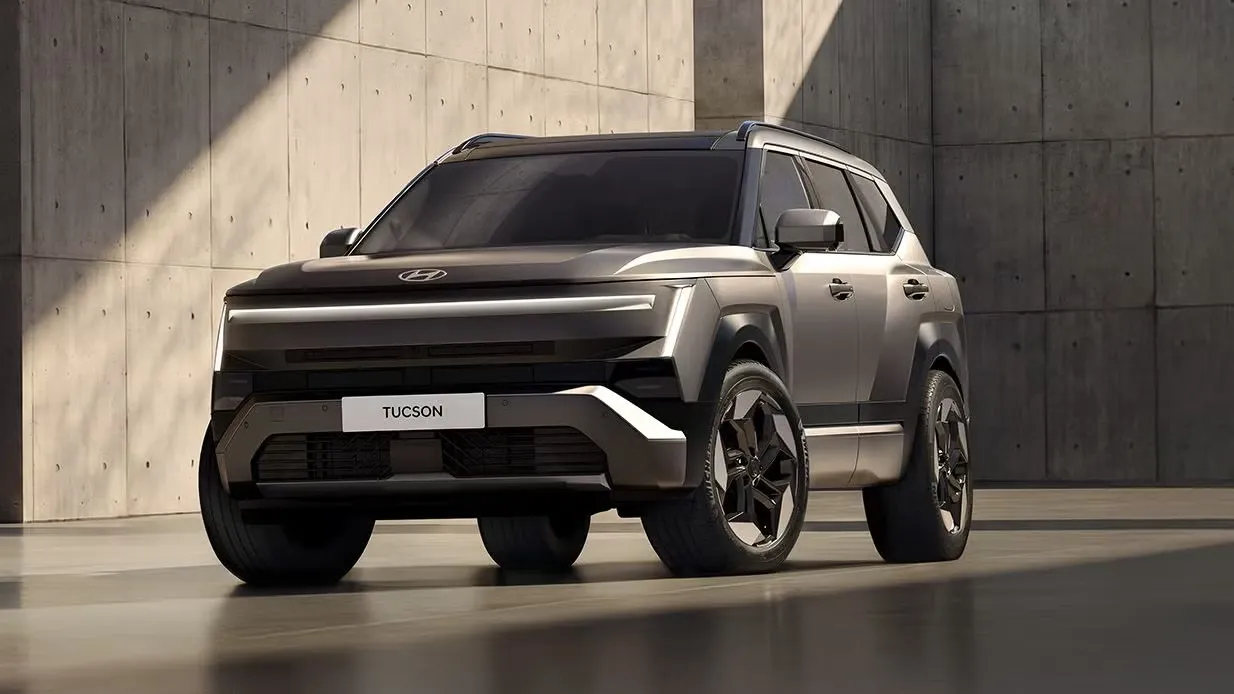
The result is a Tucson that looks wider, taller and more substantial.
The key changes include:
New boxy exterior design
Upright front fascia
Vertical H-edge LED daytime running lights
Square and flared wheel arches
Full-width rear lighting
Longer wheelbase
Wider body
New minimalist dashboard
Twin curved displays
Floating centre console
More rear-seat space
2026 Hyundai Tucson vs Previous Generation
|
Feature |
Previous Generation Tucson |
2026 Hyundai Tucson |
|---|---|---|
|
Design language |
Sensuous Sportiness |
Art of Steel |
|
Exterior design |
Curved and sculpted |
Boxy and angular |
|
Front lighting |
Parametric Hidden Jewel DRLs |
Vertical H-edge LED DRLs |
|
Front design |
Jewel-pattern grille |
Upright, structured fascia |
|
Length |
4,640 mm |
4,700 mm |
|
Width |
1,865 mm |
1,905 mm |
|
Wheelbase |
2,755 mm |
2,785 mm |
|
Wheel arches |
Rounded |
Square and flared |
|
Rear lighting |
Sculpted LED elements |
Full-width LED lighting |
|
Dashboard |
Dual cockpit layout |
Horizontal minimalist layout |
|
Centre console |
Waterfall-style console |
Floating centre console |
|
Display layout |
Previous-generation setup |
Twin curved displays |
|
Rear-seat space |
Spacious |
More legroom and headroom |
The 2026 Tucson Is Bigger
The new Tucson has grown in length, width and wheelbase.
At 4,700 mm, it is 60 mm longer than the previous generation. Its width has increased by 40 mm to 1,905 mm, while the wheelbase has grown by 30 mm to 2,785 mm.
The wheelbase increase matters more for passengers than the extra length. A longer distance between the axles can give designers more room to improve the passenger compartment.
Hyundai has used this additional space to improve second-row legroom and headroom.
For families who regularly carry adults in the rear seat, this could be one of the most useful changes in the new Tucson.
The Front Design Is Completely New
The previous Tucson became famous for its Parametric Hidden Jewel DRLs, which were integrated into the grille. The setup gave the SUV a complex and futuristic appearance.
The 2026 Tucson moves away from that treatment.
The new SUV gets vertical H-edge LED daytime running lights, giving the front a more upright appearance. The headlights are recessed into the redesigned fascia, while the stronger vertical lines make the SUV look more rugged.
The new lighting signature also helps the Tucson develop a stronger family resemblance with Hyundai’s latest SUV designs.
Square Wheel Arches Make It Look More Rugged
The wheel arches are another major visual change.
The outgoing Tucson used rounded wheel-arch cladding that blended into its softer body design. The 2026 model gets square, flared wheel arches with much stronger edges.
This gives the SUV a more traditional rugged-SUV appearance.
It also works well with the taller and wider body. Instead of relying on complicated surface detailing, Hyundai uses strong geometric shapes to give the Tucson its character.
The Rear Gets a Full-Width Light Signature
Hyundai has also redesigned the rear of the Tucson.
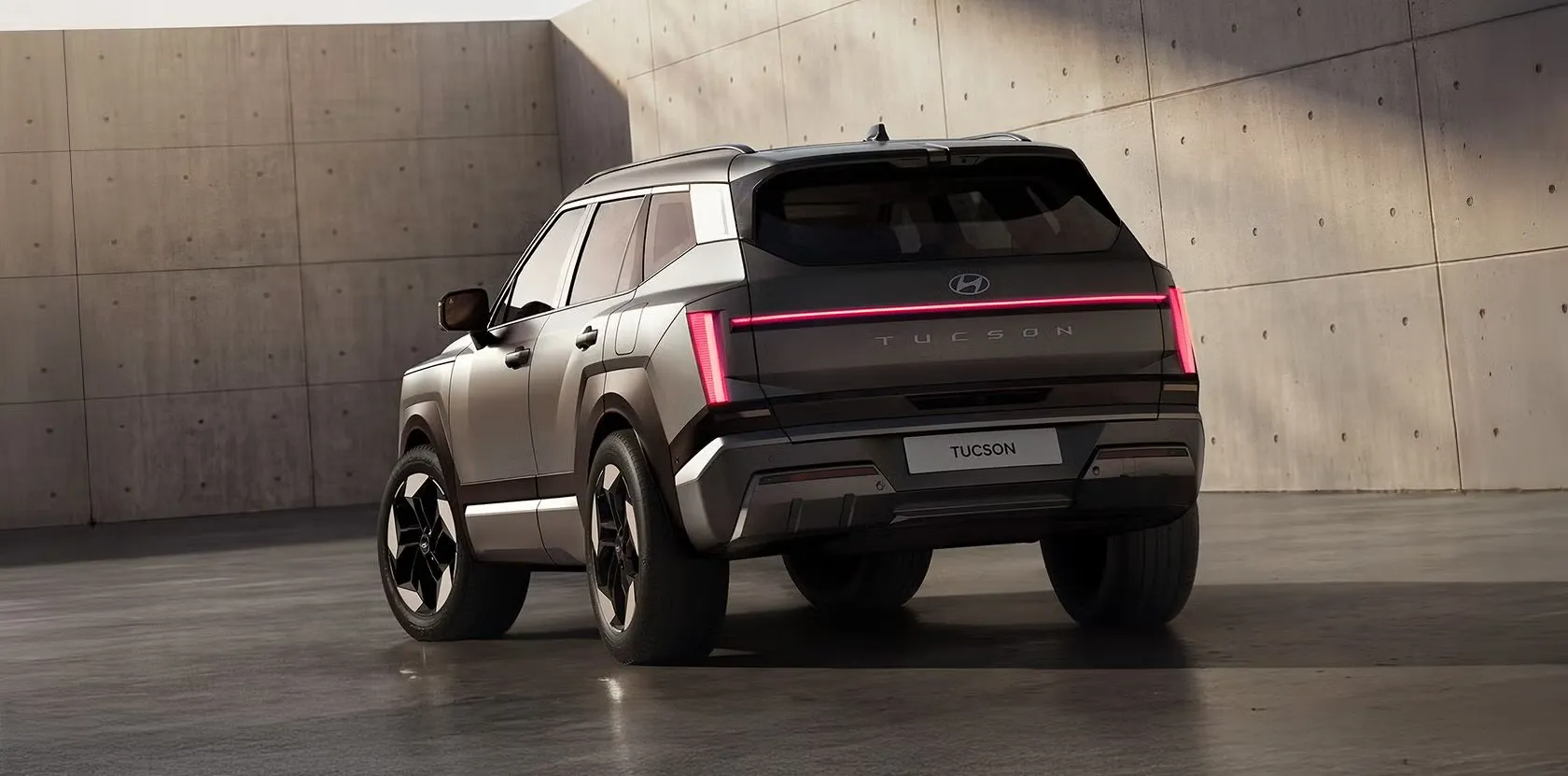
The new model features full-width LED rear lighting, creating a broader visual appearance at night.
The rear design follows the same theme as the front. There are stronger horizontal lines and more geometric surfaces instead of the rounded treatment used on the previous model.
This makes the Tucson look wider and more planted from behind.
The Interior Gets a Major Redesign
The cabin follows the exterior's move towards cleaner and more geometric design.
The 2026 Tucson gets a horizontal dashboard with twin curved displays. The layout reduces visual clutter and gives the dashboard a wider appearance.
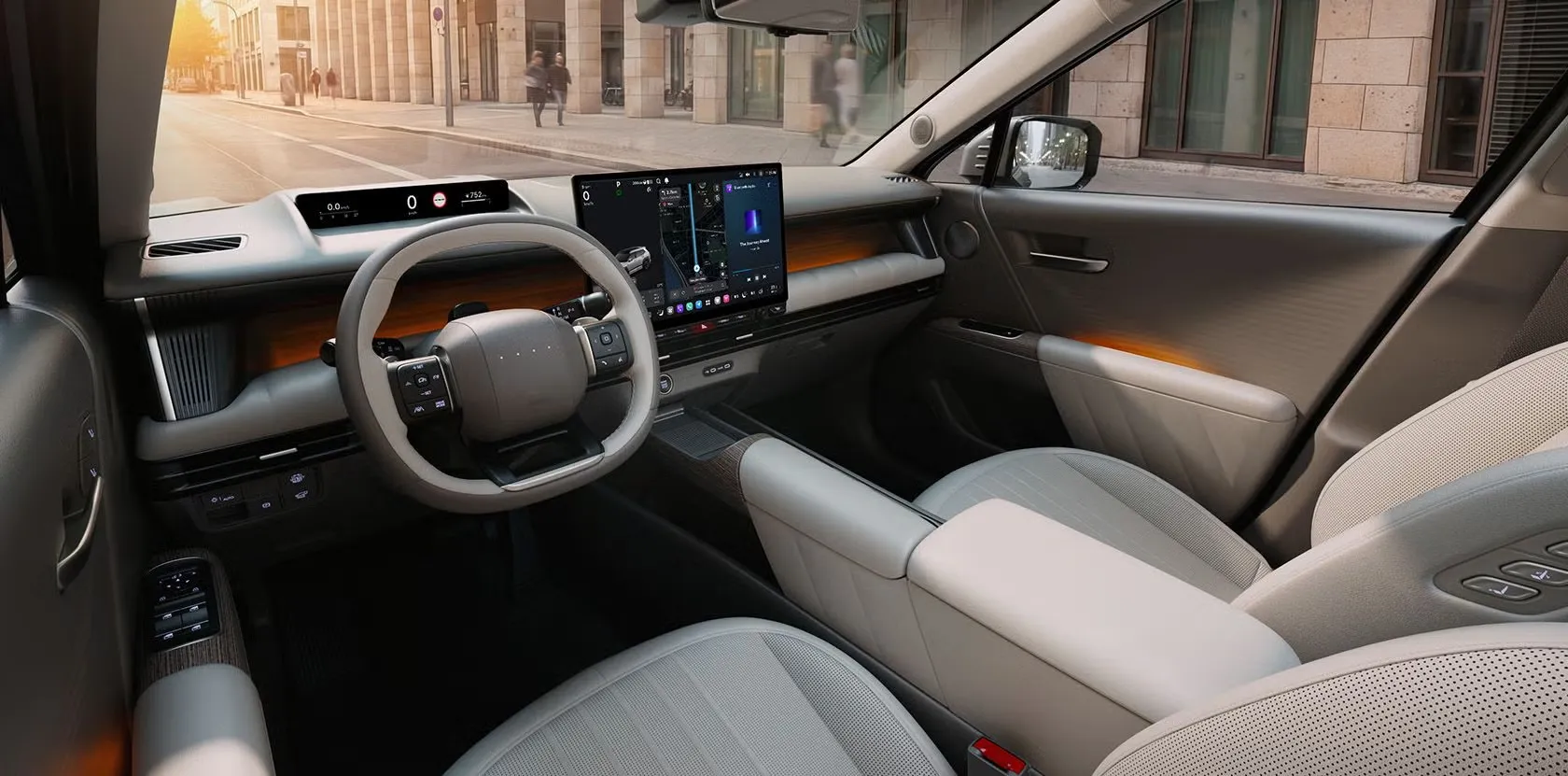
The centre console is now designed as a floating unit, while the two-spoke steering wheel adds another major visual change.
The focus is clearly on creating a more open cabin rather than covering the dashboard with buttons and layers.
The additional exterior dimensions also help Hyundai improve rear passenger space, particularly headroom and legroom.
2026 Hyundai Tucson Engine Options
The new Tucson is offered with multiple powertrain choices depending on the market.
|
Engine / Powertrain |
Type |
|
2.0-litre |
Naturally aspirated four-cylinder petrol |
|
1.6-litre Turbo |
Turbocharged petrol |
|
1.6-litre Turbo Hybrid |
Petrol-electric hybrid |
|
1.6-litre Turbo PHEV |
Plug-in hybrid |
The hybrid and plug-in hybrid versions are important because Hyundai is increasing its focus on electrified SUVs across international markets.
The exact engine and transmission combinations available in India can differ from other markets, so Indian buyers should wait for Hyundai’s official India-specific specifications.
Why the 2026 Tucson Design Is Important
The new Tucson shows how Hyundai's SUV design direction is changing.
The previous generation focused on flowing surfaces and complex geometric details. The new model uses simpler but stronger shapes.
The Art of Steel philosophy gives the Tucson a more solid and architectural appearance. The upright body, square wheel arches and vertical lighting make it look closer to a traditional SUV while keeping Hyundai's futuristic identity.
This approach also places the Tucson closer visually to Hyundai’s newer rugged SUV models.
.webp)