























Maruti Brezza Brake Noise, Vibration and Judder: Causes and Fixes
By Nitesh Yadav • Published on 25 Sept 2026Brake noise becomes a very different story when the Maruti Brezza starts making brake noise or the steering wheel begins shaking while you are travell...
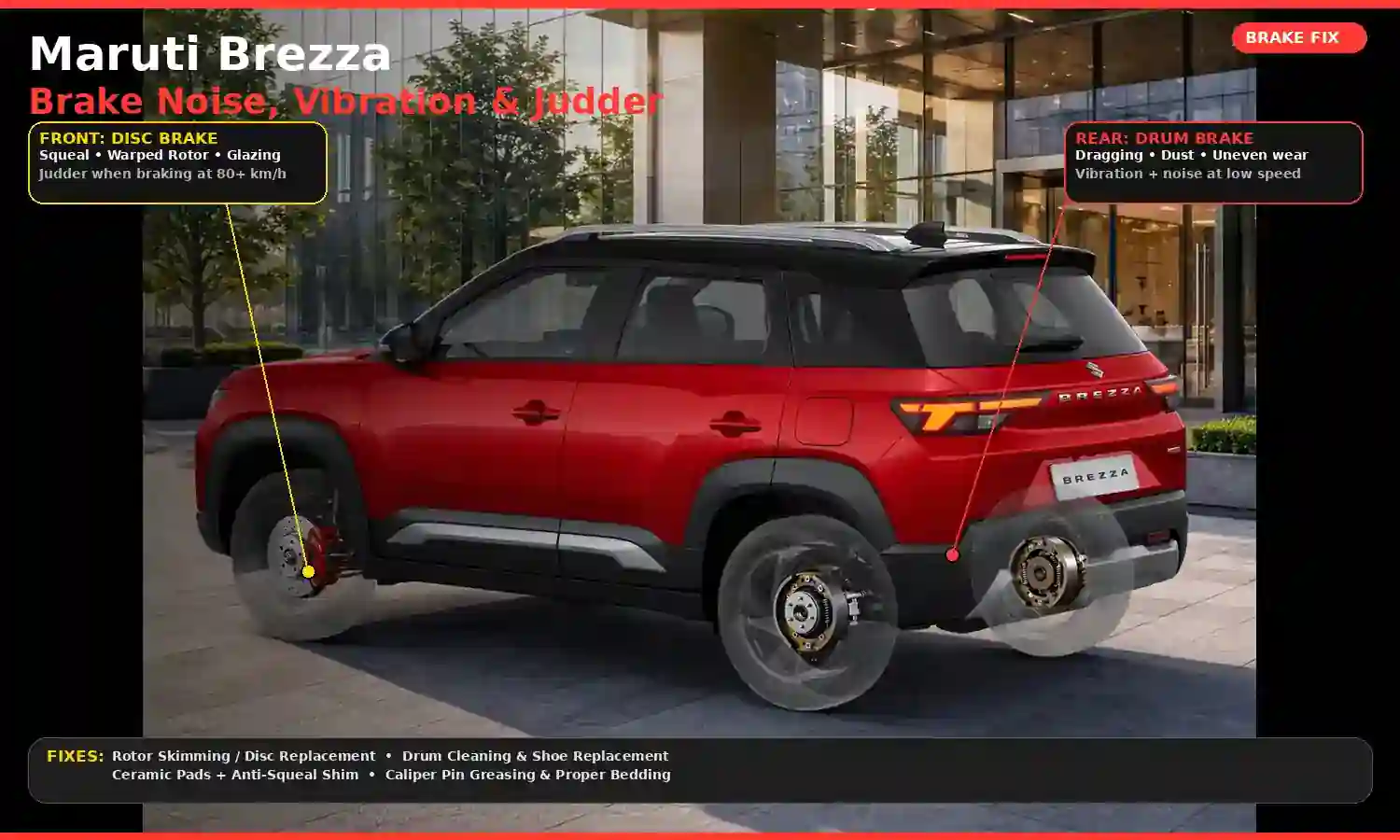
Brake noise becomes a very different story when the Maruti Brezza starts making brake noise or the steering wheel begins shaking while you are travelling on a highway. You still need to reach your destination, but now every brake application comes with a small question mark.
Brake noise, steering vibration and brake judder can have several causes. Some are minor, such as brake dust or uneven pad deposits. Others can point towards worn brake components, hydraulic problems or an issue with the ABS system.
Here is how to understand the problem and what needs to be checked.
Why is my Maruti Brezza making noise when braking?
Brake noise does not always mean that the brakes are failing.
A Brezza can develop brake noise because of:
Brake dust accumulating around the pads or drums
Worn brake pads
Uneven brake-pad deposits on the disc
Glazed friction material
Moisture or surface rust after the car has been parked
Worn or damaged brake components
Rear drum brake dust
Poor-quality or incorrectly fitted friction material
A light squeal during the first few braking events, especially after rain or overnight parking, can disappear once the brakes warm up.
A repeated grinding noise, however, deserves immediate attention because it can indicate severe pad wear or metal-to-metal contact.
Why does the Brezza steering wheel vibrate when braking at high speed?
This is one of the most common brake complaints drivers notice during highway travel.
If the steering wheel starts shaking when you brake from higher speeds, the front braking system should be inspected first.
Possible causes include:
Uneven brake-disc thickness
Disc runout
Uneven pad deposits on the disc
Worn or contaminated brake pads
Loose or incorrectly torqued wheel components
Suspension or steering component wear
People often describe this as a “bent brake disc”, but that explanation is not always accurate.
A brake disc can develop excessive runout or uneven friction surfaces without literally being bent.
The correct diagnosis requires checking the disc, pads, wheel installation and related components.
Can brake pads cause vibration in the Maruti Brezza?
Yes.
Brake pads transfer friction material onto the disc during normal use. If this material becomes unevenly deposited, braking force can vary as the disc rotates.
The driver may then feel a pulsation through the steering wheel or brake pedal.
Overheating can also glaze the friction material, reducing consistent braking performance and sometimes producing noise.
If the pads are worn, contaminated or damaged, replacement may be necessary.
However, simply changing the pads without checking the brake disc may not solve the problem.
What should be checked when replacing Brezza brake pads?
A proper brake service should include more than simply removing the old pads and installing new ones.
The technician should inspect:
Brake-pad thickness
Disc condition
Disc runout or thickness variation where required
Caliper movement
Pad-contact surfaces
Caliper pins and hardware
Wheel installation and torque
The replacement pads should also be suitable for the Brezza and installed correctly.
Avoid choosing brake pads purely because they are cheaper. The friction material affects braking feel, noise and heat performance.
Can brake fluid cause braking problems in the Brezza?
Brake fluid problems usually produce different symptoms from a noisy or vibrating brake.
Old or contaminated brake fluid can absorb moisture over time. Under heavy braking, moisture-contaminated fluid can reduce the system's resistance to heat.
Air in the hydraulic system can also make the brake pedal feel soft or spongy.
If the brake pedal feels unusually soft, sinks more than normal or requires repeated pumping, the vehicle should be inspected rather than treated as a simple brake-noise issue.
Does the Brezza need brake-fluid bleeding?
Brake bleeding is used to remove air from the hydraulic brake system.
It may be required after hydraulic components have been opened, during certain brake repairs, or when air has entered the system.
Brake fluid should also be replaced according to the manufacturer's maintenance recommendations and the condition of the fluid.
For a Brezza using DOT 4 brake fluid, use the exact specification recommended for your model and owner's manual. Do not mix random brake fluids simply because they have a similar label.
A proper fluid flush is different from simply topping up the reservoir.
What happens if there is air in the brake lines?
Air is compressible.
Brake fluid is not meant to behave like a spring, so when air enters the hydraulic system, some of the pedal movement is used to compress that air instead of directly transferring pressure to the brakes.
The result can be a:
Spongy brake pedal
Longer pedal travel
Less confidence during hard braking
A qualified technician should bleed the system using the correct procedure.
If air keeps returning after bleeding, the source of the problem needs to be found.
Can the ABS system cause brake problems?
The ABS system can also create braking-related warnings or unusual behaviour.
If the ABS warning light comes on, the system should be diagnosed rather than simply resetting the warning.
Wheel-speed sensors are particularly important because the ABS system uses their signals to understand how quickly each wheel is rotating.
Dirt, debris or physical damage around a sensor can affect its signal.
However, do not assume that every ABS warning is caused by a dirty sensor. Wiring, sensor failure, tone-ring issues and other faults can produce similar symptoms.
What should I do if the Brezza brake warning appears during a trip?
This is where things become important.
If you are travelling and notice a small amount of brake squeal but the pedal feels normal and the car stops normally, drive cautiously and get the brakes inspected at the earliest practical opportunity.
But if you notice major steering vibration, a soft brake pedal, significantly increased stopping distance, grinding, pulling to one side, brake fluid leakage or an illuminated brake-system warning, do not continue driving normally.
Slow down safely and stop at a suitable location.
If braking performance is clearly compromised, arrange roadside assistance or professional inspection instead of trying to complete the journey.
Saving two hours on a trip is not worth testing how much road you need to stop a moving SUV.
What about the rear drum brakes?
The Brezza's rear braking system can also contribute to noise and uneven braking behaviour.
Rear drum brakes collect brake dust as the friction material wears.
During servicing, the drum assembly can be inspected and cleaned, while the brake shoes and associated hardware should be checked for wear or damage.
The shoe adjustment also needs to be correct.
If the shoes sit too far away from the drum, pedal travel and braking response can be affected. If they are adjusted too tightly, the brakes can drag and generate unnecessary heat.
Can the handbrake cable cause a problem?
Yes, but it should not be treated as a simple cable-tightening job every time the handbrake feels loose.
The rear brake mechanism, shoe adjustment and cable should all be checked.
If the cable is tightened when the actual problem is excessive shoe wear or incorrect adjustment, the underlying problem remains.
A correctly adjusted handbrake should hold the vehicle securely without causing the rear brakes to drag during normal driving.
Maruti Brezza brake problem: when should you worry?
Not every squeak requires an emergency stop.
A simple noise after rain may disappear after a few braking cycles.
But brake judder at highway speeds, a soft pedal, grinding noise, pulling while braking or a brake-system warning should never be ignored.
The right fix depends on the symptom.
Front brake vibration may require inspection of the pads, discs and calipers. A soft pedal may point towards hydraulic issues or air in the system. ABS warnings require electronic and wheel-speed sensor diagnosis. Rear noise may require drum, shoe and adjustment inspection.
The showroom or service centre can handle most of these jobs during a proper brake inspection.
.webp)