
























Ethanol Blending Explained, Why E20 Is Raising Concerns and Why E25 Could Be a Bigger Challenge
By Nitesh Yadav • Published on 3 Jul 2026India's ethanol blending program is growing quickly. Petrol that once contained almost no ethanol now commonly contains 10%, and E20 is becoming the n...

India's ethanol blending program is growing quickly. Petrol that once contained almost no ethanol now commonly contains 10%, and E20 is becoming the new standard. Discussions about E25 have also started.
Supporters say ethanol reduces crude oil imports and cuts emissions. Critics worry about engine durability, fuel quality, and long term reliability.
So, what actually happens inside an engine when ethanol content increases?
What Is Ethanol Blending?
Ethanol blending means mixing ethanol, an alcohol made from crops such as sugarcane and maize, with petrol.
The common blends are:
E10, 10% ethanol, 90% petrol
E20, 20% ethanol, 80% petrol
E25, 25% ethanol, 75% petrol
As the percentage of ethanol increases, the fuel behaves differently inside the engine.
Why E10 Worked for Most Cars
E10 has been used globally for many years because the changes it brings are relatively small.
Most modern petrol engines can automatically adjust to a 10% ethanol blend using sensors and the engine control unit.
At this level:
Fuel lines and rubber seals usually remain compatible.
Moisture absorption is limited.
Engine calibration changes are minimal.
Fuel economy drops only slightly, usually by 2 to 3%.
For most drivers, the difference is barely noticeable.
Why E20 Is a Bigger Concern
E20 does not automatically damage an engine. However, doubling the ethanol content doubles several challenges that engineers must manage.
1. Ethanol Attracts Water
One of ethanol's biggest characteristics is that it absorbs moisture from the air.
The higher the ethanol percentage, the more water the fuel can absorb.
If petrol pump storage tanks contain moisture or are poorly maintained, water mixes more easily with ethanol blended petrol.
Excess water can cause:
Difficult starting
Engine misfires
Rust inside metal fuel components
Reduced combustion efficiency
Modern direct injection engines are especially sensitive to contaminated fuel.
2. Ethanol Is a Strong Solvent
Unlike petrol, ethanol acts as a cleaning agent.
Initially, this sounds like a good thing.
However, it can loosen years of dirt, varnish, and deposits inside old fuel tanks and fuel lines.
These particles may eventually reach:
Fuel filters
Fuel pumps
High pressure fuel injectors
Once injectors become partially blocked, fuel spray becomes uneven.
The result can be:
Rough idling
Lower mileage
Reduced power
Higher emissions
3. Lower Energy Means More Fuel Consumption
Ethanol contains less energy than petrol.
Approximate energy content per litre:
Petrol, about 34 MJ
Ethanol, about 21 MJ
Because of this, engines must burn more E20 fuel to produce the same amount of power.
Even in perfectly healthy vehicles, fuel economy usually drops by around 4 to 7% with E20 compared to pure petrol.
4. Material Compatibility
Ethanol is more chemically aggressive than petrol.
Older vehicles often contain:
Rubber hoses
Plastic seals
Gaskets
These materials may slowly harden, crack, or swell after long exposure to higher ethanol blends.
Modern E20 compatible vehicles use upgraded materials designed to withstand ethanol.
5. Engine Calibration Becomes More Important
E20 requires different combustion characteristics.
Manufacturers must recalibrate:
Fuel injection timing
Ignition timing
Air fuel ratio
Cold start strategy
Cars designed for E20 receive these changes from the factory.
Older engines may struggle because they were never tuned for higher ethanol content.
Why Fuel Injectors Are Becoming More Sensitive
Today's turbocharged and hybrid engines operate at extremely high fuel pressures.
Injector openings are incredibly small.
Even tiny amounts of dirt, corrosion, or water contamination can affect fuel spray.
Poor spray means:
Incomplete combustion
Loss of power
Increased fuel consumption
Engine knocking in severe cases
This is why fuel quality has become more important than ever.
Why E25 Could Be a Bigger Challenge
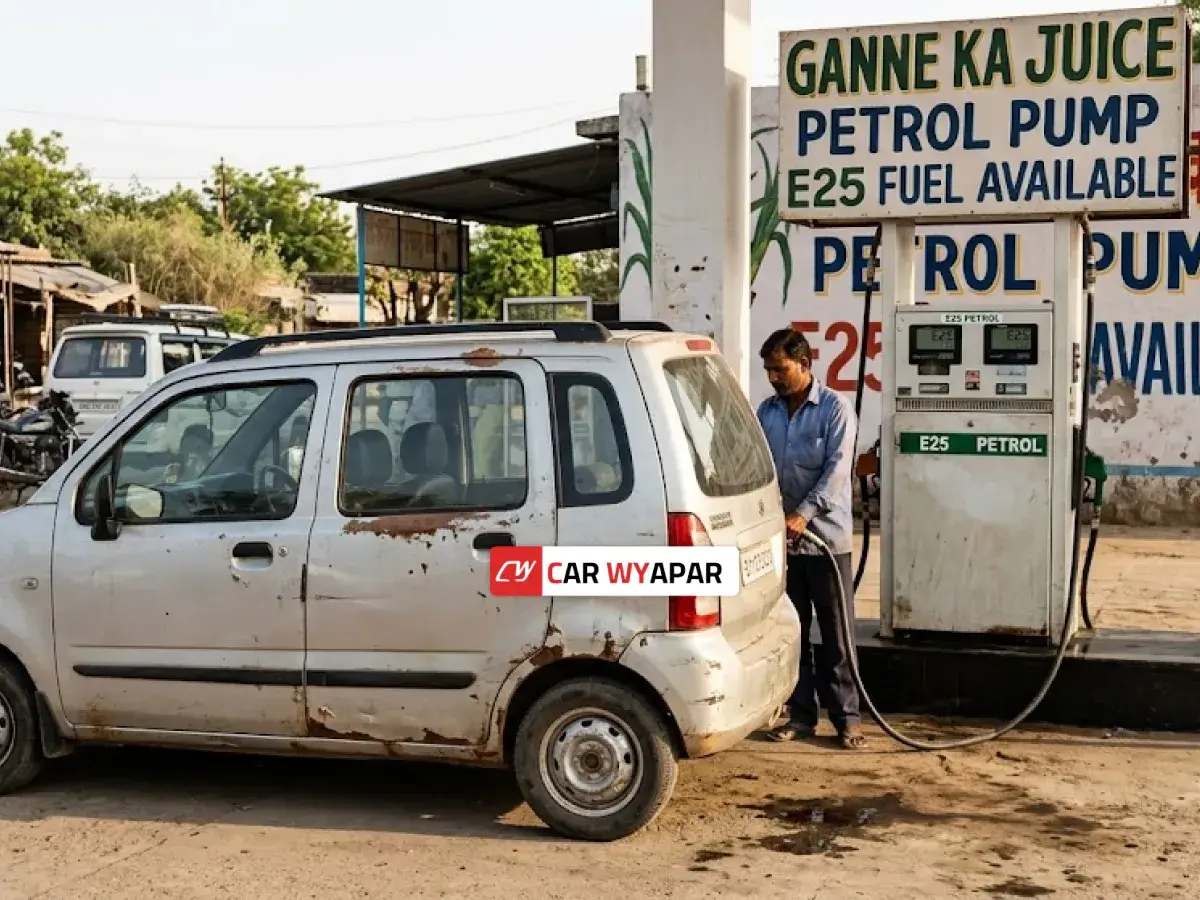
Moving from E20 to E25 is not simply adding another 5% ethanol.
Each increase raises engineering demands.
With E25:
Fuel economy may decrease further.
Moisture absorption increases.
Cold starts become more difficult in colder regions.
Fuel system materials require even greater resistance.
Engine software needs additional optimisation.
Countries that use E25 successfully often build engines specifically for these blends rather than adapting older designs.
Does E20 Damage Modern Cars?
If a vehicle is certified for E20 and the fuel meets quality standards, E20 should not damage the engine under normal operating conditions.
Problems usually appear when one or more of these factors combine:
Poor quality fuel
Excess water contamination
Dirty underground storage tanks
Fuel with ethanol levels beyond specification
Older vehicles not designed for E20
Delayed maintenance
In many reported cases, contaminated fuel causes more trouble than ethanol itself.
The Bottom Line
Ethanol blending is not inherently harmful. In fact, it plays an important role in reducing oil imports and lowering emissions.
The real challenge lies in ensuring that every part of the fuel ecosystem keeps pace. Vehicles must be engineered for higher blends, fuel stations need clean storage and strict quality control, and ethanol percentages must stay within approved limits.
E10 became widely accepted because most vehicles could handle it with little compromise.
E20 demands better engineering and tighter fuel quality standards.
If India eventually moves to E25, those standards will need to become even stricter. Otherwise, the margin for fuel related problems will become smaller, especially in modern engines that rely on precise fuel injection and complex electronic controls.



 (1).webp)


