

















Let's compare MINI Cooper SE Cooper SE vs Hyundai i20 N-Line N6 MT

Compare MINI Cooper SE Cooper SE vs Hyundai i20 N-Line N6 MT price, specifications, mileage, features and performance to find the best car for you.
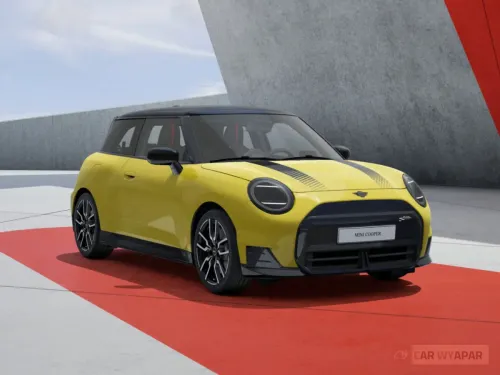
MINI Cooper SE Cooper SE
MINI Cooper SE
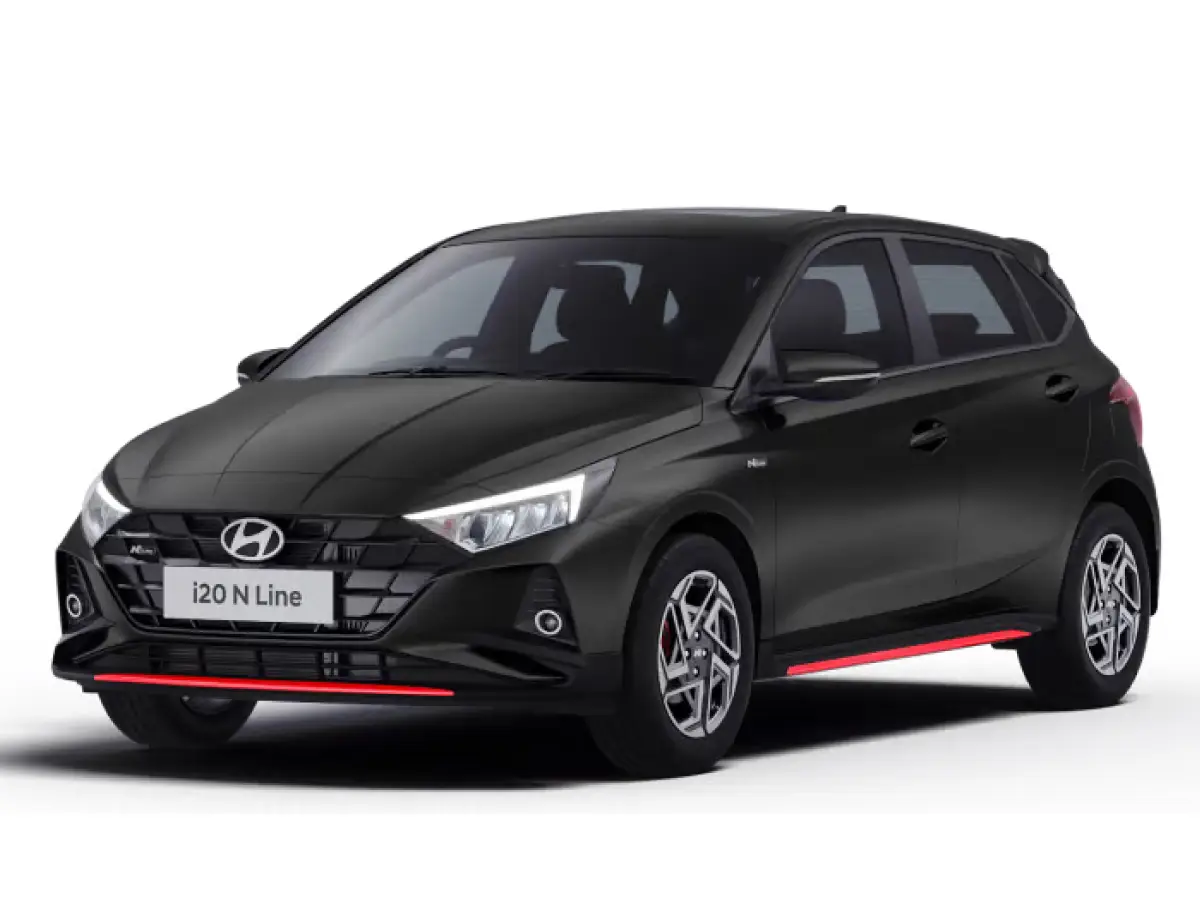
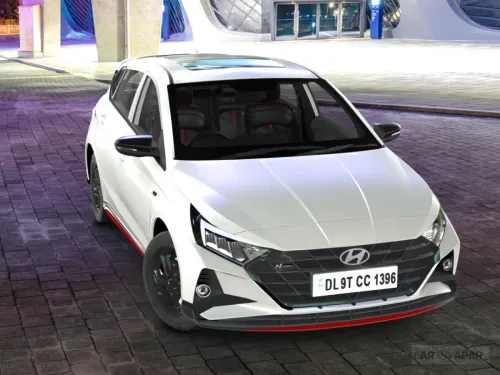
Hyundai i20 N-Line N6 MT
Hyundai i20 N-Line
Car comparison placeholder
Here is a detailed comparison of price:

MINI Cooper SE Cooper SE

Price

₹ 60.61 Lakh

On-Road Price New Delhi

EMI

₹ 1.12 Lakh/month

Hyundai i20 N-Line N6 MT

Price

₹ 10.14 Lakh

On-Road Price New Delhi

EMI

₹ 18,730/month

From the above comparison, we can conclude that Hyundai i20 N-Line feels light on the pocket compared to MINI Cooper SE by ₹50,46,637.

Dimensions & Seating

Body Type

Hatchback

Hatchback

Length

3850 mm

3995 mm +145

Width

1727 mm

1775 mm +48

Height

1432 mm

1505 mm +73

WheelBase

2495 mm

2580 mm +85

Ground Clearance

146 mm

170 mm +24

Seating Capacity

5

5

Fuel Tank Capacity

--

37 Liters

Boot Space

211 Liters

311 Liters +100

Engine & Transmission

Fuel Type

Petrol

Petrol

Mileage (KMPL)

7.2 Km/kWh

15 +7.8

Range

270 Kms

550 Kms +280

Engine Type

--

1.0 Turbo Gdi

Powertrain Assistance

--

No

Emission Standards

Zev

Bs Vi

No. of Cylinders

--

3

Displacement

--

998 cc

Max Power

184 bhp +66

118 bhp @ 6000 rpm

Max Torque

270 +98

172 Nm @ 6000 rpm

Transmission Type

AT

MT

Gear Box

1-AT

6-Manual

Drive Type

FWD

FWD

Top Speed

150

160 +10

Steering and Suspension

Tilt Adjust

Yes

Yes

Telescopic Adjust

Yes

Yes

Turning Radius

5.4 +0.6

4.8

Front Suspension

MacPherson Strut

McPherson strut with coil spring

Rear Suspension

Multi-link with Coil Spring

Coupled torsion beam axle

Front Brakes

Disc

Disc

Rear Brakes

Disc

Disc

Safety & Security

Airbags

4

6 +2

Seatbelt Warning

Yes

Yes

Over Speeding Warning

Yes

Yes

Anti-lock Braking System

Yes

Yes

ESP

Yes

Yes

Brake Assist

Yes

--

Tyre Pressure Monitor System

Yes

Yes

Reverse Camera

Yes

Yes

360 Camera

No

No

Hill Assist

Yes

Yes

Hill Descent Control

Yes

No

Child Lock

Yes

Yes

Isofix Child Seat Mount

Yes

Yes

Engine Immobilizer

Yes

Yes

ADAS

No

No

Comfort & Convenience

Power Windows

Only Front

Front And Rear

ORVM Adjustment

Electric

Electric

Request Sensors

Yes

Yes

Push Button Start

Yes

Yes

Cruise Control

Yes

Yes

Keyless Entry

Yes

Yes

Steering Mounted Control

Yes

Yes

Climate Control

Automatic

Automatic

Rear AC Vents

No

Yes

Adjustable Steering Column

Yes

Yes

Interior Features

Upholstery

Leather

Faux Leather

Adjustable Front Seats

Yes

Yes

Height Adjustable Driver Seat

Yes

Yes

Rear Armrest

No

No

Rear Cup Holders

--

--

Front Cup Holders

Yes

Yes

Cooled Glovebox

No

Yes

Exterior Features

Sunroof

Panoramic

Yes

Wheels

Alloy

Diamond Cut Alloy

Fog Lights

Yes

No

Tyre Size

205 45/R17

195/55 R16

Daytime Running Lights

LED

LED

Headlight Type

Projector Led

Projector Led

Tailgate

Electric

Electric

Roof Rails

No

No

Rear Wiper

Rear Wiper

Rear Wiper

Infotainment & Telematics

Touch Screen

Yes

Yes

Screen Size

9.4 inch

10.25 inch

USB Port

Yes

Yes

Navigation System

Yes

No

Speakers

6

7

Remote App Control

Yes

No

Wireless Charging

Yes

Yes

Smartphone Connectivity

Yes

Yes

Telematics

Digital

Digital

Connectivity & Internet

USB Port

Yes

Yes

Navigation

Yes

No

Smartphone Connectivity

Yes

Yes

MINI Cooper SE Vs Hyundai i20 N-Line Colors
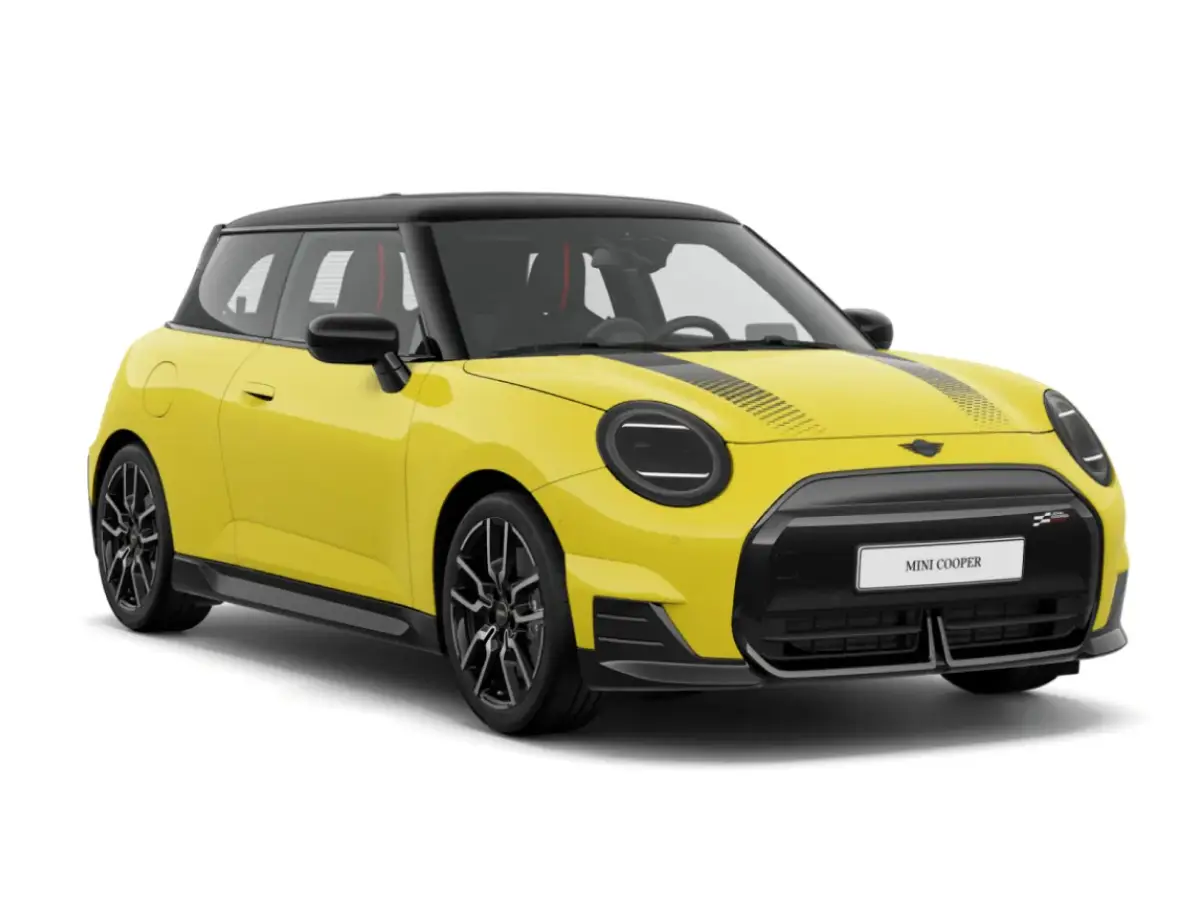
MINI Cooper SE Sunny Side Yellow

Sunny Side Yellow

Hyundai i20 N-Line Abyss Black

Abyss Black

MINI Cooper SE Sunny Side Yellow

Sunny Side Yellow

Hyundai i20 N-Line Abyss Black

Abyss Black

MINI Cooper SE Vs Hyundai i20 N-Line Expert Opinions
Design and Aesthetics
Features and Specifications
After Sales Support
Brand Value
Resale Value
Likes
Dislikes
Design and Aesthetics
Features and Specifications
After Sales Support
Brand Value
Resale Value
Likes
Dislikes
MINI Cooper SE Vs Hyundai i20 N-Line FAQs
The Mini Cooper SE is priced between ₹ 56.33 lakh and ₹ 57.95 lakh (on-road) depending on variant and location. This makes the Cooper SE one of the premium electric hatchbacks, aimed at buyers who want style + EV perks, not just low running cost.

The Cooper SE offers a certified range of 270 km per full charge (WLTP). With electricity priced at ₹ 9 per unit, and assuming energy usage around 15-20 kWh per 100 km (typical for small EVs in real use), the cost works out to about ₹ 1.35 per km. This means a 100-km trip would cost roughly ₹ 135-₹ 180 for energy, far cheaper than petrol versions over time.

The Cooper SE uses a 32.6 kWh lithium-ion battery pack with an electric motor producing ~181 BHp (≈ 135 kW) and 270 Nm torque. It charges from 0-80% in about 2.5 hours on an 11 kW AC charger and in ≈ 36 minutes with a 50 kW DC fast charger.

The Cooper SE accelerates from 0-100 km/h in about 7.3 seconds, with a top speed of 150 km/h. These numbers place it ahead of many EV hatchbacks for fun drive, though it’s not in the league of performance EVs. Good enough for spirited city & occasional highway use.

The Mini Cooper SE is 3.850 m long (≈ 12.62 ft), 1.928 m wide (≈ 6.32 ft), 1.432 m tall (≈ 4.70 ft), with a wheelbase of 2.495 m. Boot space is 211 litres. Seating for 4 hard points. The compact size makes it easier in cramped urban parking, but with limited rear-legroom and luggage space, it’s not ideal for long family road trips with full load.

Electric version has much lower energy cost per km (~₹ 1.35-₹ 1.80, see above), negligible engine maintenance costs, no oil changes, fewer moving parts. In contrast, petrol versions cost ~₹ 6-7+ per km (with fuel at ₹ 102/litre) plus higher maintenance. The initial higher price for EV is offset over time if daily use is high, especially in city commute.

The Cooper SE comes with standard EV safety tech plus modern comfort features: multiple airbags, traction control, digital instrument cluster (≈ 5.5-inch), infotainment touch display (≈ 8.8-inch), heated front seats, wireless phone charging, dual-tone finishes, premium styling with some yellow accents.

The Mini Cooper SE is best for buyers who want a stylish electric hatch with premium badge, decent range for daily city / suburban driving, care about running costs and environmental impact, and are OK with modest luggage and rear-seat space. If your daily routes include highway runs of 200-300 km or you carry lots of luggage often, a larger EV SUV might serve better.

The Hyundai i20 N Line starts at around ₹9.99 lakh (ex-showroom) for the base N6 MT variant and goes up to about ₹12.56 lakh for the top-spec N8 DCT variant in India.

The i20 N Line is powered by a 1.0-litre turbo-petrol engine (998 cc) that puts out about 120 PS and 172 Nm torque. You get both a 6-speed manual and a 7-speed DCT automatic. It has sportier suspension and visual tweaks to match.

Dimensions: length is 3,995 mm, width 1,775 mm, height 1,505 mm. Wheelbase is 2,580 mm. Ground clearance is 170 mm. Boot space is 311 litres, and fuel tank capacity is 37 litres.

The claimed / certified fuel efficiency is about 20.3 kmpl for ARAI (manual / DCT). In real-world city traffic, especially with AC, the number drops to around 11-12 kmpl, and on highways around 18-20 kmpl depending on driving style. To compute running cost: assume petrol price = ₹102 per litre: 1. Using the ARAI figure ~20.3 kmpl: cost per km ≈ ₹102 ÷ 20.3 ≈ ₹5.02 per km. 2. In city traffic with 11-12 kmpl: cost per km ≈ ₹102 ÷ 11.5 ≈ ₹8.87 per km.

i20 N Line is the “sporty, I-mean-business” version of the regular i20. The differences: visual styling (red accents, sporty bumpers, dual exhaust look, special alloys), tuned suspension & steering for sharper response, more aggressive interior touches (N line badging, red stitching etc.), more power (regular i20 doesn’t have turbo-petrol in many variants), better brakes (disc at rear etc.), and better driving engagement.

Buy i20 N Line if you love a hatchback that makes you feel like you’re driving something more alive. If you enjoy traffic with flair, occasional highway stints, and want features & sportiness. Also good if you don’t mind that sharper ride & slightly higher upkeep. Avoid it if you mostly drive bumper-to-bumper city traffic, want minimal maintenance cost, or prefer cushioned ride over sporty stiffness. If low cost or simplicity is priority, regular i20 or other hatchbacks will do better.

Because it has turbo, more performance-oriented parts, and premium styling, maintenance will cost more than regular i20. Rough estimate: 1. Routine service (oil change, filters etc.) once/year or every 10,000-15,000 km: expect ₹8,000-₹12,000 depending on variant and usage. 2. Additional costs due to performance tweaks (e.g. brake pads, tyres, turbo oil, etc.) may lead to occasional bigger bills: maybe once every 2-3 years extra ₹3,000-₹5,000 for such wear and tear. 3. Insurance, tyres with sportier compound, upgraded wheels, etc. may also cost a bit more. Over 5 years, expect maintenance costs somewhat higher than regular i20 by maybe ₹20,000-₹30,000 total, depending on how enthusiast you drive.
*Ad Advertisement banner