





















Let's compare Maruti Fronx Sigma vs Renault Duster Authentic 1.0L Turbo

Compare Maruti Fronx Sigma vs Renault Duster Authentic 1.0L Turbo price, specifications, mileage, features and performance to find the best car for you.
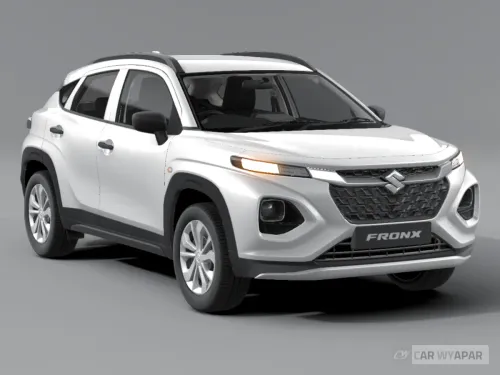
Maruti Fronx Sigma
Maruti Fronx
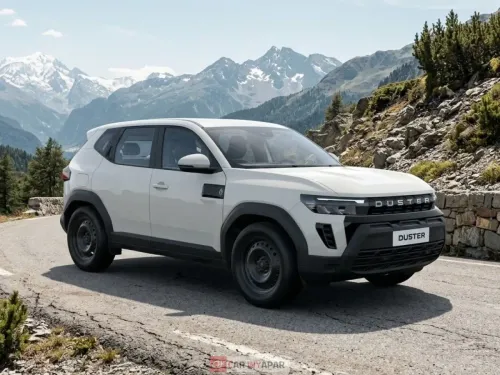
Renault Duster Authentic 1.0L Turbo
Renault Duster
Car comparison placeholder
Here is a detailed comparison of price:

Maruti Fronx Sigma

Price

₹ 7.61 Lakh

On-Road Price New Delhi

EMI

₹ 14,057/month

Renault Duster Authentic 1.0L Turbo

Price

₹ 11.97 Lakh

On-Road Price New Delhi

EMI

₹ 22,099/month

From the above comparison, we can conclude that Maruti Fronx feels light on the pocket compared to Renault Duster by ₹4,35,539.

Dimensions & Seating

Body Type

Compact Suv

Suv

Length

3995 mm

4346 mm +351

Width

1765 mm

1815 mm +50

Height

1550 mm

1701 mm +151

WheelBase

2520 mm

2657 mm +137

Ground Clearance

190 mm

212 mm +22

Seating Capacity

5

5

Fuel Tank Capacity

37 Liters

50 Liters +13

Boot Space

308 Liters

518 Liters +210

Engine & Transmission

Fuel Type

Petrol

Petrol

Mileage (KMPL)

21.79 Km/l +5.59

16.2 Km/l

Range

806 Kms

825 KMs Kms +19

Engine Type

1.2l Dual Jet Dual Vvt

1.0l Tce 100 Turbo

Powertrain Assistance

Mild Hybrid

No

Emission Standards

Bs Vi

Bs Vi

No. of Cylinders

4 +1

3

Displacement

1197 cc +198

999 cc

Max Power

89bhp @ 4400 rpm

99 bhp @ 5000 rpm +10

Max Torque

113 Nm @ 4400 rpm

166 Nm @ 2000 rpm +53

Transmission Type

MT

MT

Gear Box

5-MT

6-Synchromesh Manual

Drive Type

FWD

FWD

Top Speed

180 +12

168

Steering and Suspension

Tilt Adjust

Yes

Yes

Telescopic Adjust

--

Yes

Turning Radius

4.9

5.2 +0.3

Front Suspension

McPherson Strut

MacPherson Strut

Rear Suspension

Torsion Beam

Twist Beam with coil springs

Front Brakes

Disc

Ventilated Disc

Rear Brakes

Drum

Drum

Safety & Security

Airbags

6

6

Seatbelt Warning

Yes

Yes

Over Speeding Warning

Yes

Yes

Anti-lock Braking System

Yes

Yes

ESP

Yes

Yes

Brake Assist

Yes

Yes

Tyre Pressure Monitor System

No

Yes

Reverse Camera

No

No

360 Camera

No

No

Hill Assist

Yes

Yes

Hill Descent Control

No

No

Child Lock

Yes

Yes

Isofix Child Seat Mount

Yes

Yes

Engine Immobilizer

Yes

Yes

ADAS

No

No

Comfort & Convenience

Power Windows

Front And Rear

Front And Rear

ORVM Adjustment

Manual

Manual

Request Sensors

--

--

Push Button Start

No

No

Cruise Control

No

No

Keyless Entry

--

--

Steering Mounted Control

--

--

Climate Control

Automatic

--

Rear AC Vents

No

Yes

Adjustable Steering Column

Yes

Yes

Interior Features

Upholstery

Fabric

Fabric

Adjustable Front Seats

Yes

Yes

Height Adjustable Driver Seat

--

Yes

Rear Armrest

No

No

Rear Cup Holders

--

--

Front Cup Holders

Yes

Yes

Cooled Glovebox

No

No

Exterior Features

Sunroof

No

No

Wheels

Steel Rims

Steel Rims

Fog Lights

No

No

Tyre Size

195 / 60 R16

225/60 R17

Daytime Running Lights

--

LED

Headlight Type

Projector

Reflector Led

Tailgate

Manual

Manual

Roof Rails

Yes

No

Rear Wiper

No

No

Infotainment & Telematics

Touch Screen

--

--

Screen Size

--

--

USB Port

Yes

Yes

Navigation System

No

No

Speakers

--

7

Remote App Control

No

No

Wireless Charging

No

No

Smartphone Connectivity

No

No

Telematics

Analogue-Digital

Digital

Connectivity & Internet

USB Port

Yes

Yes

Navigation

No

No

Smartphone Connectivity

No

No

Maruti Fronx Vs Renault Duster Colors
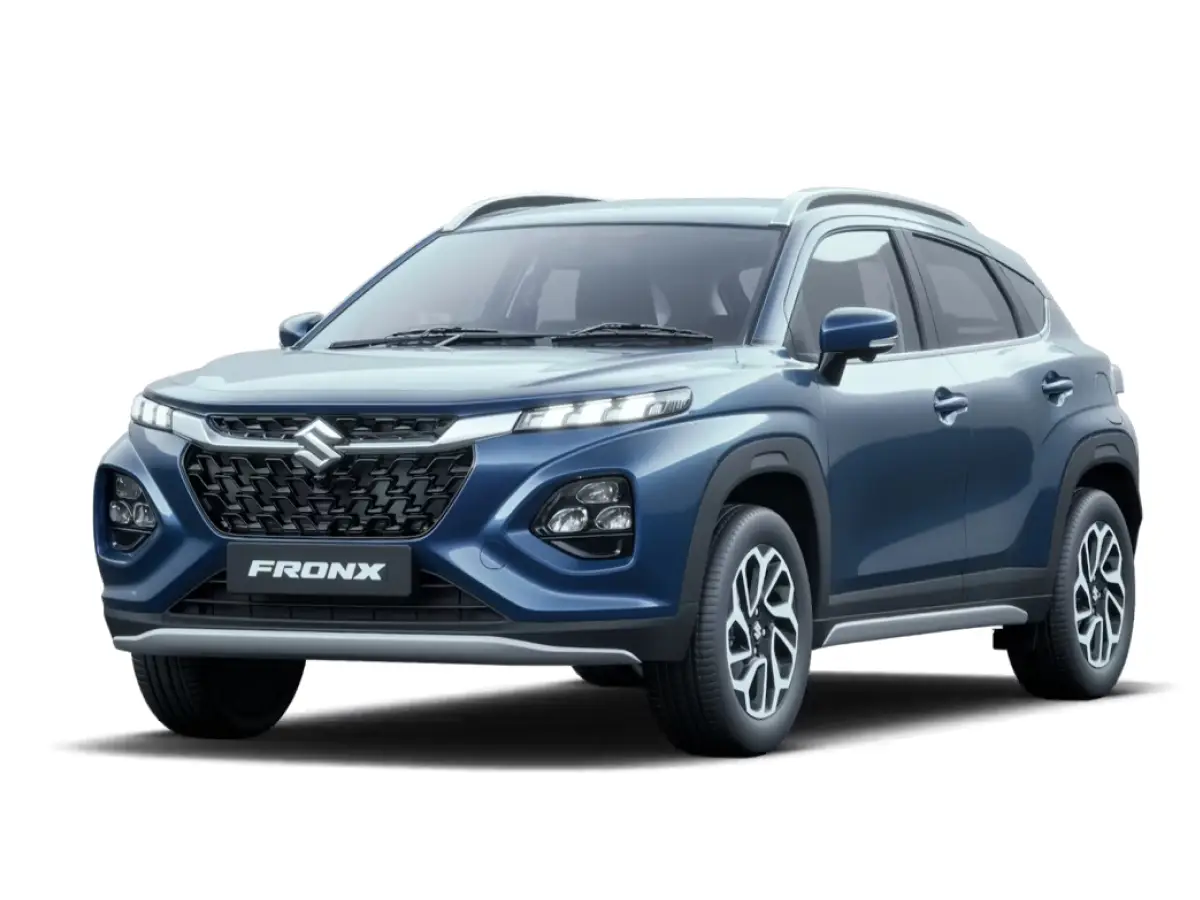
Maruti Fronx Nexa Blue

Nexa Blue

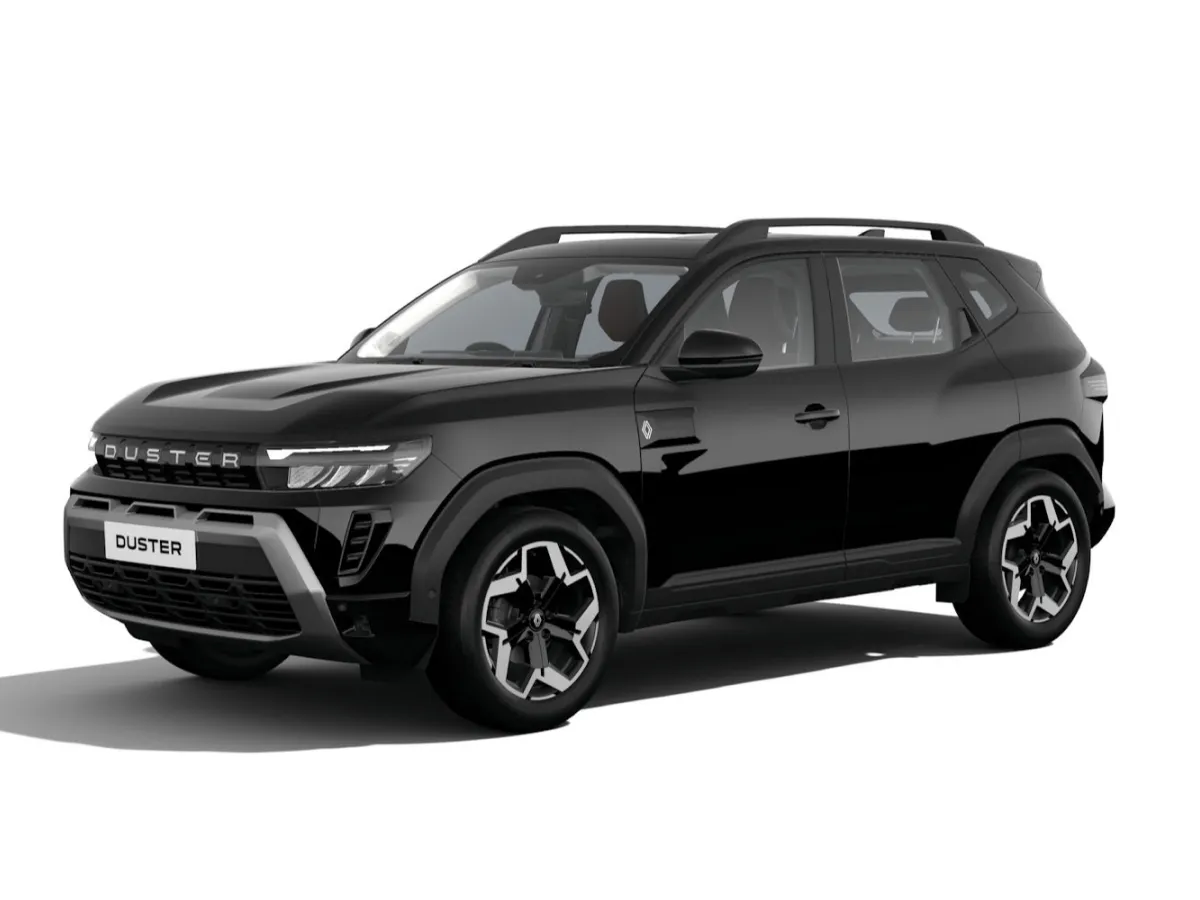
Front perspective of the Renault Duster in Stealth Black, showcasing a rugged all-black aesthetic with satin chrome skid plates.

Stealth Black

Maruti Fronx Nexa Blue

Nexa Blue

Front perspective of the Renault Duster in Stealth Black, showcasing a rugged all-black aesthetic with satin chrome skid plates.

Stealth Black

Maruti Fronx Vs Renault Duster Expert Opinions
Design and Aesthetics
Features and Specifications
After Sales Support
Brand Value
Resale Value
Likes
Dislikes
Design and Aesthetics
Features and Specifications
After Sales Support
Brand Value
Resale Value
Likes
Dislikes
Maruti Fronx Vs Renault Duster FAQs

The base Sigma variant of the Fronx starts at about ₹7.51 lakh (ex-showroom), while the top-end Alpha AT Dual Tone variant goes up to roughly ₹13.04 lakh (ex-showroom).

Because the Fronx showed that Maruti could deliver an SUV-style car with strong design, decent tech, and variant options, all while coming at a price tag that didn’t break too many wallets. It crossed milestones fast: 100,000 units in 10 months after launch, over 150,000 in 14 months, then over 200,000 in 17 months. It helped Maruti push its SUV share up in the market and proved buyers liked something that looked premium without being “too premium.”

Fronx comes with two petrol engine types: a 1.2-litre naturally aspirated DualJet engine (~ 89 PS / 113 Nm) and a 1.0-litre Turbo Boosterjet (~ 100 PS / ~148 Nm). The 1.2L is offered with manual and AMT gearboxes; the turbo 1.0L comes with manual and a 6-speed torque converter automatic in top trims. Fuel efficiency for the 1.2L MT is around 21.8 kmpl, the AMT version slightly less. For the turbo AT, efficiency drops a bit (~ 20.0-20.5 kmpl) due to more power and automatic losses.

The Fronx is 3,995 mm long, ~ 1,765 mm wide, ~ 1,550 mm tall, with a wheelbase of 2,520 mm. Minimum turning radius is 4.9 metres. Boot capacity is 308 litres. These dimensions make it compact enough to park in tighter spaces compared to bigger SUVs, yet give enough width, height, and road presence for comfort. Ground clearance is decent (official not always emphasized), which helps over speed breakers and rough roads.

If you live in a Tier-2 or Tier-3 city, want an SUV-like presence, decent boot and interior space, enjoy the style of a sporty crossover, and need multiple propulsion/transmission choices (petrol, CNG, turbo, automatic), but still want lower running and ownership costs, Fronx fits well. If you’re new to cars and want something that looks premium, feels modern, but doesn’t cost SUV-premium, Fronx is a smart middle ground.

The petrol manual Fronx delivers an ARAI-rated mileage of around 21.79 kmpl, while the AMT/automatic goes up to 22.89 kmpl. On CNG, it returns about 28.51 km per kilogram. With petrol at roughly ₹102 a litre, the cost per kilometre works out to ₹4.7 to ₹5 in ideal highway conditions, and higher in city traffic where mileage usually drops to 14–17 kmpl. The CNG trims are cheaper to run, averaging ₹3.2 to ₹3.5 per km depending on local CNG prices.

The Fronx is underpinned by Maruti’s Heartect platform, which is designed to keep weight low, boost fuel efficiency and maintain decent crash protection. This same architecture is shared with Baleno and other Maruti models, but Fronx has additional strengthening to suit its SUV-crossover stance.

6 airbags are standard in Fronx from the base variant only.

The India-spec Fronx has not yet been tested under Bharat NCAP or Global NCAP. However, the Japan-spec export version was crash-tested by JNCAP and scored four stars. That model included some additional safety assists not available in Indian trims, so while the Fronx sold in India is considered reasonably safe for its class, its exact local rating is still awaited.

The Fronx has a crossover SUV design with raised stance, muscular wheel arches, and a grille reminiscent of the Grand Vitara, giving it a more aggressive road presence. The Baleno, on the other hand, is a sleek hatchback with a streamlined silhouette, designed for city roads and aerodynamics. Many buyers joke that the Fronx is like “Baleno on steroids,” thanks to the coupe-style SUV cues.

Fronx uses a slightly stiffer suspension, giving a firm ride especially on rough roads, while Baleno has a softer suspension that absorbs bumps better. This makes Fronx feel more planted but Baleno more comfortable for daily city drives.

Fronx comes with a 1.2L DualJet petrol engine producing ~89 bhp, available with manual or automatic transmission. Baleno uses a similar 1.2L K-Series petrol engine (~88.5 bhp) with manual or AMT options. Fronx turbo variants have slightly higher torque for a more spirited drive.

Baleno edges ahead slightly with 22.35 kmpl ARAI mileage, while the Fronx delivers 21.79 kmpl for petrol manual. Turbo or automatic Fronx variants see slightly lower efficiency due to higher power output.

Choose Fronx if you want an SUV-styled car with higher road presence, slightly stiffer ride, and modern coupe-like design. Opt for Baleno if you prefer a comfortable, efficient hatchback with a slightly larger boot, lower price, and easier city driving.

The Duster 2026 adopts a "downsizing" strategy where a smaller displacement 1.3L engine is paired with a high-pressure turbocharger. This 1.3L Turbo (TCe 160) actually produces 163 hp and 280 Nm, which is significantly higher than the old 1.5L naturally aspirated engine (106 hp). This shift allows the Duster 2026 to offer better fuel efficiency during light cruising while providing superior "punch" and torque for overtaking.

The Duster 2026 is a generational leap. While the old model was based on the aging B0 platform, the new one sits on the advanced CMF-B architecture. Visually, the Duster 2026 replaces the rounded "bulky" look with a sharper, more muscular design featuring Y-shaped LED DRLs and 18-inch alloys. Inside, it swaps the dated, basic dashboard for a modern, soft-touch layered cockpit with dual digital screens.

No, Renault has officially moved away from diesel for the Indian market. The Duster 2026 is powered exclusively by a range of petrol engines, including a 1.0L Turbo for entry variants, a 1.3L Turbo for performance, and a flagship 1.8L Strong Hybrid (E-Tech) that aims to deliver diesel-like fuel efficiency by running up to 80% in EV mode during city crawls.

The Duster 2026 is packed with modern tech, including a 10.1-inch floating touchscreen with built-in Google services, a 10.25-inch fully digital instrument cluster, and wireless Android Auto/Apple CarPlay. It also features a 360-degree 3D camera, an Arkamys 3D sound system, and a first-for-Duster electric panoramic sunroof.

Yes, the Duster 2026 is the first Renault in India to feature Level 2 ADAS. This suite includes 17 India-specific functions such as Adaptive Cruise Control, Lane Keep Assist, Autonomous Emergency Braking, and Traffic Sign Recognition, significantly increasing its safety rating compared to the older generation.

Absolutely. While the base 1.0L comes with a 6-speed manual, the high-performance 1.3L engine in the Duster 2026 is paired with a 6-speed Dual-Clutch Transmission (DCT) with a wet clutch for smooth and rapid shifts. The Strong Hybrid variant uses a specialized 8-speed Dedicated Hybrid Transmission (DHT).

Duster 2026 offers a massive 212 mm of ground clearance. While the India-spec focuses on FWD (Front Wheel Drive) for efficiency, the platform is engineered for high approach and departure angles, making the Duster 2026 highly capable on broken roads and rural trails.

The Duster 2026 offers a class-leading boot capacity of 518 litres (measured up to the parcel shelf), which can be expanded to over 1,700 litres by folding the rear seats. It also introduces a powered tailgate, a feature that was completely missing in the previous generations.

Yes, Renault has "Indianized" the Duster 2026. Most notably, the India-spec model features a connected LED tail-lamp bar at the rear, which is not found on the global Dacia version. The interior also uses different materials and color schemes (like the Iconic trim’s yellow stitching) tailored to local premium tastes.

The Duster 2026 Strong Hybrid uses a 1.8L petrol engine combined with two electric motors and a 1.4 kWh battery. It starts in pure electric mode every time, and the system intelligently switches between the engine and motor to ensure maximum range. Renault claims this version of the Duster 2026 can cover up to 1,000 km on a single tank of fuel.
*Ad Advertisement banner