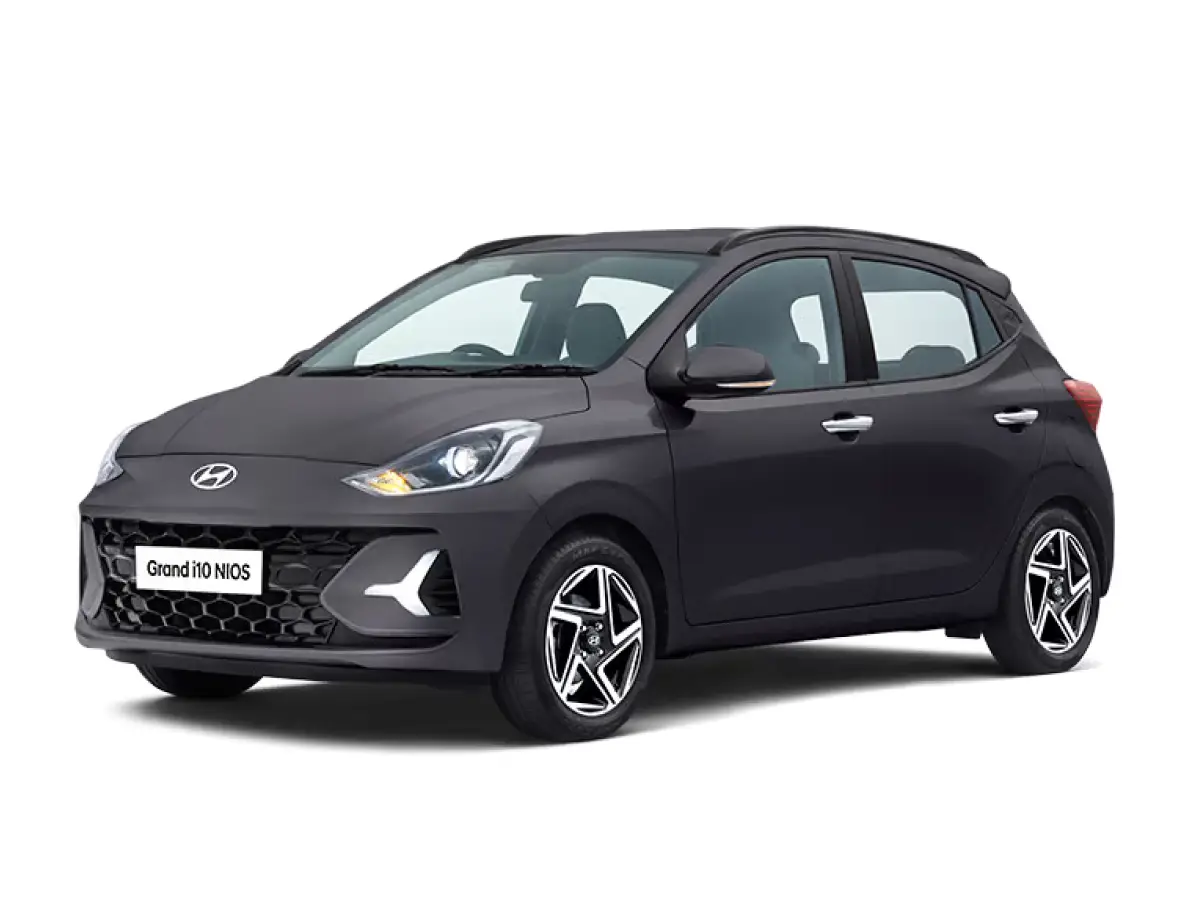





























Let's compare Maruti Celerio LXI vs Hyundai i10 Nios Grand i10 Nios Era

Compare Maruti Celerio LXI vs Hyundai i10 Nios Grand i10 Nios Era price, specifications, mileage, features and performance to find the best car for you.


Maruti Celerio LXI
Maruti Celerio
Hyundai i10 Nios Grand i10 Nios Era
Hyundai i10 Nios
Car comparison placeholder
Here is a detailed comparison of price:

Maruti Celerio LXI

Price

₹ 5.09 Lakh

On-Road Price New Delhi

EMI

₹ 9,401/month

Hyundai i10 Nios Grand i10 Nios Era

Price

₹ 5.92 Lakh

On-Road Price New Delhi

EMI

₹ 10,929/month

From the above comparison, we can conclude that Maruti Celerio feels light on the pocket compared to Hyundai i10 Nios by ₹82,744.

Dimensions & Seating

Body Type

Hatchback

Hatchback

Length

3695 mm

3815 mm +120

Width

1655 mm

1680 mm +25

Height

1555 mm +35

1520 mm

WheelBase

2435 mm

2450 mm +15

Ground Clearance

170 mm +5

165 mm

Seating Capacity

5

5

Fuel Tank Capacity

32 Liters

37 Liters +5

Boot Space

313 Liters +53

260 Liters

Engine & Transmission

Fuel Type

Petrol

Petrol

Mileage (KMPL)

25.24 +7.24

18

Range

758 Kms +98

660 Kms

Engine Type

K10 C

1.2 Kappa

Powertrain Assistance

Mild Hybrid

No

Emission Standards

Bs Vi

Bs Vi

No. of Cylinders

3

4 +1

Displacement

998 cc

1197 cc +199

Max Power

66 bhp @ 5500 rpm

82 bhp @ 6000 rpm +16

Max Torque

89 Nm @ 3500 rpm

114 Nm @ 4000 rpm +25

Transmission Type

MT

MT

Gear Box

5-MT

5-Manual

Drive Type

FWD

FWD

Top Speed

130

160 +30

Steering and Suspension

Tilt Adjust

--

--

Telescopic Adjust

--

--

Turning Radius

4.7

4.8 +0.1

Front Suspension

MacPherson Strut with Coil Spring

McPherson Strut

Rear Suspension

Torision Beam with Coil Spring

Coupled Torsion Beam Axle

Front Brakes

Disc

Disc

Rear Brakes

Drum

Drum

Safety & Security

Airbags

6

6

Seatbelt Warning

Yes

Yes

Over Speeding Warning

Yes

Yes

Anti-lock Braking System

Yes

Yes

ESP

--

--

Brake Assist

--

--

Tyre Pressure Monitor System

No

No

Reverse Camera

No

No

360 Camera

No

No

Hill Assist

--

--

Hill Descent Control

No

No

Child Lock

Yes

Yes

Isofix Child Seat Mount

--

Yes

Engine Immobilizer

Yes

Yes

ADAS

No

No

Comfort & Convenience

Power Windows

No

Only Front

ORVM Adjustment

Manual

Manual

Request Sensors

--

--

Push Button Start

No

No

Cruise Control

No

No

Keyless Entry

--

--

Steering Mounted Control

--

--

Climate Control

--

--

Rear AC Vents

No

No

Adjustable Steering Column

--

--

Interior Features

Upholstery

Fabric

Fabric

Adjustable Front Seats

Yes

Yes

Height Adjustable Driver Seat

--

--

Rear Armrest

No

No

Rear Cup Holders

--

--

Front Cup Holders

Yes

Yes

Cooled Glovebox

No

No

Exterior Features

Sunroof

No

No

Wheels

Steel Rims

Steel Rims

Fog Lights

No

No

Tyre Size

165 / 70 R14

165 / 70 R14

Daytime Running Lights

--

--

Headlight Type

Halogen

Halogen

Tailgate

Manual

Manual

Roof Rails

No

No

Rear Wiper

No

No

Infotainment & Telematics

Touch Screen

--

--

Screen Size

--

--

USB Port

Yes

--

Navigation System

No

No

Speakers

--

--

Remote App Control

No

No

Wireless Charging

No

No

Smartphone Connectivity

No

No

Telematics

Analogue-Digital

Analogue-Digital

Connectivity & Internet

USB Port

Yes

--

Navigation

No

No

Smartphone Connectivity

No

No

Maruti Celerio Vs Hyundai i10 Nios Colors

Maruti Celerio Glistening Grey

Glistening Grey

Hyundai i10 Nios Titan Grey

Titan Grey

Maruti Celerio Glistening Grey

Glistening Grey

Hyundai i10 Nios Titan Grey

Titan Grey

Maruti Celerio Vs Hyundai i10 Nios Expert Opinions
Design and Aesthetics
Features and Specifications
After Sales Support
Brand Value
Resale Value
Likes
Dislikes
Design and Aesthetics
Features and Specifications
After Sales Support
Brand Value
Resale Value
Likes
Dislikes
Maruti Celerio Vs Hyundai i10 Nios FAQs
The base LXi variant starts at ₹5.64 lakh (ex-showroom) and the top-end ZXi+ AMT goes up to ₹7.09 lakh (ex-showroom).

It is powered by a 1.0-litre K10C petrol engine producing 67 PS and 89 Nm torque. Transmission choices include a 5-speed manual and a 5-speed AMT (AGS in Maruti language), which is the highlight of the Celerio for city buyers.

Because it offers the convenience of automatic driving without the high cost of proper torque converter automatics. The AMT is tuned to deliver smooth shifts in traffic, keeps mileage high, and makes the car far less tiring to drive in congested Indian cities. For someone upgrading from a two-wheeler or hatch, this is the cheapest hassle-free automatic you can buy.

The Celerio is about 3.7 Meters long, 1.655Meters wide, and has 170 mm ground clearance. These numbers make it compact enough to weave through tight city lanes, while the high clearance prevents underbody hits on speed breakers. It feels light and nimble to drive, yet practical for Indian road conditions.

The Alto is the ultimate entry-level car, best for extremely budget-conscious buyers, small families, or those upgrading from a bike. The Celerio sits one step higher, offering more space, higher ground clearance, better features, and the option of an AMT. In short, Alto is bare-bones affordability, Celerio is affordable comfort.

Buy the Celerio if you want a compact hatch that is easy to park, fuel-efficient, and cheaper to maintain. Step up to the Baleno if you want more space, premium design, stronger road presence, and more safety features. The Baleno is better suited for long drives and family use, while the Celerio remains a pure city-friendly car.

The Celerio replaced the Maruti Zen Estilo and A Star, which were struggling in sales. The Celerio was introduced as a more stylish and practical alternative with modern features and the introduction of AMT technology in India.

Yes, the Celerio is available in CNG, which makes it one of the cheapest cars to run in India. 1. Petrol running cost: With real mileage of around 20 kmpl and fuel at ₹102 per litre, the cost comes to ₹5.1 per km. 2. CNG running cost: With real mileage of about 28–30 km/kg and CNG price around ₹75 per kg, the cost is just ₹2.5–2.7 per km.

The Celerio X was a crossover-styled version of the Celerio, featuring black cladding and a sporty design. While it offered no mechanical changes, it was targeted at younger buyers wanting more style.

The Hyundai Grand i10 Nios is priced between ₹5.98 lakh and ₹8.65 lakh (ex-showroom). It was launched in January 2023 with updated design, more features, and better safety equipment.

The car comes with a 1.2-litre Kappa MPI petrol engine (1197 cc). Transmission options include manual and AMT. Hyundai also offers a factory-fitted CNG variant for buyers who want low running costs.

The petrol version delivers around 18 kmpl. With petrol at ₹102 per litre, the running cost works out to: 102/18≈₹5.66 per km. The CNG version gives about 28 km/kg. At ₹75 per kg, the running cost is ≈₹2.67 per km.

The Nios measures 3.815 metres in length (12.5 feet), 1.68 metres in width (5.5 feet), and 1.52 metres in height (4.9 feet). Boot space is 260 litres, which is good enough for weekend luggage or daily family use.

The first i10 was around 3.56 metres long, while the Nios stretches to 3.815 metres, nearly 25 cm longer. It’s also wider and taller, which translates into more cabin comfort. Boot capacity has grown from 225 litres to 260 litres, and modern safety kit like 6 airbags, ABS with EBD, and ISOFIX mounts make it far safer. Simply put, the Nios feels like a proper grown-up version of the first i10.

If you want a stylish city hatchback with practical space and low running costs, the Nios makes sense. Petrol gives smooth performance, while CNG saves money on every trip. Compared to older i10 models, the Nios is more spacious, safer, and modern, making it a great fit for both daily commutes and small family runs.

Hyundai cars are known for low service bills, and the Nios is no exception. On average: 1. Petrol Nios yearly maintenance costs around ₹6,000–₹8,000 for regular servicing. 2. CNG Nios costs slightly more, about ₹7,000–₹9,000, since CNG filters and tuning need checks. 3. Consumables like engine oil, brake pads, and tyres add up over time, so after 4–5 years, expect some bigger bills (₹12,000–₹15,000 in those years). Over a 5-year period, the Nios typically costs ₹35,000–₹40,000 to maintain, which is very competitive compared to rivals like Swift or Tiago.
*Ad Advertisement banner