
























Let's compare Maruti Baleno Sigma vs Maruti Fronx Sigma

Compare Maruti Baleno Sigma vs Maruti Fronx Sigma price, specifications, mileage, features and performance to find the best car for you.
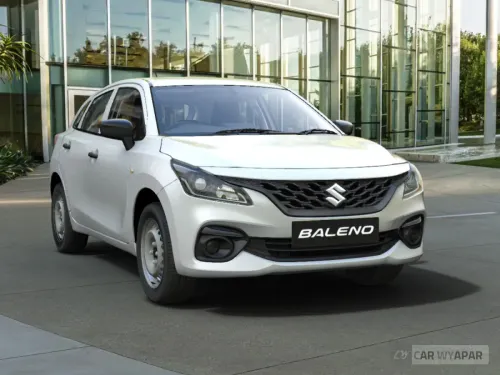
Maruti Baleno Sigma
Maruti Baleno
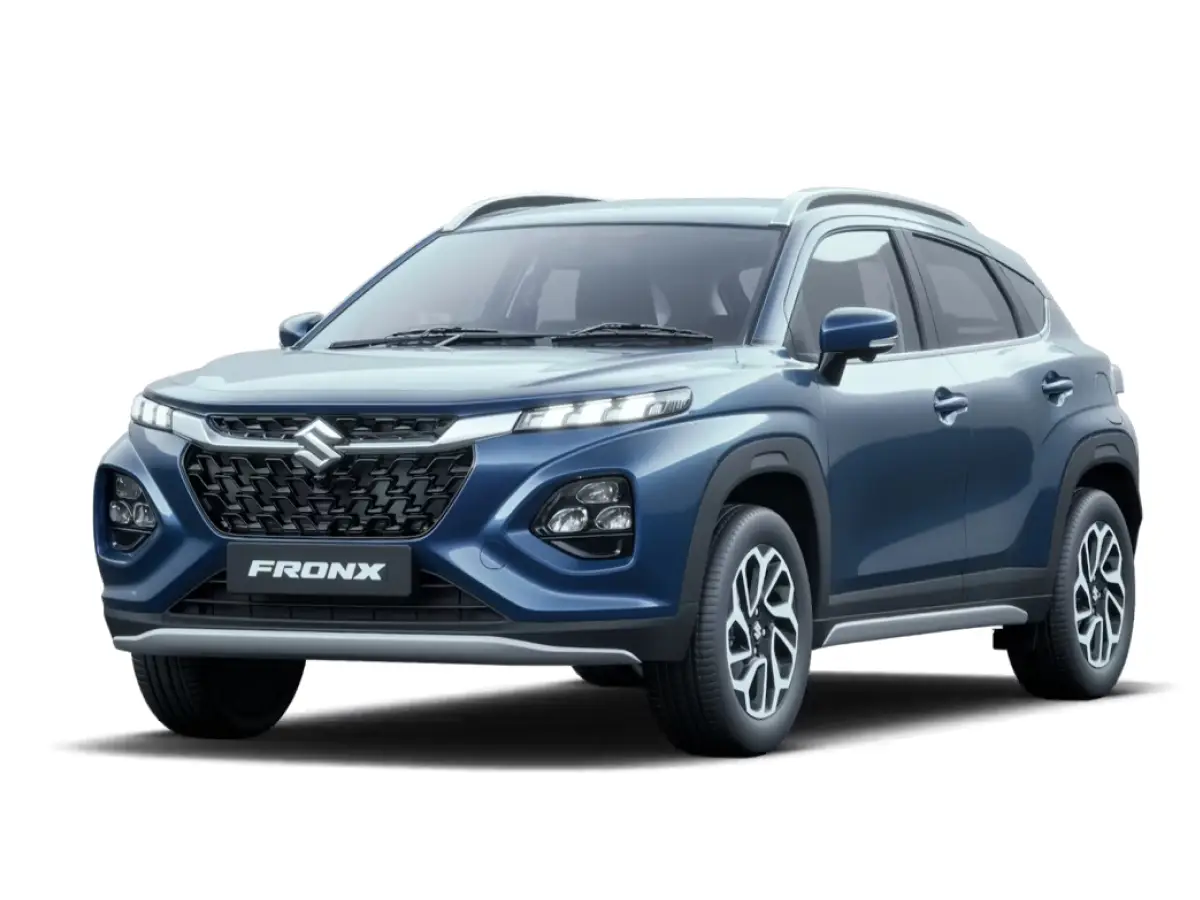
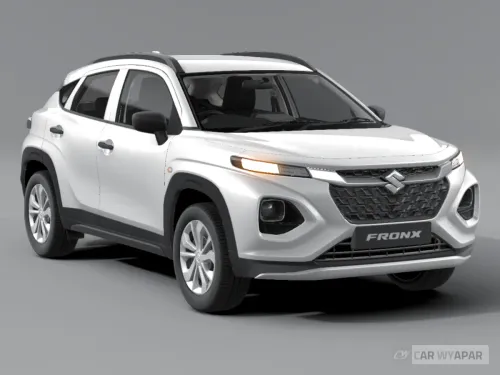
Maruti Fronx Sigma
Maruti Fronx
Car comparison placeholder
Here is a detailed comparison of price:

Maruti Baleno Sigma

Price

₹ 6.48 Lakh

On-Road Price New Delhi

EMI

₹ 11,960/month

Maruti Fronx Sigma

Price

₹ 7.61 Lakh

On-Road Price New Delhi

EMI

₹ 14,057/month

From the above comparison, we can conclude that Maruti Baleno feels light on the pocket compared to Maruti Fronx by ₹1,13,556.

Dimensions & Seating

Body Type

Hatchback

Compact Suv

Length

3990 mm

3995 mm +5

Width

1745 mm

1765 mm +20

Height

1500 mm

1550 mm +50

WheelBase

2520 mm

2520 mm

Ground Clearance

170 mm

190 mm +20

Seating Capacity

5

5

Fuel Tank Capacity

37 Liters

37 Liters

Boot Space

318 Liters +10

308 Liters

Engine & Transmission

Fuel Type

Petrol

Petrol

Mileage (KMPL)

22.35 Km/l +0.56

21.79 Km/l

Range

826 Kms +20

806 Kms

Engine Type

1.2 L K Series

1.2l Dual Jet Dual Vvt

Powertrain Assistance

Mild Hybrid

Mild Hybrid

Emission Standards

Bs Vi

Bs Vi

No. of Cylinders

4

4

Displacement

1197 cc

1197 cc

Max Power

88.50 bhp @ 6000 rpm

89bhp @ 4400 rpm +0.5

Max Torque

113 Nm @ 4400 rpm

113 Nm @ 4400 rpm

Transmission Type

MT

MT

Gear Box

5-MT

5-MT

Drive Type

FWD

FWD

Top Speed

180

180

Steering and Suspension

Tilt Adjust

Yes

Yes

Telescopic Adjust

--

--

Turning Radius

4.85

4.9 +0.05

Front Suspension

McPherson Strut

McPherson Strut

Rear Suspension

Torsion Beam

Torsion Beam

Front Brakes

Disc

Disc

Rear Brakes

Drum

Drum

Safety & Security

Airbags

6

6

Seatbelt Warning

Yes

Yes

Over Speeding Warning

Yes

Yes

Anti-lock Braking System

Yes

Yes

ESP

Yes

Yes

Brake Assist

Yes

Yes

Tyre Pressure Monitor System

No

No

Reverse Camera

No

No

360 Camera

No

No

Hill Assist

Yes

Yes

Hill Descent Control

No

No

Child Lock

Yes

Yes

Isofix Child Seat Mount

Yes

Yes

Engine Immobilizer

Yes

Yes

ADAS

No

No

Comfort & Convenience

Power Windows

Front And Rear

Front And Rear

ORVM Adjustment

Manual

Manual

Request Sensors

--

--

Push Button Start

No

No

Cruise Control

No

No

Keyless Entry

--

--

Steering Mounted Control

Yes

--

Climate Control

Automatic

Automatic

Rear AC Vents

No

No

Adjustable Steering Column

Yes

Yes

Interior Features

Upholstery

Fabric

Fabric

Adjustable Front Seats

Yes

Yes

Height Adjustable Driver Seat

--

--

Rear Armrest

No

No

Rear Cup Holders

--

--

Front Cup Holders

Yes

Yes

Cooled Glovebox

No

No

Exterior Features

Sunroof

No

No

Wheels

Steel Rims

Steel Rims

Fog Lights

No

No

Tyre Size

185 / 65 R15

195 / 60 R16

Daytime Running Lights

--

--

Headlight Type

Halogen

Projector

Tailgate

Manual

Manual

Roof Rails

No

Yes

Rear Wiper

No

No

Infotainment & Telematics

Touch Screen

--

--

Screen Size

--

--

USB Port

Yes

Yes

Navigation System

No

No

Speakers

--

--

Remote App Control

No

No

Wireless Charging

No

No

Smartphone Connectivity

No

No

Telematics

Analogue-Digital

Analogue-Digital

Connectivity & Internet

USB Port

Yes

Yes

Navigation

No

No

Smartphone Connectivity

No

No

Maruti Baleno Vs Maruti Fronx Colors
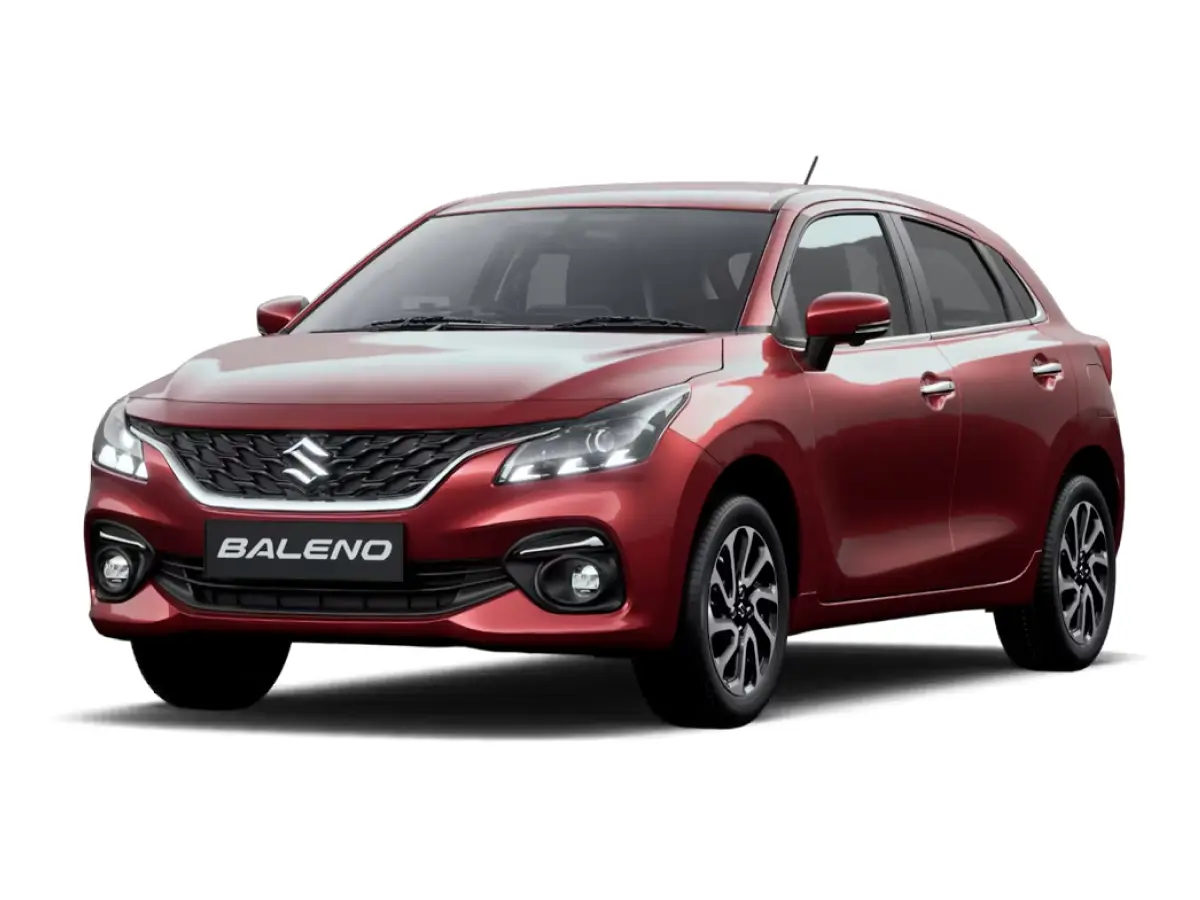
Maruti Baleno Opulent Red

Opulent Red

Maruti Fronx Nexa Blue

Nexa Blue

Maruti Baleno Opulent Red

Opulent Red

Maruti Fronx Nexa Blue

Nexa Blue

Maruti Baleno Vs Maruti Fronx Expert Opinions
Design and Aesthetics
Features and Specifications
After Sales Support
Brand Value
Resale Value
Likes
Dislikes
Design and Aesthetics
Features and Specifications
After Sales Support
Brand Value
Resale Value
Likes
Dislikes
Maruti Baleno Vs Maruti Fronx FAQs

Baleno comes with a 5-speed manual (MT) gearbox and an AMT (Automated Manual Transmission). It does not offer a torque converter or CVT in the current facelift version. AMT is not quite an AT, but it gives automatic-like ease without the full cost or complexity.

If you drive in stop-start traffic (markets, small towns, dense suburbs), AMT helps avoid constant clutch work. Compared to older CVT/auto models, the AMT in Baleno is more fuel efficient (22.94 kmpl vs older CVT) because it’s simpler and lighter. You will feel some jerks during gear shifts, particularly from 1 ⇢ 2 or when accelerating hard, but for everyday driving it reduces fatigue.

AMT works by automating a manual gearbox’s clutch and gears, so shifts aren’t as smooth or fast as a torque converter or DCT/AT, but AMT costs less, has lower maintenance, better fuel efficiency, and is simpler mechanically. Full AT gives smoother transitions, better for overtakes and steep hill starts, but at higher price and running cost.

Baleno S-CNG delivers about 30.61 km per kg of CNG, which is much cheaper per km than petrol. It uses the same 1.2-litre DualJet petrol engine, but in CNG mode, power output drops a bit (from ~90 PS / 113 Nm in petrol to ~77.5 PS / 98.5 Nm). The CNG variant is only offered with the manual gearbox, so more driver involvement but much cheaper fuel bills. Boot space reduces because the CNG tank takes up part of the boot.

Baleno is ideal for first-time car buyers, families with 1-2 kids, people commuting in cities or small towns where parking is tight, fuel cost matters, but you still want style, gadgets, comfort. Over compact SUVs, Baleno gives lower running cost, better mileage, easier parking, lower height (less wind noise), and often better drive feel for city roads.

Some detractors say Baleno feels light or less “solid” than SUVs or heavier hatchbacks — meaning body panels might flex more, noise insulation less, crash safety may feel less at high impacts. While Baleno has modern safety features, it doesn’t have the same rugged feel or perceived invincibility people associate with SUVs. But for daily driving in urban/Tier-2 areas, many users accept these tradeoffs for lower cost and better fuel economy. Still Baleno has 4 Star Bharat N-Cap Rating and it is pretty safe enough.

The petrol manual gives ~ 22.35 kmpl according to ARAI, AMT gives ~ 22.94 kmpl. The CNG version claims 30.61 km/kg.

Assuming petrol price ~ ₹102/L: • Petrol Manual at 22.35 kmpl → cost ≈ ₹4.57 / km • Petrol AMT at 22.94 kmpl → cost ≈ ₹4.45 / km If you drive 12,000 km / yr, petrol manual fuel cost ~ ₹54,840/year, AMT ~ ₹53,400/year. Over 5 years fuel cost would be ~ ₹2,70,000–₹2,75,000. CNG variant: assume CNG price ~ ₹90/kg and mileage 30.61 km/kg → cost ≈ ₹2.94 / km. Over 12,000 km/year that’s ~ ₹35,300/year, 5-year ≈ ₹1,76,500, large savings if you habitually drive many kms. Also service cost of service intervals common with Baleno petrol, slight extra on CNG specific items.

Baleno length ~ 3,990 mm, width ~ 1,745 mm, height ~ 1,500 mm, wheelbase ~ 2,520 mm. Boot space ~ 318 litres in petrol version. With the CNG version, boot space reduces a bit due to the CNG tank. Overall, it is easier to park in Tier-2/3 town lanes, garages, narrow streets; still enough luggage for 2-3 medium suitcases + daily grocery or small travel.

Baleno matters because it fills the sweet spot: premium features + smart tech (LED lights, connected car features, good interiors) + fuel efficiency + relatively low price. For buyers who can’t stretch to SUVs, Baleno offers many of the benefits without the compromises like size, higher fuel bills, higher insurance, etc. It’s often seen as a car that gives maximum value for money in its segment.

The base Sigma variant of the Fronx starts at about ₹7.51 lakh (ex-showroom), while the top-end Alpha AT Dual Tone variant goes up to roughly ₹13.04 lakh (ex-showroom).

Because the Fronx showed that Maruti could deliver an SUV-style car with strong design, decent tech, and variant options, all while coming at a price tag that didn’t break too many wallets. It crossed milestones fast: 100,000 units in 10 months after launch, over 150,000 in 14 months, then over 200,000 in 17 months. It helped Maruti push its SUV share up in the market and proved buyers liked something that looked premium without being “too premium.”

Fronx comes with two petrol engine types: a 1.2-litre naturally aspirated DualJet engine (~ 89 PS / 113 Nm) and a 1.0-litre Turbo Boosterjet (~ 100 PS / ~148 Nm). The 1.2L is offered with manual and AMT gearboxes; the turbo 1.0L comes with manual and a 6-speed torque converter automatic in top trims. Fuel efficiency for the 1.2L MT is around 21.8 kmpl, the AMT version slightly less. For the turbo AT, efficiency drops a bit (~ 20.0-20.5 kmpl) due to more power and automatic losses.

The Fronx is 3,995 mm long, ~ 1,765 mm wide, ~ 1,550 mm tall, with a wheelbase of 2,520 mm. Minimum turning radius is 4.9 metres. Boot capacity is 308 litres. These dimensions make it compact enough to park in tighter spaces compared to bigger SUVs, yet give enough width, height, and road presence for comfort. Ground clearance is decent (official not always emphasized), which helps over speed breakers and rough roads.

If you live in a Tier-2 or Tier-3 city, want an SUV-like presence, decent boot and interior space, enjoy the style of a sporty crossover, and need multiple propulsion/transmission choices (petrol, CNG, turbo, automatic), but still want lower running and ownership costs, Fronx fits well. If you’re new to cars and want something that looks premium, feels modern, but doesn’t cost SUV-premium, Fronx is a smart middle ground.

The petrol manual Fronx delivers an ARAI-rated mileage of around 21.79 kmpl, while the AMT/automatic goes up to 22.89 kmpl. On CNG, it returns about 28.51 km per kilogram. With petrol at roughly ₹102 a litre, the cost per kilometre works out to ₹4.7 to ₹5 in ideal highway conditions, and higher in city traffic where mileage usually drops to 14–17 kmpl. The CNG trims are cheaper to run, averaging ₹3.2 to ₹3.5 per km depending on local CNG prices.

The Fronx is underpinned by Maruti’s Heartect platform, which is designed to keep weight low, boost fuel efficiency and maintain decent crash protection. This same architecture is shared with Baleno and other Maruti models, but Fronx has additional strengthening to suit its SUV-crossover stance.

6 airbags are standard in Fronx from the base variant only.

The India-spec Fronx has not yet been tested under Bharat NCAP or Global NCAP. However, the Japan-spec export version was crash-tested by JNCAP and scored four stars. That model included some additional safety assists not available in Indian trims, so while the Fronx sold in India is considered reasonably safe for its class, its exact local rating is still awaited.

The Fronx has a crossover SUV design with raised stance, muscular wheel arches, and a grille reminiscent of the Grand Vitara, giving it a more aggressive road presence. The Baleno, on the other hand, is a sleek hatchback with a streamlined silhouette, designed for city roads and aerodynamics. Many buyers joke that the Fronx is like “Baleno on steroids,” thanks to the coupe-style SUV cues.

Fronx uses a slightly stiffer suspension, giving a firm ride especially on rough roads, while Baleno has a softer suspension that absorbs bumps better. This makes Fronx feel more planted but Baleno more comfortable for daily city drives.

Fronx comes with a 1.2L DualJet petrol engine producing ~89 bhp, available with manual or automatic transmission. Baleno uses a similar 1.2L K-Series petrol engine (~88.5 bhp) with manual or AMT options. Fronx turbo variants have slightly higher torque for a more spirited drive.

Baleno edges ahead slightly with 22.35 kmpl ARAI mileage, while the Fronx delivers 21.79 kmpl for petrol manual. Turbo or automatic Fronx variants see slightly lower efficiency due to higher power output.

Choose Fronx if you want an SUV-styled car with higher road presence, slightly stiffer ride, and modern coupe-like design. Opt for Baleno if you prefer a comfortable, efficient hatchback with a slightly larger boot, lower price, and easier city driving.
*Ad Advertisement banner