



























Let's compare Mahindra XUV400 XUV 400 EV EC Pro 34.5 kWh vs Tata Punch EV Smart 30 kWh

Compare Mahindra XUV400 XUV 400 EV EC Pro 34.5 kWh vs Tata Punch EV Smart 30 kWh price, specifications, mileage, features and performance to find the best car for you.
Mahindra XUV400 XUV 400 EV EC Pro 34.5 kWh
Mahindra XUV400
Tata Punch EV Smart 30 kWh
Tata Punch EV
Car comparison placeholder
Here is a detailed comparison of price:

Mahindra XUV400 XUV 400 EV EC Pro 34.5 kWh

Price

₹ 16.13 Lakh

On-Road Price New Delhi

EMI

₹ 29,775/month

Tata Punch EV Smart 30 kWh

Price

₹ 10.12 Lakh

On-Road Price New Delhi

EMI

₹ 18,689/month

From the above comparison, we can conclude that Tata Punch EV feels light on the pocket compared to Mahindra XUV400 by ₹6,00,387.

Dimensions & Seating

Body Type

Suv

Compact Suv

Length

4200 mm +320

3880 mm

Width

1821 mm +79

1742 mm

Height

1634 mm +12

1622 mm

WheelBase

2600 mm +155

2445 mm

Ground Clearance

201 mm +6

195 mm

Seating Capacity

5

5

Battery Capacity

34.5 kWh +4.5

30 kWh

Boot Space

378 Liters +12

366 Liters

Engine & Transmission

Power Source

Electric

Electric

Mileage (KMPL)

11.5 Km/kWh

12.1 KM/kWh +0.6

Range

456 Kms +91

365 Kms

Motor Type

Single Pmsm

Pmsm

Powertrain Assistance

--

--

Emission Standards

Zev

Zev

Battery Type

Li-Ion

Li-Ion

Displacement

--

--

Max Power

148 bhp +61

87 bhp

Max Torque

310 bhp +156

154 Nm

Transmission Type

AT

AT

Gear Box

1-AT

1 AT

Drive Type

FWD

FWD

Top Speed

150

150

Steering and Suspension

Tilt Adjust

Yes

Yes

Telescopic Adjust

Yes

--

Turning Radius

5.3 +0.4

4.9

Front Suspension

McPherson Strut with Anti-roll Bar

McPherson Strut

Rear Suspension

Twist Beam Suspension with Coil Spring

Twist beam

Front Brakes

Disc

Disc

Rear Brakes

Disc

Drum

Safety & Security

Airbags

2

6 +4

Seatbelt Warning

Yes

Yes

Over Speeding Warning

Yes

Yes

Anti-lock Braking System

Yes

Yes

ESP

Yes

Yes

Brake Assist

Yes

--

Tyre Pressure Monitor System

Yes

Yes

Reverse Camera

No

No

360 Camera

No

No

Hill Assist

--

--

Hill Descent Control

No

No

Child Lock

Yes

Yes

Isofix Child Seat Mount

Yes

Yes

Engine Immobilizer

Yes

Yes

ADAS

No

No

Comfort & Convenience

Power Windows

Front And Rear

Only Front

ORVM Adjustment

Electric

Manual

Request Sensors

Yes

--

Push Button Start

Yes

No

Cruise Control

No

No

Keyless Entry

Yes

--

Steering Mounted Control

Yes

Yes

Climate Control

Automatic

Automatic

Rear AC Vents

Yes

No

Adjustable Steering Column

Yes

Yes

Interior Features

Upholstery

Fabric

Fabric

Adjustable Front Seats

Yes

Yes

Height Adjustable Driver Seat

Yes

Yes

Rear Armrest

No

No

Rear Cup Holders

--

--

Front Cup Holders

Yes

Yes

Cooled Glovebox

No

No

Exterior Features

Sunroof

No

No

Wheels

Steel Rims

Steel Rims

Fog Lights

No

No

Tyre Size

205 / 65 R16

185 / 70 R15

Daytime Running Lights

--

LED

Headlight Type

Halogen

Halogen

Tailgate

Electric

Manual

Roof Rails

No

No

Rear Wiper

No

No

Infotainment & Telematics

Touch Screen

--

--

Screen Size

--

--

USB Port

Yes

Yes

Navigation System

No

No

Speakers

4

--

Remote App Control

Yes

No

Wireless Charging

No

No

Smartphone Connectivity

Yes

No

Telematics

Digital

Digital

Connectivity & Internet

USB Port

Yes

Yes

Navigation

No

No

Smartphone Connectivity

Yes

No

Mahindra XUV400 Vs Tata Punch EV Colors
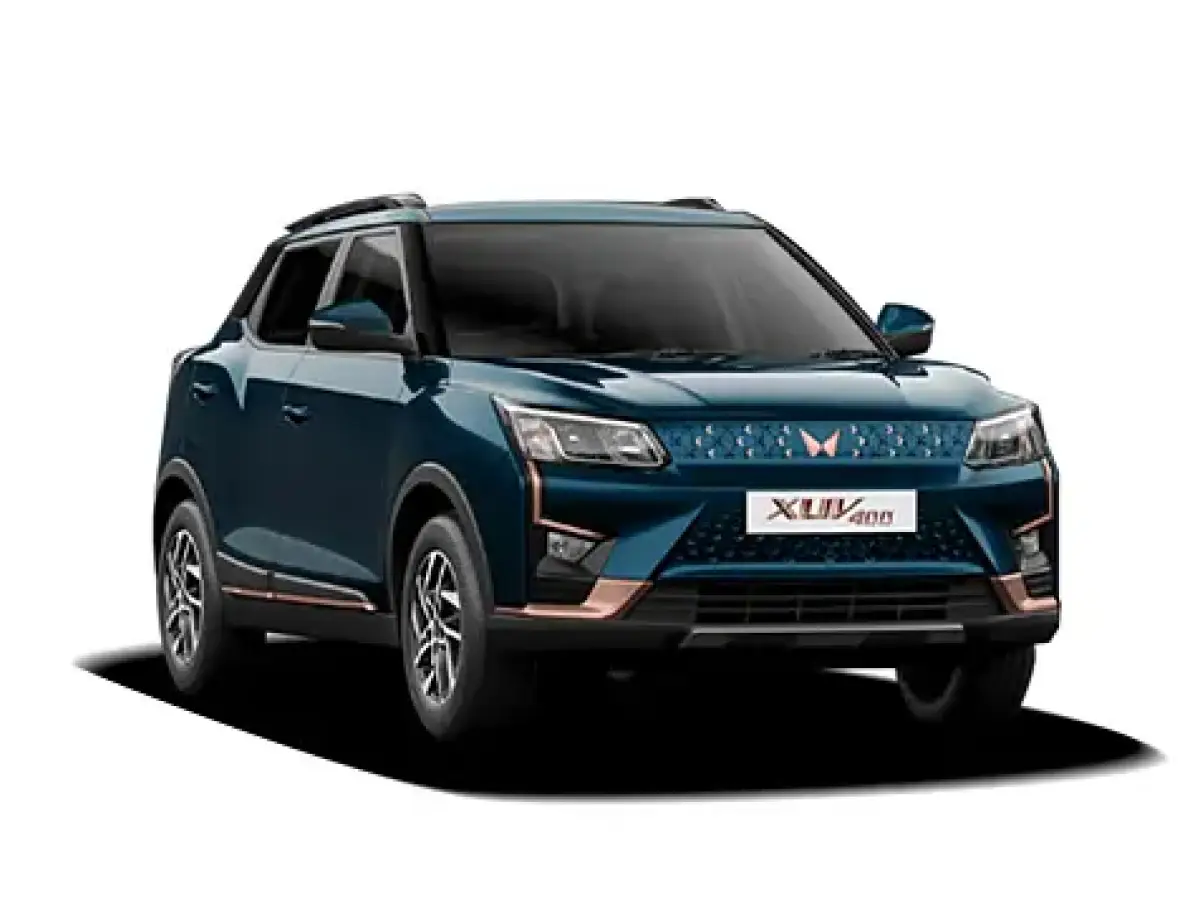
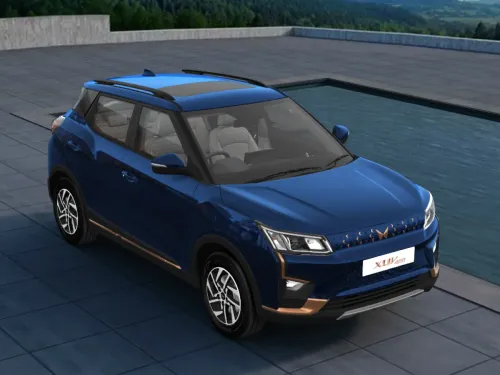
Mahindra XUV400 Nebula Blue

Nebula Blue

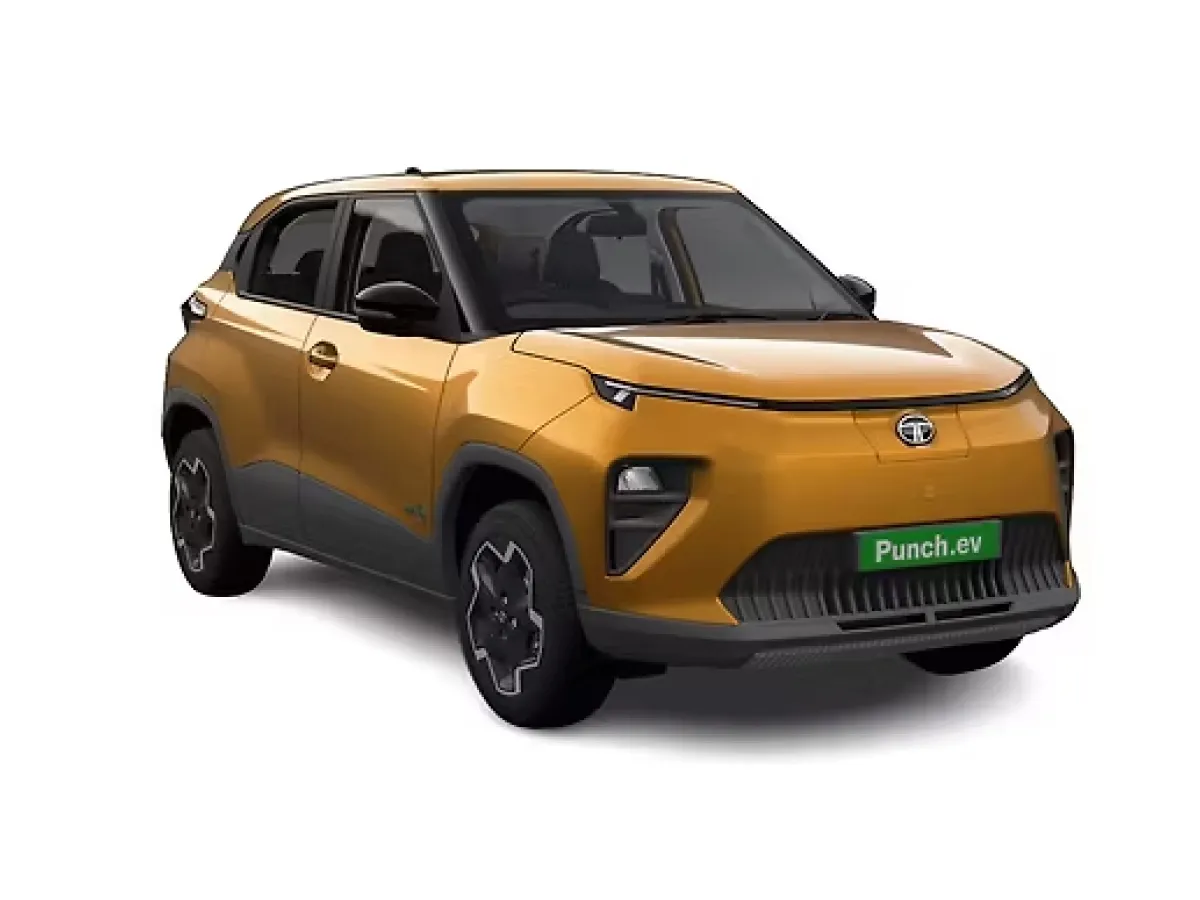
Tata Punch.ev in a rich Caramel monotone finish.

Caramel

Mahindra XUV400 Nebula Blue

Nebula Blue

Tata Punch.ev in a rich Caramel monotone finish.

Caramel

Mahindra XUV400 Vs Tata Punch EV Expert Opinions
Design and Aesthetics
Features and Specifications
After Sales Support
Brand Value
Resale Value
Likes
Dislikes
Design and Aesthetics
Features and Specifications
After Sales Support
Brand Value
Resale Value
Likes
Dislikes
Mahindra XUV400 Vs Tata Punch EV FAQs

Yes, the Mahindra XUV400 is built upon the X100 platform of the SsangYong Tivoli. This platform was initially designed for internal combustion engine (ICE) vehicles, and Mahindra adapted it to an ICE car, XUV 300 (now 3XO) accommodate electric vehicle (EV) components.

No, the XUV400 is not a ground-up EV. It is a retrofit of the existing XUV300, which shares its platform with the Tivoli. Mahindra integrated an electric powertrain into this existing structure, rather than designing a new platform specifically for electric propulsion.

Retrofitting allows for quicker time-to-market and cost savings compared to developing a new platform. It also enables manufacturers to leverage existing designs and components, which can be beneficial in markets where rapid adoption of EVs is occurring.

The XUV400 is targeted at urban professionals and small families seeking an affordable entry into the electric vehicle market. It appeals to those looking for a compact SUV with modern features and the benefits of electric driving, such as lower running costs and reduced environmental impact.

Both models share Mahindra's design language and offer a range of modern features. However, the XUV400, being an electric vehicle, focuses more on sustainability and efficiency, while the XUV3XO emphasizes traditional SUV attributes with internal combustion engines. Specific feature comparisons would depend on the exact trims and configurations of each model.

The XUV400 offers two battery options: 1. 34.5 kWh battery with an ARAI-certified range of 375 km. 2. 39.4 kWh battery with an ARAI-certified range of 456 km.

The XUV400 delivers an efficiency of 11.5 km/kWh.

To calculate the per-kilometer running cost: 1. 34.5 kWh battery: • Efficiency = 11.5 km/kWh • Cost of electricity (approx.) = ₹10 per kWh • Cost per km = ₹10 / 11.5 km = ₹0.87/km 2. 39.4 kWh battery: • Efficiency = 11.5 km/kWh • Cost of electricity (approx.) = ₹10 per kWh • Cost per km = ₹10 / 11.5 km = ₹0.87/km

Assuming an average monthly driving distance of 1,000 km: • Annual driving distance: 12,000 km • 5-year driving distance: 60,000 km

The 2026 model gets bigger battery packs, better range, faster charging, updated screens, improved software, and refined motor tuning.

The overall dimensions remain similar, but interior tech and packaging feel more modern and efficient.

The battery upgrade. Larger 30 kWh and 40 kWh options replace the smaller packs from the first generation.

The larger battery variant delivers a much higher certified range and stronger real world performance than the previous model.

Yes, the long range variant can comfortably cover Delhi to Jaipur without drama, assuming normal driving conditions.

Shimla is a hill station, so range drops during climbs. A mid way charging stop is practical and realistic.

Yes. Elevation gain consumes more energy. Regenerative braking helps recover some charge while descending.

Less than before. Bigger batteries and improved charging network make ownership easier.

It recovers energy when you slow down, especially useful in city traffic.

Yes. Most urban users will charge once every few days, not daily.

Major highways and metro cities have growing fast charging networks. Planning apps make it simpler.

It uses updated LFP cells, known for better thermal stability and long life.

It shows how quickly battery tech and charging speed are improving within just a few years.

It’s about ₹1.20 per km, if the car does 7.5 km per kWh and electricity costs ₹9 per unit.

A petrol car at 15 km/litre and petrol at ₹100/litre is about ₹6.67 per km. EV cost is a fraction of that.

Yes. AC uses extra energy, so you might drop from 7.5 km/kWh to maybe 6–6.5 km/kWh in hot city traffic, slightly raising cost per km.

Usually 8 years or a set number of km for the battery pack and high-voltage parts, protecting against premature failure.

For daily use, charging to around 80–90% is healthier for the battery. Full 100% is best saved for long trips.

EV batteries self-discharge slowly. It’s best to leave it around 50–70% state of charge, not 100%.
*Ad Advertisement banner