



























Let's compare Mahindra XUV400 XUV 400 EV EC Pro 34.5 kWh vs Hyundai Venue HX2 (P)

Compare Mahindra XUV400 XUV 400 EV EC Pro 34.5 kWh vs Hyundai Venue HX2 (P) price, specifications, mileage, features and performance to find the best car for you.
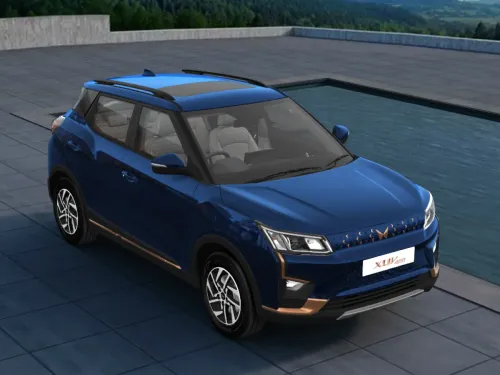
Mahindra XUV400 XUV 400 EV EC Pro 34.5 kWh
Mahindra XUV400
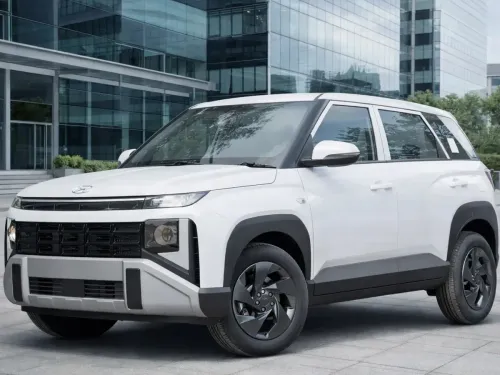
Hyundai Venue HX2 (P)
Hyundai Venue
Car comparison placeholder
Here is a detailed comparison of price:

Mahindra XUV400 XUV 400 EV EC Pro 34.5 kWh

Price

₹ 16.13 Lakh

On-Road Price New Delhi

EMI

₹ 29,775/month

Hyundai Venue HX2 (P)

Price

₹ 8.87 Lakh

On-Road Price New Delhi

EMI

₹ 16,387/month

From the above comparison, we can conclude that Hyundai Venue feels light on the pocket compared to Mahindra XUV400 by ₹7,25,019.

Dimensions & Seating

Body Type

Suv

Compact Suv

Length

4200 mm +205

3995 mm

Width

1821 mm +21

1800 mm

Height

1634 mm

1665 mm +31

WheelBase

2600 mm +80

2520 mm

Ground Clearance

201 mm +11

190 mm

Seating Capacity

5

5

Fuel Tank/Battery Capacity

34.5 kWh

45 Liters

Boot Space

378 Liters +3

375 Liters

Engine & Transmission

Power Source/Fuel Type

Electric

Petrol

Mileage (KMPL)

11.5 Km/kWh

18.5 Km/l +7

Range

456 Kms

812 Kms +356

Engine/Motor Type

Single Pmsm

Kappa 1.2-Litre Mpi

Powertrain Assistance

--

No

Emission Standards

Zev

Bs Vi

No. of Cylinders/Battery Type

Li-Ion

4

Displacement

--

1197 cc

Max Power

148 bhp +66

82 bhp @ 6000 rpm

Max Torque

310 bhp +195.3

114.7 Nm @ 4200 rpm

Transmission Type

AT

MT

Gear Box

1-AT

5-MT

Drive Type

FWD

FWD

Top Speed

150

165 +15

Steering and Suspension

Tilt Adjust

Yes

Yes

Telescopic Adjust

Yes

--

Turning Radius

5.3 +0.2

5.1

Front Suspension

McPherson Strut with Anti-roll Bar

McPherson Strut

Rear Suspension

Twist Beam Suspension with Coil Spring

Coupled torsion beam

Front Brakes

Disc

Disc

Rear Brakes

Disc

Drum

Safety & Security

Airbags

2

6 +4

Seatbelt Warning

Yes

Yes

Over Speeding Warning

Yes

Yes

Anti-lock Braking System

Yes

Yes

ESP

Yes

Yes

Brake Assist

Yes

--

Tyre Pressure Monitor System

Yes

No

Reverse Camera

No

No

360 Camera

No

No

Hill Assist

--

Yes

Hill Descent Control

No

No

Child Lock

Yes

Yes

Isofix Child Seat Mount

Yes

Yes

Engine Immobilizer

Yes

Yes

ADAS

No

No

Comfort & Convenience

Power Windows

Front And Rear

Front And Rear

ORVM Adjustment

Electric

Electric

Request Sensors

Yes

Yes

Push Button Start

Yes

No

Cruise Control

No

No

Keyless Entry

Yes

Yes

Steering Mounted Control

Yes

Yes

Climate Control

Automatic

--

Rear AC Vents

Yes

Yes

Adjustable Steering Column

Yes

Yes

Interior Features

Upholstery

Fabric

Fabric

Adjustable Front Seats

Yes

Yes

Height Adjustable Driver Seat

Yes

--

Rear Armrest

No

No

Rear Cup Holders

--

--

Front Cup Holders

Yes

--

Cooled Glovebox

No

No

Exterior Features

Sunroof

No

No

Wheels

Steel Rims

Steel Rims

Fog Lights

No

No

Tyre Size

205 / 65 R16

195/65 R15

Daytime Running Lights

--

LED

Headlight Type

Halogen

Projector

Tailgate

Electric

Electric

Roof Rails

No

No

Rear Wiper

No

No

Infotainment & Telematics

Touch Screen

--

Yes

Screen Size

--

10.25 inch

USB Port

Yes

Yes

Navigation System

No

No

Speakers

4

4

Remote App Control

Yes

No

Wireless Charging

No

No

Smartphone Connectivity

Yes

Yes

Telematics

Digital

Digital

Connectivity & Internet

USB Port

Yes

Yes

Navigation

No

No

Smartphone Connectivity

Yes

Yes

Mahindra XUV400 Vs Hyundai Venue Colors
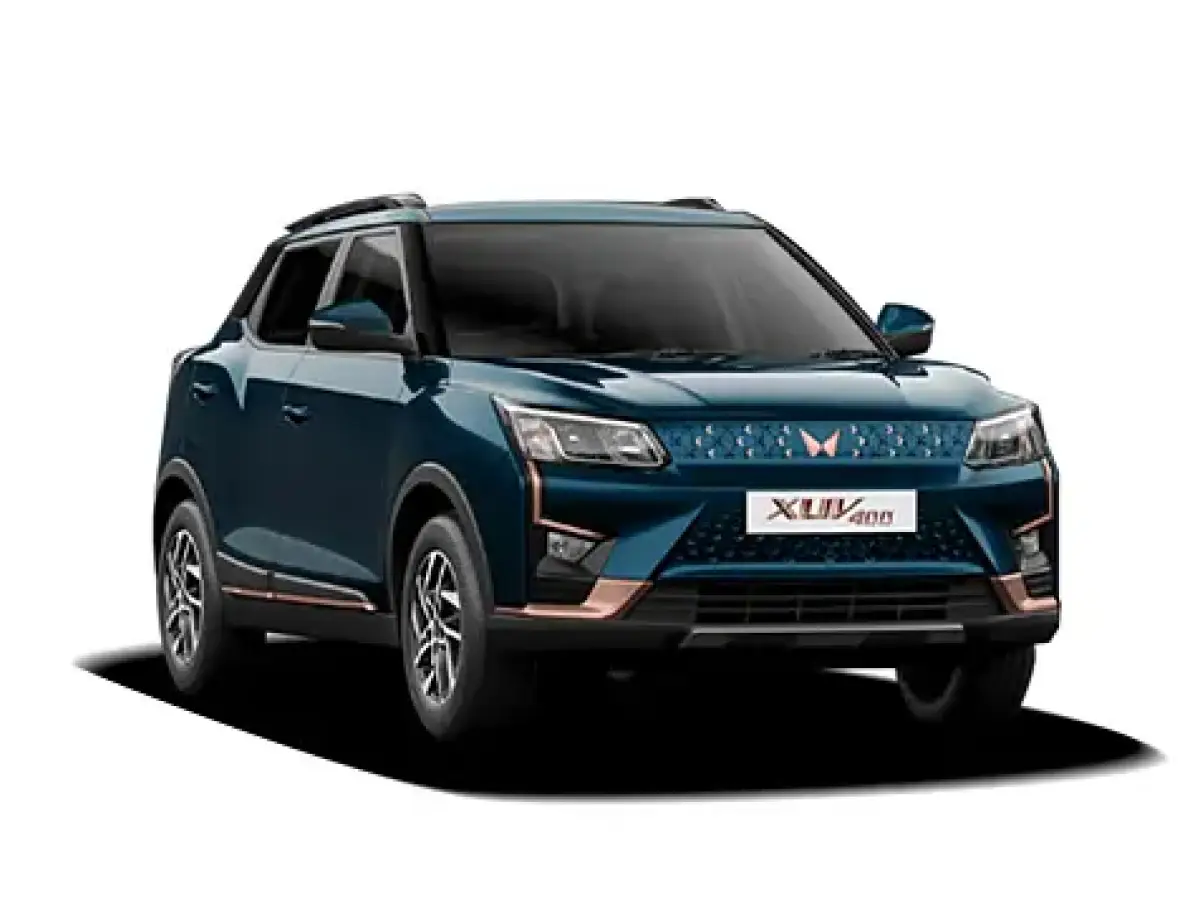
Mahindra XUV400 Nebula Blue

Nebula Blue

Abyss Black colored venue 2025

Abyss Black

Mahindra XUV400 Nebula Blue

Nebula Blue

Abyss Black colored venue 2025

Abyss Black

Mahindra XUV400 Vs Hyundai Venue Expert Opinions
Design and Aesthetics
Features and Specifications
After Sales Support
Brand Value
Resale Value
Likes
Dislikes
Design and Aesthetics
Features and Specifications
After Sales Support
Brand Value
Resale Value
Likes
Dislikes
Mahindra XUV400 Vs Hyundai Venue FAQs

Yes, the Mahindra XUV400 is built upon the X100 platform of the SsangYong Tivoli. This platform was initially designed for internal combustion engine (ICE) vehicles, and Mahindra adapted it to an ICE car, XUV 300 (now 3XO) accommodate electric vehicle (EV) components.

No, the XUV400 is not a ground-up EV. It is a retrofit of the existing XUV300, which shares its platform with the Tivoli. Mahindra integrated an electric powertrain into this existing structure, rather than designing a new platform specifically for electric propulsion.

Retrofitting allows for quicker time-to-market and cost savings compared to developing a new platform. It also enables manufacturers to leverage existing designs and components, which can be beneficial in markets where rapid adoption of EVs is occurring.

The XUV400 is targeted at urban professionals and small families seeking an affordable entry into the electric vehicle market. It appeals to those looking for a compact SUV with modern features and the benefits of electric driving, such as lower running costs and reduced environmental impact.

Both models share Mahindra's design language and offer a range of modern features. However, the XUV400, being an electric vehicle, focuses more on sustainability and efficiency, while the XUV3XO emphasizes traditional SUV attributes with internal combustion engines. Specific feature comparisons would depend on the exact trims and configurations of each model.

The XUV400 offers two battery options: 1. 34.5 kWh battery with an ARAI-certified range of 375 km. 2. 39.4 kWh battery with an ARAI-certified range of 456 km.

The XUV400 delivers an efficiency of 11.5 km/kWh.

To calculate the per-kilometer running cost: 1. 34.5 kWh battery: • Efficiency = 11.5 km/kWh • Cost of electricity (approx.) = ₹10 per kWh • Cost per km = ₹10 / 11.5 km = ₹0.87/km 2. 39.4 kWh battery: • Efficiency = 11.5 km/kWh • Cost of electricity (approx.) = ₹10 per kWh • Cost per km = ₹10 / 11.5 km = ₹0.87/km

Assuming an average monthly driving distance of 1,000 km: • Annual driving distance: 12,000 km • 5-year driving distance: 60,000 km

The 2025 model adopts a "Dark Chrome" rectangular grille and a more muscular, boxy silhouette. It features new quad-beam LED headlamps and a sleeker "Horizon" LED light bar at the rear, making it look like a "mini-Creta."

Yes. It is 30mm wider and 48mm taller, with a 20mm longer wheelbase. This translates to better shoulder room and significantly more rear legroom than the previous generation.

The cabin now features a "dual-screen" layout with two 12.3-inch curved displays (one for infotainment, one for the cluster). It also introduces a "coffee-table" center console and premium dual-tone Dark Navy and Dove Grey upholstery.

Massively. It has upgraded from Level 1 to Level 2 ADAS, which uses both cameras and radar. It also now offers a 360-degree Surround View Monitor (SVM) and Blind Spot View Monitor.

The 2025 Venue introduces Front Ventilated Seats, a 4-way powered driver's seat, and an 8-speaker Bose Premium Sound System, which were previously unavailable in this model.

The N Line features a unique "Chequered Flag" grille, sportier bumpers with red accents, larger 17-inch alloy wheels (vs 16-inch on standard), and a dual-tip exhaust.

You can choose from three engines: • 1.2L Kappa Petrol: 83 PS (City-friendly) • 1.0L Turbo GDi Petrol: 120 PS (Performance-focused) • 1.5L U2 CRDi Diesel: 116 PS (Long-distance efficiency)
*Ad Advertisement banner