



















Let's compare Mahindra Thar AXT RWD Diesel vs Toyota Fortuner 4X2 Petrol

Compare Mahindra Thar AXT RWD Diesel vs Toyota Fortuner 4X2 Petrol price, specifications, mileage, features and performance to find the best car for you.
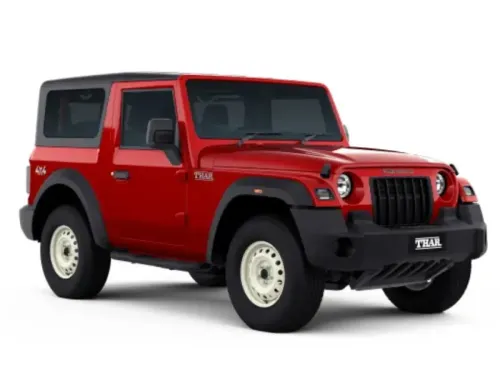
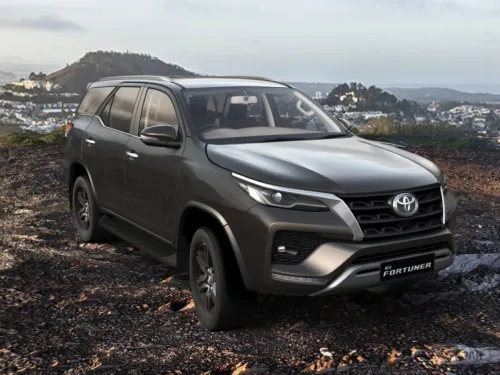
Mahindra Thar AXT RWD Diesel
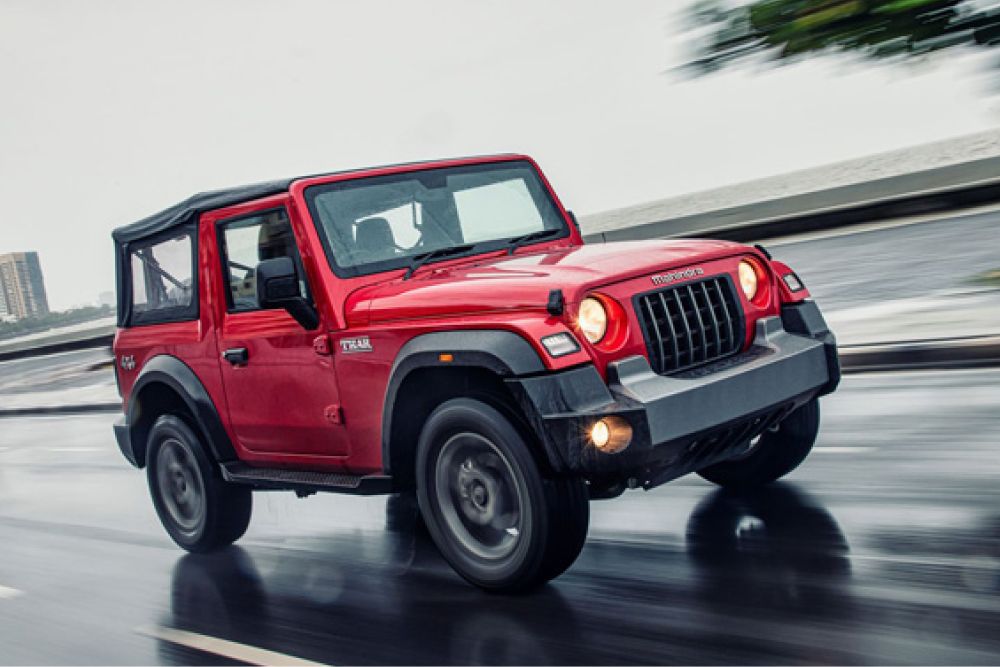
Mahindra Thar
Toyota Fortuner 4X2 Petrol
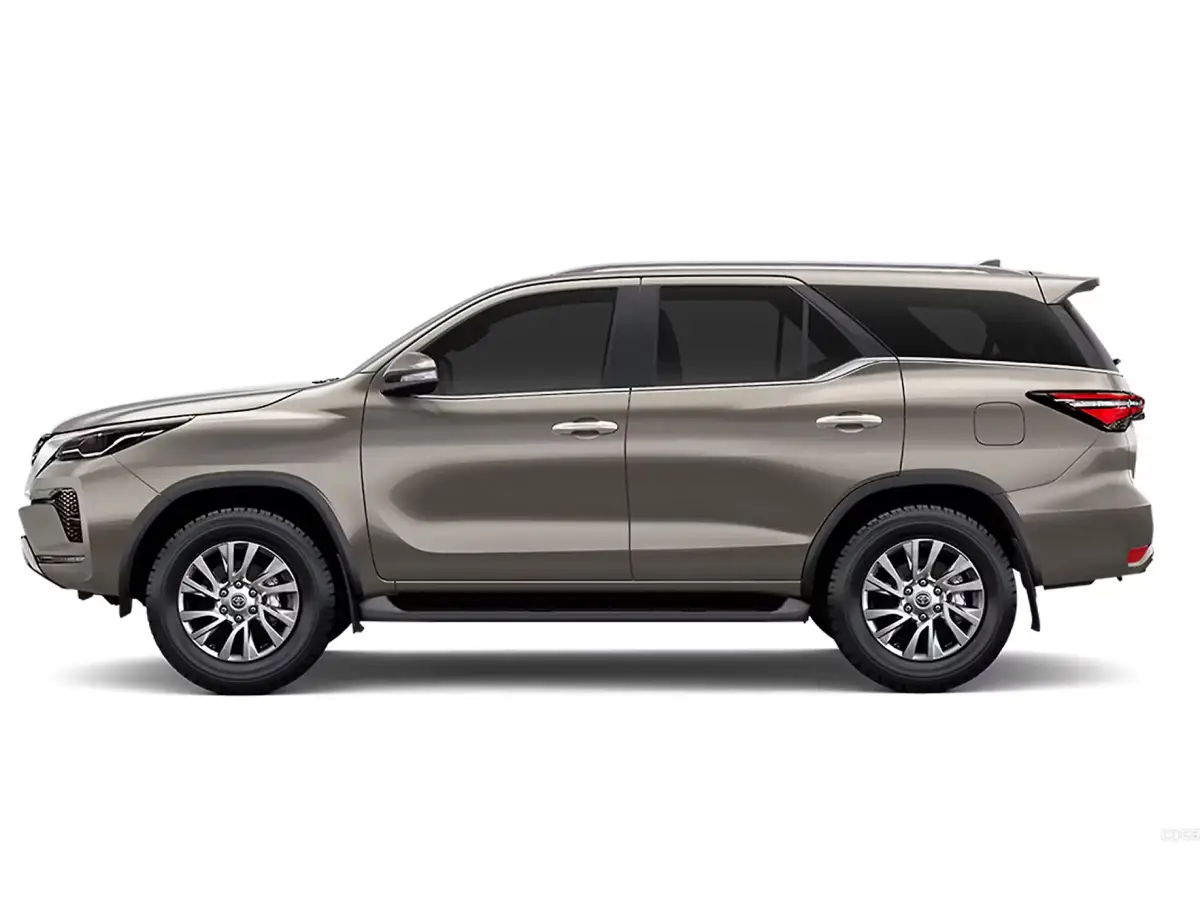
Toyota Fortuner
Car comparison placeholder
Here is a detailed comparison of price:

Mahindra Thar AXT RWD Diesel

Price

₹ 11.26 Lakh

On-Road Price New Delhi

EMI

₹ 20,789/month

Toyota Fortuner 4X2 Petrol

Price

₹ 38.77 Lakh

On-Road Price New Delhi

EMI

₹ 71,585/month

From the above comparison, we can conclude that Mahindra Thar feels light on the pocket compared to Toyota Fortuner by ₹27,50,944.

Dimensions & Seating

Body Type

Suv

Suv

Length

3985 mm

4795 mm +810

Width

1820 mm

1855 mm +35

Height

1850 mm +15

1835 mm

WheelBase

2450 mm

2745 mm +295

Ground Clearance

226 mm +1

225 mm

Seating Capacity

4

7 +3

Fuel Tank Capacity

57 Liters

80 Liters +23

Boot Space

-- Liters

296 Liters

Engine & Transmission

Fuel Type

Diesel

Petrol

Mileage (KMPL)

15.2 Km/l +4

11.2 Km/l

Range

866 Kms

884 Kms +18

Engine Type

D117 Crde

2tr-Fe I4 Dual Vvt-I

Powertrain Assistance

No

No

Emission Standards

Bs Vi

Bs Vi

No. of Cylinders

4

4

Displacement

1497 cc

2694 cc +1197

Max Power

117 bhp @ 3500 rpm

164 bhp @ 5200 rpm +47

Max Torque

300 Nm @ 1750-2500 rpm +55

245 Nm @ 4000 rpm

Transmission Type

MT

AT

Gear Box

6-MT

6-TC

Drive Type

RWD

RWD

Top Speed

155

190 +35

Steering and Suspension

Tilt Adjust

Yes

Yes

Telescopic Adjust

--

Yes

Turning Radius

5.5

5.8 +0.3

Front Suspension

Independent Double Wishbone

Double Wishbone with Stabiliser

Rear Suspension

Multilink solid Rear Axle

4-Link with Coil Spring and Stabiliser

Front Brakes

Disc

Disc

Rear Brakes

Drum

Disc

Safety & Security

Airbags

2

7 +5

Seatbelt Warning

Yes

Yes

Over Speeding Warning

Yes

Yes

Anti-lock Braking System

Yes

Yes

ESP

Yes

Yes

Brake Assist

Yes

Yes

Tyre Pressure Monitor System

No

No

Reverse Camera

No

Yes

360 Camera

No

No

Hill Assist

Yes

Yes

Hill Descent Control

Yes

No

Child Lock

Yes

Yes

Isofix Child Seat Mount

Yes

Yes

Engine Immobilizer

--

Yes

ADAS

No

No

Comfort & Convenience

Power Windows

Only Front

Front And Rear

ORVM Adjustment

Manual

Electric

Request Sensors

--

Yes

Push Button Start

No

Yes

Cruise Control

No

Yes

Keyless Entry

--

Yes

Steering Mounted Control

--

Yes

Climate Control

--

Automatic

Rear AC Vents

No

Yes

Adjustable Steering Column

Yes

Yes

Interior Features

Upholstery

Fabric

Leather

Adjustable Front Seats

Yes

Yes

Height Adjustable Driver Seat

Yes

Yes

Rear Armrest

Yes

Yes

Rear Cup Holders

--

Yes

Front Cup Holders

Yes

Yes

Cooled Glovebox

No

Yes

Exterior Features

Sunroof

Not Compatible

No

Wheels

Steel Rims

Alloy

Fog Lights

No

Yes

Tyre Size

245 / 75 R16

265 / 65 R17

Daytime Running Lights

--

LED

Headlight Type

Halogen

Projector Led

Tailgate

Manual

Electric

Roof Rails

No

Yes

Rear Wiper

No

Rear Wiper

Infotainment & Telematics

Touch Screen

--

Yes

Screen Size

--

8 inch

USB Port

Yes

Yes

Navigation System

No

Yes

Speakers

--

6

Remote App Control

No

Yes

Wireless Charging

No

No

Smartphone Connectivity

No

Yes

Telematics

Analogue-Digital

Analogue-Digital

Connectivity & Internet

USB Port

Yes

Yes

Navigation

No

Yes

Smartphone Connectivity

No

Yes

Mahindra Thar Vs Toyota Fortuner Colors
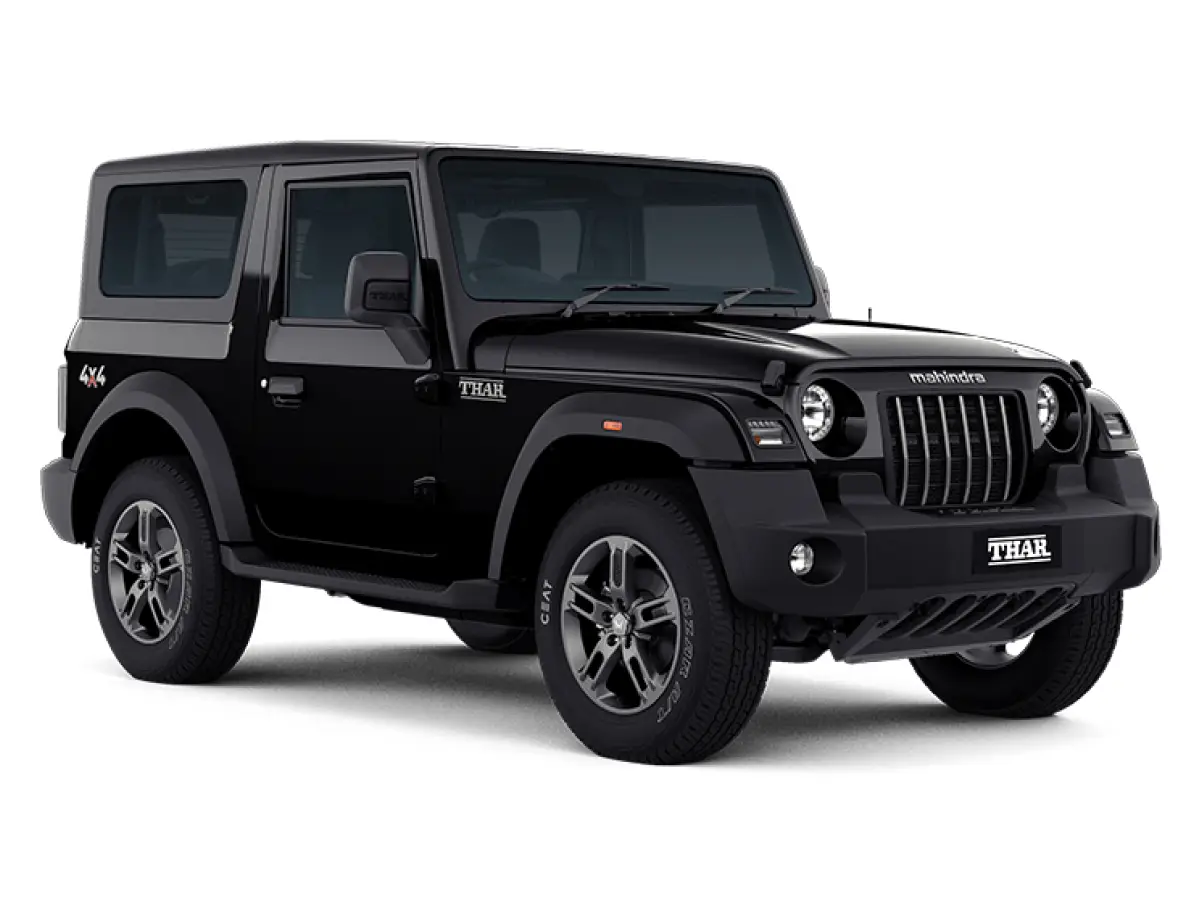
Mahindra Thar STEALTH BLACK

STEALTH BLACK

Toyota Fortuner Avant-Garde Bronze

Avant-Garde Bronze

Mahindra Thar STEALTH BLACK

STEALTH BLACK

Toyota Fortuner Avant-Garde Bronze

Avant-Garde Bronze

Mahindra Thar Vs Toyota Fortuner Expert Opinions
Design and Aesthetics
Features and Specifications
After Sales Support
Brand Value
Resale Value
Likes
Dislikes
Design and Aesthetics
Features and Specifications
After Sales Support
Brand Value
Resale Value
Likes
Dislikes
Mahindra Thar Vs Toyota Fortuner FAQs

The 3-door Mahindra Thar was launched in October 2020, and it remains in production. It has become one of the most iconic off-road SUVs in India, combining retro style with modern tech.

The Thar is built on a ladder-frame / body-on-frame chassis, not a monocoque. That means a separate rigid frame under the vehicle supports the body. This style gives it strength and toughness — excellent for off-road use, rugged terrain, uneven surfaces. The flip side? It tends to have more body roll, slightly less smooth ride at highway speeds compared to crossover SUVs, and more weight. But if your road includes broken stretches, streams, mud, or even adventure trails, ladder frame is gold.

Thar has many things working in its favor. First, its looks: round headlamps, seven-slot grille, boxy rugged shape — retro but cool. Second, it taps into nostalgia: Mahindra’s lineage of Jeeps (CJ, MM540) is legendary. Third, it offers real off-road capability in a licensed SUV package (4×4, high ground clearance, robust chassis) at prices many can reach. Fourth, media, film and owner stories have made the Thar more than a car, it’s identity, rebel car, adventure car. It’s that vehicle people imagine driving through desert dunes, forest trails, or Chennai monsoon roads and living to tell about it.

The first generation Thar (launched around 2010) grew out of Mahindra’s legacy of producing rugged “jeep-like” vehicles (e.g. MM540). The old Thar had simpler features: basic interiors, fewer comfort features, analogue dials, basic doors or soft tops. The current 2020 Thar upgrades a lot: modern suspension (independent front double wishbone, multi-link rear with coil springs instead of older leaf/composite springs), better ride comfort, features like touchscreen infotainment, LED lighting, safety equipment, more variants (petrol/diesel, manual/auto), removable tops (hard top, soft top, convertible style). So the Thar evolved from rugged utilitarian off-roader to “rugged + somewhat civilized” adventure SUV.

MM540 was one of the ancestors of Thar. Mahindra produced the MM540 from around 1985 to 2005 (varied by model), which itself was an evolution of Mahindra’s Jeep licence lineage (CJ, etc.). MM540 was very basic, almost military/off-road focused: leaf springs, minimal creature comforts, rugged and simple. Thar inherits that DNA: it’s part nostalgia, part engineering. But modern Thar is far more than just MM540 with a stereo.

Yes, design conflict has been a thing. Jeep’s parent companies (Stellantis / FCA) have alleged that Mahindra’s Thar too closely resembles the Jeep Wrangler or Jeep’s design trademarks — things like the front grille, bumper style, small design cues. In some markets (Australia among them), Jeep has taken Mahindra to court arguing that Mahindra is infringing intellectual property rights. Mahindra has responded sometimes by saying no immediate plan to launch in those markets, or has removed teaser images, etc. So there is legal tension. Thar is iconic, but because certain design cues are globally recognized, copying or resembling too closely invites trouble.

Because of its look, its roar, and how it is often used. Thar has appeared in films, in crime-stories, in rural strongman legends, in city stories as “that SUV that can drive anywhere”. Some people believe owning a Thar projects power: seeing it drive up means attrition of smaller cars, road space, etc. In some regions, Thar owners have been associated with overconfidence, performing reckless driving. Media reports of accidents or misbehaviour sometimes focus on Thar drivers. So it has “notorious” status in popular culture — partly romantic, partly real, partly exaggerated.

Should buy if you value off-road capability, want a car that can take mud, water, and rough terrain, like adventure weekends, beach drives, or need to go to remote areas. If you want strong road presence and don’t mind compromises on comfort, fuel cost, space. Also good for enthusiasts, younger people who want a fun weekend ride more than a plush city drive. Avoid if your drive is mostly smooth city roads, frequent traffic jams, parking tight, you want high fuel efficiency, or comfort as priority over ruggedness. If your back complains easily, Thar’s ride can be firm.

Thar got 4 stars for adult and child occupant protection in the 2020 Global NCAP test, when tested in basic spec with two airbags. The updated Thar Roxx version has gone further, earning 5 stars in both adult and child safety in Bharat NCAP. This shows Mahindra has worked to improve safety with stronger structure and more safety tech.

Because Thar is tall, high clearance, and body-on-frame, it has a higher centre of gravity than many other SUVs. That increases risk in sharp turns or fast evasive manoeuvres. However, standard driving, responsible speeds, avoiding overloading, and features like ESC reduce that risk significantly. Official crash tests noted “unstable dynamic behaviour” in some scenarios, so driver caution is required. There is no large public record (in tests) of design being proven unsafe in normal conditions.

The Toyota Fortuner is primarily available with two engine options: • A 2.7L Petrol Engine. • A powerful 2.8L Turbo-Diesel Engine (also available in a mild-hybrid 'NeoDrive' option for select variants). Both engines are offered with Manual (MT) and Automatic (AT) transmission choices.

The Toyota Fortuner is a robust full-size SUV that offers a standard 7-seater configuration across all its variants.

Yes, the Toyota Fortuner's higher-end variants, including the Legender and potentially some standard diesel variants, are equipped with ventilated front seats for enhanced comfort, especially in hot weather.

While the global Fortuner models often include safety features under the Toyota Safety Sense (TSS) umbrella, the availability of a full ADAS suite (like adaptive cruise control, lane departure warning, etc.) on the Indian-spec 2025 Fortuner is confirmed in some reports for top-spec models, but it is important to confirm with the local dealer as some versions may still not include these features.

No, the Toyota Fortuner is traditionally known for its rugged body-on-frame construction and does not feature a panoramic sunroof. It only offers a standard electric sunroof in some international markets or highly-accessorized top-end models in India.

The Toyota Fortuner has an impressive ground clearance of 225 mm, which, combined with its robust 4x4 (Four-Wheel Drive) system, Active Traction Control (A-TRC), and ladder-frame chassis, makes it one of the most capable off-road SUVs in its segment.

Yes, the Toyota Fortuner is renowned in the Indian market for its exceptionally high resale value due to its reputation for bulletproof reliability, low maintenance costs, and high demand.

Yes, the Toyota Fortuner is built on a tough body-on-frame (or ladder frame) chassis, which provides superior durability, high torsional rigidity, and excellent off-road performance compared to modern monocoque SUVs.

The recommended service interval for the Toyota Fortuner is typically every 10,000 km or 1 year, whichever comes first. Toyota is known for offering competitive and transparent maintenance costs.
*Ad Advertisement banner