
























Let's compare Citroen eC3 Feel vs Hyundai i20 N-Line N6 MT

Compare Citroen eC3 Feel vs Hyundai i20 N-Line N6 MT price, specifications, mileage, features and performance to find the best car for you.
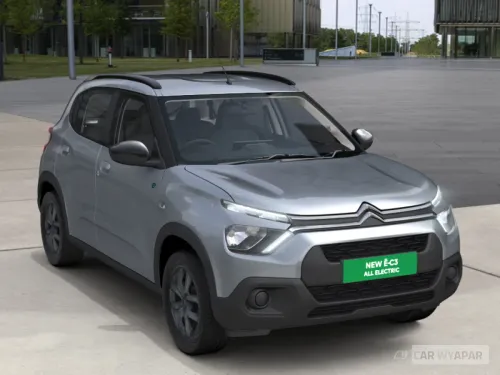
Citroen eC3 Feel
Citroen eC3
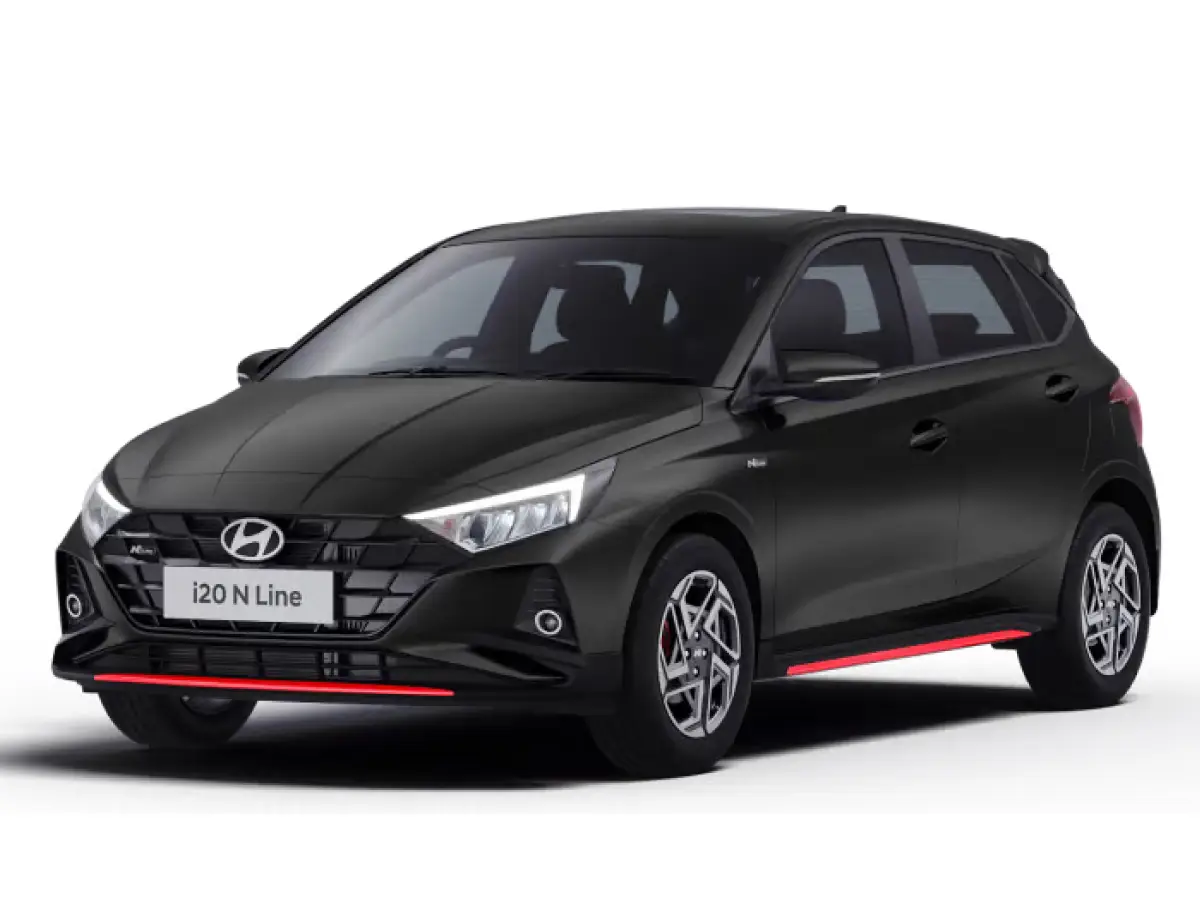
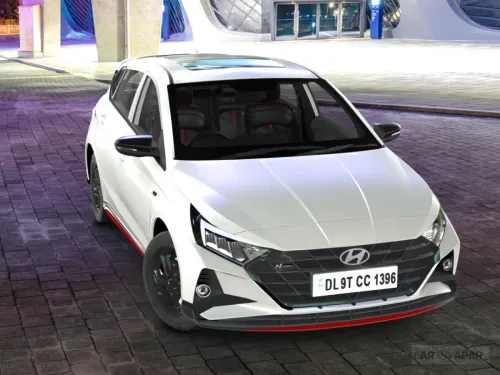
Hyundai i20 N-Line N6 MT
Hyundai i20 N-Line
Car comparison placeholder
Here is a detailed comparison of price:

Citroen eC3 Feel

Price

₹ 13.45 Lakh

On-Road Price New Delhi

EMI

₹ 24,832/month

Hyundai i20 N-Line N6 MT

Price

₹ 10.14 Lakh

On-Road Price New Delhi

EMI

₹ 18,730/month

From the above comparison, we can conclude that Hyundai i20 N-Line feels light on the pocket compared to Citroen eC3 by ₹3,30,447.

Dimensions & Seating

Body Type

Hatchback

Hatchback

Length

3981 mm

3995 mm +14

Width

1733 mm

1775 mm +42

Height

1586 mm +81

1505 mm

WheelBase

2540 mm

2580 mm +40

Ground Clearance

170 mm

170 mm

Seating Capacity

5

5

Fuel Tank/Battery Capacity

29.2 kWh

37 Liters

Boot Space

315 Liters +4

311 Liters

Engine & Transmission

Power Source/Fuel Type

Electric

Petrol

Mileage (KMPL)

10.9 KM/kWh

15 +4.1

Range

320 Kms

550 Kms +230

Engine/Motor Type

Pmsm

1.0 Turbo Gdi

Powertrain Assistance

--

No

Emission Standards

Zev

Bs Vi

No. of Cylinders/Battery Type

Li-Ion

3

Displacement

--

998 cc

Max Power

56 bhp

118 bhp @ 6000 rpm +62

Max Torque

143 Nm

172 Nm @ 6000 rpm +29

Transmission Type

AT

MT

Gear Box

1-Speed

6-Manual

Drive Type

FWD

FWD

Top Speed

107

160 +53

Steering and Suspension

Tilt Adjust

--

Yes

Telescopic Adjust

--

Yes

Turning Radius

4.9 +0.1

4.8

Front Suspension

MacPherson Strut with Coil Spring

McPherson strut with coil spring

Rear Suspension

Rear Twist Beam with Coil Spring

Coupled torsion beam axle

Front Brakes

Disc

Disc

Rear Brakes

Drum

Disc

Safety & Security

Airbags

2

6 +4

Seatbelt Warning

Yes

Yes

Over Speeding Warning

Yes

Yes

Anti-lock Braking System

Yes

Yes

ESP

--

Yes

Brake Assist

--

--

Tyre Pressure Monitor System

No

Yes

Reverse Camera

No

Yes

360 Camera

No

No

Hill Assist

--

Yes

Hill Descent Control

No

No

Child Lock

--

Yes

Isofix Child Seat Mount

--

Yes

Engine Immobilizer

--

Yes

ADAS

No

No

Comfort & Convenience

Power Windows

Only Front

Front And Rear

ORVM Adjustment

Electric

Electric

Request Sensors

--

Yes

Push Button Start

No

Yes

Cruise Control

No

Yes

Keyless Entry

--

Yes

Steering Mounted Control

--

Yes

Climate Control

--

Automatic

Rear AC Vents

No

Yes

Adjustable Steering Column

--

Yes

Interior Features

Upholstery

Fabric

Faux Leather

Adjustable Front Seats

Yes

Yes

Height Adjustable Driver Seat

--

Yes

Rear Armrest

No

No

Rear Cup Holders

--

--

Front Cup Holders

Yes

Yes

Cooled Glovebox

No

Yes

Exterior Features

Sunroof

No

Yes

Wheels

Steel Rims

Diamond Cut Alloy

Fog Lights

No

No

Tyre Size

195 / 65 R15

195/55 R16

Daytime Running Lights

HALOGEN

LED

Headlight Type

Halogen

Projector Led

Tailgate

Manual

Electric

Roof Rails

No

No

Rear Wiper

No

Rear Wiper

Infotainment & Telematics

Touch Screen

Yes

Yes

Screen Size

10.23 inch

10.25 inch

USB Port

Yes

Yes

Navigation System

No

No

Speakers

4

7

Remote App Control

No

No

Wireless Charging

No

Yes

Smartphone Connectivity

Yes

Yes

Telematics

Digital

Digital

Connectivity & Internet

USB Port

Yes

Yes

Navigation

No

No

Smartphone Connectivity

Yes

Yes

Citroen eC3 Vs Hyundai i20 N-Line Colors
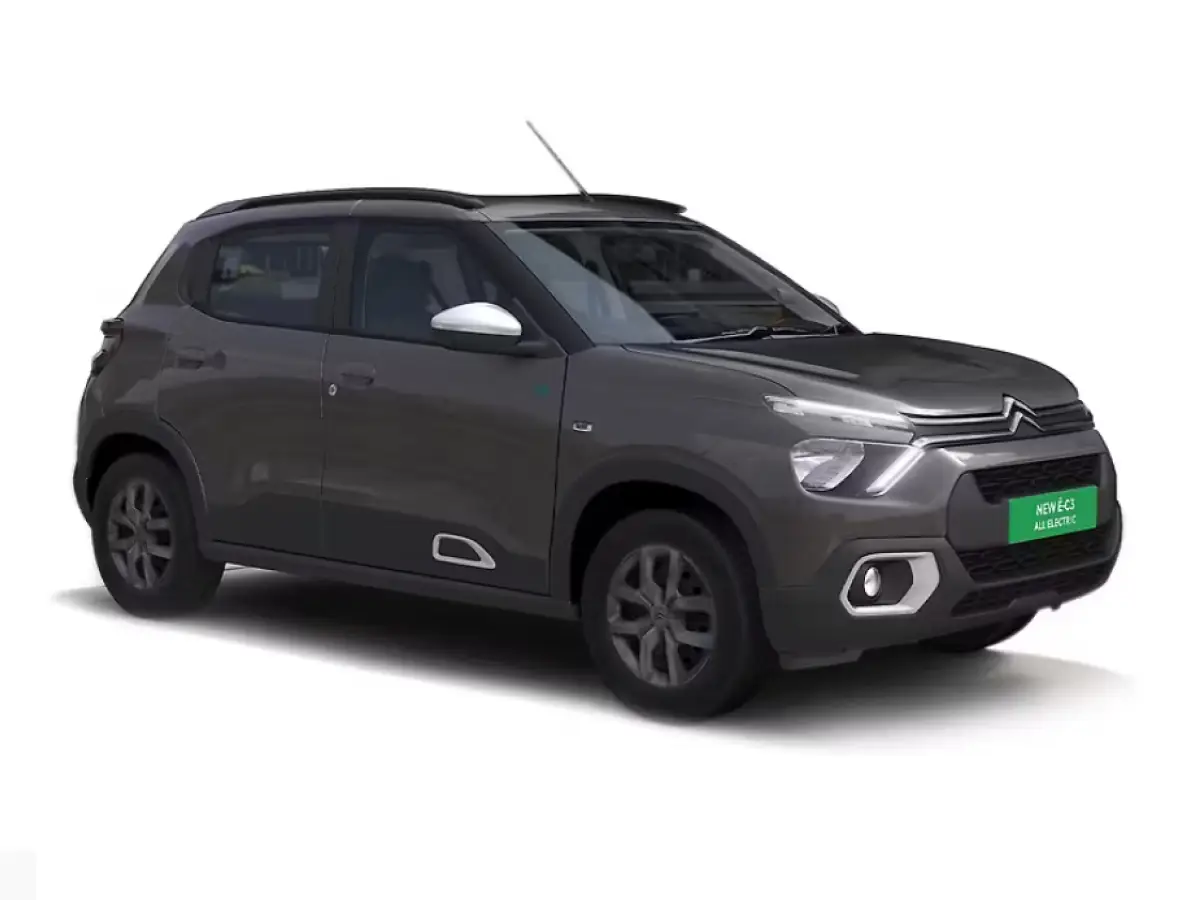
Citroen eC3 Platinum Grey

Platinum Grey

Hyundai i20 N-Line Abyss Black

Abyss Black

Citroen eC3 Platinum Grey

Platinum Grey

Hyundai i20 N-Line Abyss Black

Abyss Black

Citroen eC3 Vs Hyundai i20 N-Line Expert Opinions
Design and Aesthetics
Features and Specifications
After Sales Support
Brand Value
Resale Value
Likes
Dislikes
Design and Aesthetics
Features and Specifications
After Sales Support
Brand Value
Resale Value
Likes
Dislikes
Citroen eC3 Vs Hyundai i20 N-Line FAQs

The Citroën eC3 is priced from about ₹12.84 lakh ex-showroom for the Live variant, going up to around ₹13.54 lakh for the Feel Dual-Tone Vibe Pack.

The Citroën eC3 is a smart buy if you’re tired of rising petrol bills and want an EV that’s practical for Indian roads. It gives you around 10.9 km per kWh, which means less than ₹1 per km running cost. For daily city drives, that’s unbeatable value. Add to that its 320 km claimed range, compact dimensions for urban traffic, and a design that doesn’t scream “cheap EV,” and you have a car that balances early adopter cool with real-world usability.

The eC3 runs on a 29.2 kWh battery, with an electric motor producing about 57 PS (≈56-57 bhp) and 143 Nm torque. Its top speed is ~107 km/h. The claimed range is 320 km on a full charge (ARAI) under ideal conditions.

Using a standard 15-amp home charger it takes about 10 to 10½ hours (from 10-100%). If you use a DC fast charger the time from ~10-80% drops to approximately 57 minutes.

The eC3 is 3,981 mm in length, 1,733 mm wide, and ≈ 1,586-1604 mm tall depending on variant/roof rails. Wheelbase is 2,540 mm, ground clearance is about 170 mm, and kerb weight ≈ 1,316 kg. Boot space is 315 litres.

Claimed: 10.9 km/kWh Standard electricity cost we’re using: ₹9 per unit (kWh) So, 1 kWh → 10.9 km Cost of 1 kWh = ₹9 Cost per km = ₹9 ÷ 10.9 = ₹0.83 per km That means running the eC3 costs less than one rupee per km, which is cheaper than taking a shared auto in many Indian cities. So, a full tank of “electric juice” for the eC3 will set you back just ₹263, while a petrol hatchback would burn through more than ₹1,500 for the same distance.

The eC3 comes with: 1. Battery warranty: 7 years or 1.4 lakh km (whichever earlier) 2. Electric motor warranty: 5 years or 1 lakh km 3. Vehicle warranty: 3 years or 1.25 lakh km This long coverage is important because EV buyers worry about battery life. Citroën makes it clear: the eC3’s battery is designed to outlast your EMI cycle.

Resale is the big unknown in EVs today, but with fuel prices climbing and more charging stations appearing, early adopters will find good demand in 3–5 years. The warranty cushions you against big-ticket repair risks, so you’re not gambling your money.

The Hyundai i20 N Line starts at around ₹9.99 lakh (ex-showroom) for the base N6 MT variant and goes up to about ₹12.56 lakh for the top-spec N8 DCT variant in India.

The i20 N Line is powered by a 1.0-litre turbo-petrol engine (998 cc) that puts out about 120 PS and 172 Nm torque. You get both a 6-speed manual and a 7-speed DCT automatic. It has sportier suspension and visual tweaks to match.

Dimensions: length is 3,995 mm, width 1,775 mm, height 1,505 mm. Wheelbase is 2,580 mm. Ground clearance is 170 mm. Boot space is 311 litres, and fuel tank capacity is 37 litres.

The claimed / certified fuel efficiency is about 20.3 kmpl for ARAI (manual / DCT). In real-world city traffic, especially with AC, the number drops to around 11-12 kmpl, and on highways around 18-20 kmpl depending on driving style. To compute running cost: assume petrol price = ₹102 per litre: 1. Using the ARAI figure ~20.3 kmpl: cost per km ≈ ₹102 ÷ 20.3 ≈ ₹5.02 per km. 2. In city traffic with 11-12 kmpl: cost per km ≈ ₹102 ÷ 11.5 ≈ ₹8.87 per km.

i20 N Line is the “sporty, I-mean-business” version of the regular i20. The differences: visual styling (red accents, sporty bumpers, dual exhaust look, special alloys), tuned suspension & steering for sharper response, more aggressive interior touches (N line badging, red stitching etc.), more power (regular i20 doesn’t have turbo-petrol in many variants), better brakes (disc at rear etc.), and better driving engagement.

Buy i20 N Line if you love a hatchback that makes you feel like you’re driving something more alive. If you enjoy traffic with flair, occasional highway stints, and want features & sportiness. Also good if you don’t mind that sharper ride & slightly higher upkeep. Avoid it if you mostly drive bumper-to-bumper city traffic, want minimal maintenance cost, or prefer cushioned ride over sporty stiffness. If low cost or simplicity is priority, regular i20 or other hatchbacks will do better.

Because it has turbo, more performance-oriented parts, and premium styling, maintenance will cost more than regular i20. Rough estimate: 1. Routine service (oil change, filters etc.) once/year or every 10,000-15,000 km: expect ₹8,000-₹12,000 depending on variant and usage. 2. Additional costs due to performance tweaks (e.g. brake pads, tyres, turbo oil, etc.) may lead to occasional bigger bills: maybe once every 2-3 years extra ₹3,000-₹5,000 for such wear and tear. 3. Insurance, tyres with sportier compound, upgraded wheels, etc. may also cost a bit more. Over 5 years, expect maintenance costs somewhat higher than regular i20 by maybe ₹20,000-₹30,000 total, depending on how enthusiast you drive.
*Ad Advertisement banner