


























Let's compare BYD Atto 3 Dynamic vs Tata Harrier EV Adventure 65

Compare BYD Atto 3 Dynamic vs Tata Harrier EV Adventure 65 price, specifications, mileage, features and performance to find the best car for you.
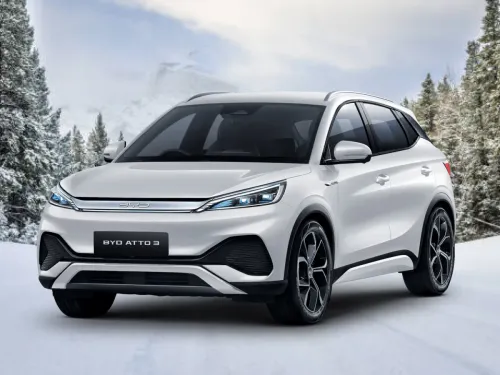
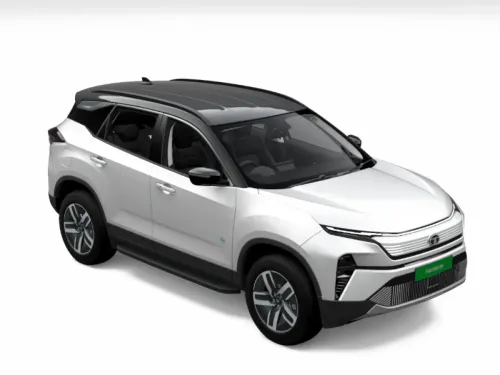
BYD Atto 3 Dynamic
BYD Atto 3
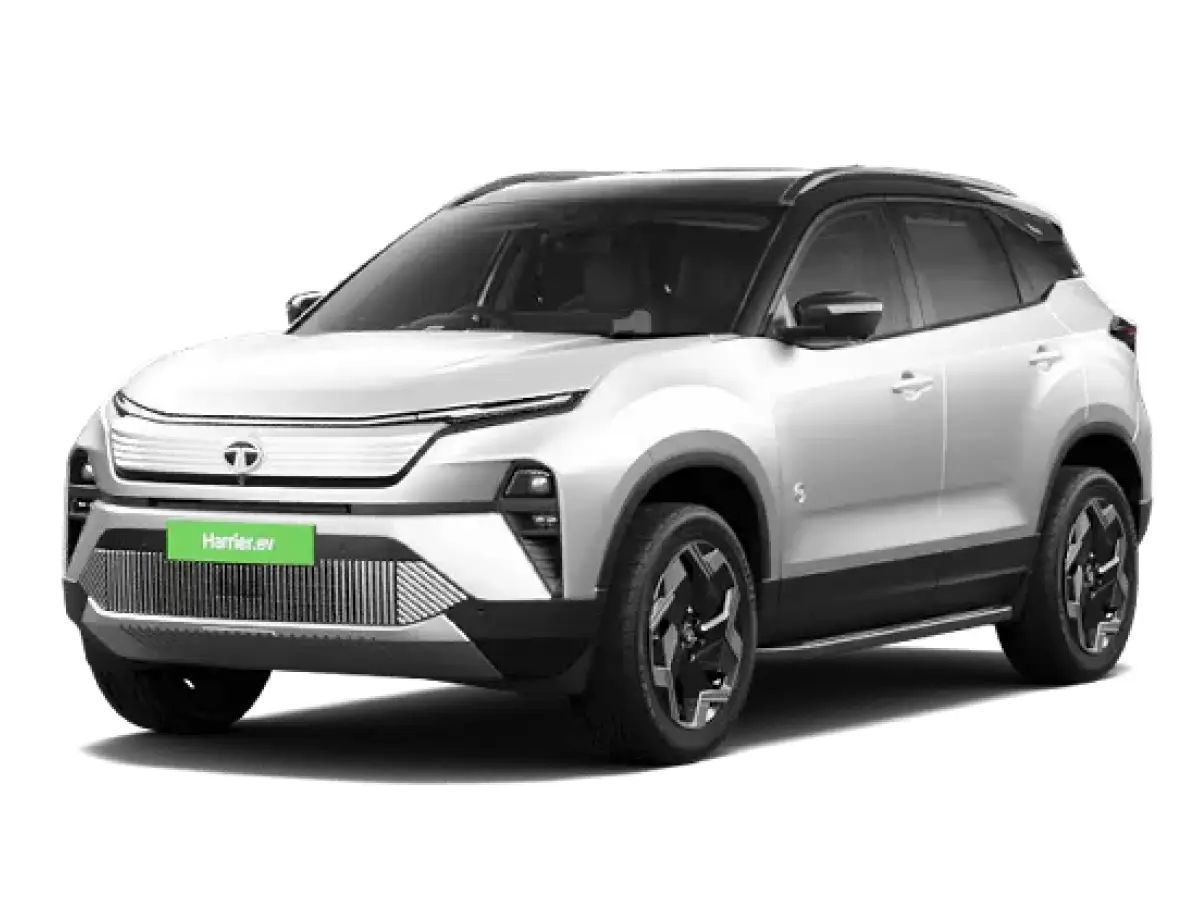
Tata Harrier EV Adventure 65
Tata Harrier EV
Car comparison placeholder
Here is a detailed comparison of price:

BYD Atto 3 Dynamic

Price

₹ 25.98 Lakh

On-Road Price New Delhi

EMI

₹ 47,966/month

Tata Harrier EV Adventure 65

Price

₹ 22.34 Lakh

On-Road Price New Delhi

EMI

₹ 41,248/month

From the above comparison, we can conclude that Tata Harrier EV feels light on the pocket compared to BYD Atto 3 by ₹3,63,825.

Dimensions & Seating

Body Type

Suv

Suv

Length

4455 mm

4607 mm +152

Width

1875 mm

2132 mm +257

Height

1615 mm

1740 mm +125

WheelBase

2720 mm

2741 mm +21

Ground Clearance

175 mm

205 mm +30

Seating Capacity

5

5

Battery Capacity

49.92 kWh

65 kWh +15.08

Boot Space

440 Liters

502 Liters +62

Engine & Transmission

Power Source

Electric

Electric

Mileage (KMPL)

9.36 Km/kWh +1

8.36 Km/kWh

Range

468 Kms

538 Kms +70

Motor Type

Pmsm

Single Pmsm

Powertrain Assistance

--

--

Emission Standards

Zev

Zev

Battery Type

Blade Li-Ion

Li-Ion

Displacement

--

--

Max Power

201 bhp

235 bhp +34

Max Torque

310 Nm

315 Nm +5

Transmission Type

AT

AT

Gear Box

1-Speed

1-AT

Drive Type

FWD

RWD

Top Speed

160

180 +20

Steering and Suspension

Tilt Adjust

Yes

Yes

Telescopic Adjust

Yes

Yes

Turning Radius

5.25

5.75 +0.5

Front Suspension

--

McPherson Strut and Stabilizer bar with FDD & MTVL shockers

Rear Suspension

--

Independent Multilink Rear Suspension with Stabilizer bar with FDD & MTVL shockers

Front Brakes

--

Disc

Rear Brakes

--

Disc

Safety & Security

Airbags

7 +1

6

Seatbelt Warning

Yes

Yes

Over Speeding Warning

Yes

Yes

Anti-lock Braking System

Yes

Yes

ESP

Yes

Yes

Brake Assist

Yes

Yes

Tyre Pressure Monitor System

Yes

Yes

Reverse Camera

Yes

Yes

360 Camera

Yes

No

Hill Assist

Yes

Yes

Hill Descent Control

Yes

Yes

Child Lock

Yes

Yes

Isofix Child Seat Mount

Yes

Yes

Engine Immobilizer

Yes

Yes

ADAS

No

No

Comfort & Convenience

Power Windows

Front And Rear

Front And Rear

ORVM Adjustment

Electric

Electric

Request Sensors

Yes

Yes

Push Button Start

Yes

Yes

Cruise Control

Yes

Yes

Keyless Entry

Yes

Yes

Steering Mounted Control

Yes

Yes

Climate Control

Automatic

Automatic

Rear AC Vents

Yes

Yes

Adjustable Steering Column

Yes

Yes

Interior Features

Upholstery

Leather

Faux Leather

Adjustable Front Seats

Yes

Yes

Height Adjustable Driver Seat

Yes

Yes

Rear Armrest

Yes

No

Rear Cup Holders

Yes

Yes

Front Cup Holders

Yes

Yes

Cooled Glovebox

No

No

Exterior Features

Sunroof

Panoramic

No

Wheels

Alloy

Alloy

Fog Lights

No

No

Tyre Size

215/60 R17

245 / 60 R18

Daytime Running Lights

LED

LED

Headlight Type

Projector Led

Projector Led

Tailgate

Electric

Electric

Roof Rails

Yes

Yes

Rear Wiper

Rear Wiper

Rear Wiper

Infotainment & Telematics

Touch Screen

Yes

Yes

Screen Size

12.8 inch

10.24 inch

USB Port

Yes

Yes

Navigation System

No

Yes

Speakers

6

4

Remote App Control

Yes

Yes

Wireless Charging

Yes

No

Smartphone Connectivity

Yes

Yes

Telematics

Digital

Digital

Connectivity & Internet

USB Port

Yes

Yes

Navigation

No

Yes

Smartphone Connectivity

Yes

Yes

BYD Atto 3 Vs Tata Harrier EV Colors
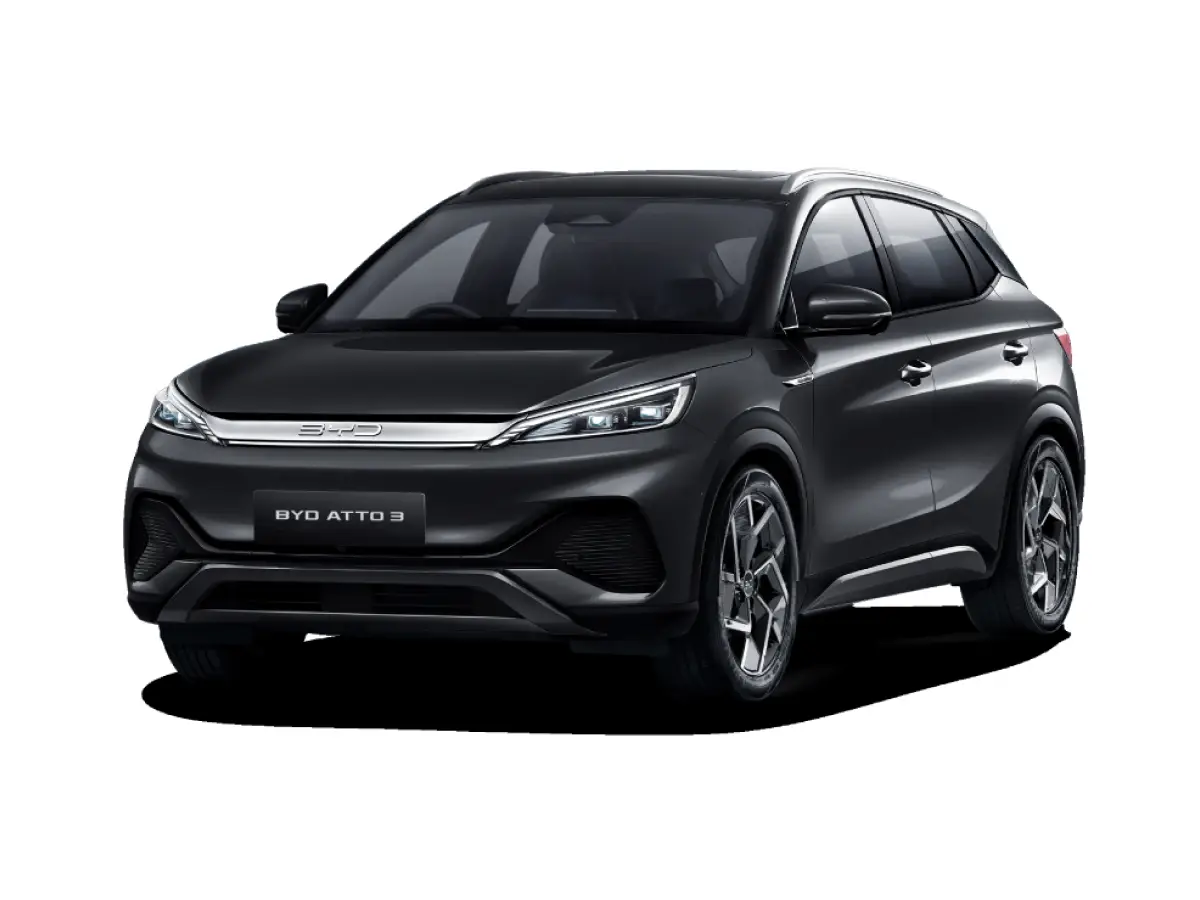
BYD Atto 3 COSMOS BLACK

COSMOS BLACK

Tata Harrier EV Pristine White DT

Pristine White DT

BYD Atto 3 COSMOS BLACK

COSMOS BLACK

Tata Harrier EV Pristine White DT

Pristine White DT

BYD Atto 3 Vs Tata Harrier EV Expert Opinions
Design and Aesthetics
Features and Specifications
After Sales Support
Brand Value
Resale Value
Likes
Dislikes
Design and Aesthetics
Features and Specifications
After Sales Support
Brand Value
Resale Value
Likes
Dislikes
BYD Atto 3 Vs Tata Harrier EV FAQs

BYD Atto 3 starts at INR 24.99 and goes upto 33.99 Lakh INR for the top model i.e Superior.

The Atto 3 is an electric SUV with good tech, decent range, and premium touches. If you’re financially sound, hate frequent fuel stops, want low running cost, plus care about gadgets, safety, and style, this could be your EV pick. Prepare to deal with charging infrastructure though, especially if you travel far.

1. Length × Width × Height: 4.455 m × 1.875 m × 1.615 m (≈ 14.62 ft × 6.15 ft × 5.29 ft) 2. Wheelbase: 2.720 m 3. Ground clearance (unladen): 175 mm

The boot gives about 440 litres of space. That’s enough for about 4-5 medium suitcases (airport run), or maybe more if you stack soft bags. With seats folded, you get more (≈ 1,340 L) for bigger hauls. So good for family weekend trips, not ideal if you move with tons of bulky gear frequently.

1. Motor: Permanent Magnet Synchronous, front-wheel drive, ~201 bhp (≈150 kW), torque ~310 Nm. 2. Battery options: ~49.92 kWh (“Standard Range”) and ~60.48 kWh (“Extended Range”) Blade Battery (LFP). 3. Claimed ARAI ranges: ~468 km with the smaller pack; ~521 km with the larger pack.

Let’s calculate with electricity at ₹9 per kWh: 1 kWh takes you 8.6 km. Cost per km = ₹9 ÷ 8.6 = ₹1.05/km (rounded). For 100 km, energy needed ≈ 11.62 kWh, so cost = 11.62 × ₹9 = ₹104.6 per 100 km. That’s less than what you’d spend on a single plate of good momos in Delhi. Compared to petrol cars that hover at ₹4–6 per km, the savings are significant in daily city runs.

Yes, it surprises many first-time viewers. The cabin design is quirky but high quality, with gym-equipment-style door handles, rotating touchscreen, panoramic sunroof, and powered seats. It feels less “cheap Chinese” and more “funky premium,” which is why younger tech-driven buyers are leaning towards it.

The Atto 3 has a 5-star Euro NCAP rating, with seven airbags and ADAS features. BYD’s Blade Battery is also known for strong thermal stability, which addresses one of the biggest EV buyer fears: fire risk. The brand still fights perception issues in India because of its Chinese origin, but safety credentials are objectively strong.

It depends where you live. In metros and Tier-1 cities, BYD’s tie-ups with charging providers mean DC fast chargers are becoming common. For highway drives, you must pre-plan using apps like PlugShare or Tata Power EZ. If you live in a gated society with dedicated parking, installing a home charger solves most worries. If you rely only on public chargers, expect occasional waits.

Globally, BYD is the world’s biggest EV manufacturer (bigger than Tesla in units sold). They supply batteries to other big brands, including Tesla. In India, the service network is small but expanding.

Yes, for nuclear families it’s quite practical: decent rear seat space, boot fits 4-5 bags, AC is strong, and ride comfort is tuned for city and highway. However, if you plan frequent Ladakh road trips, an ICE SUV still makes more sense due to charging gaps. For regular urban use, the Atto 3 is family-friendly and future-proof.

Currently yes, since EV resale is untested in India. Luxury EVs tend to drop value faster than ICE cars. Early adopters usually accept this as part of the EV shift. If you’re buying the Atto 3, you’re likely not a resale-first persona, but more of an early tech adopter.

The Tata Harrier EV is the all-electric version of Tata Motors' popular mid-size SUV, the Harrier, built on a dedicated electric vehicle architecture.

The Tata Harrier EV was launched in India on June 3, 2025.

The ex-showroom price of the Tata Harrier EV starts from around ₹21.49 Lakh and goes up to approximately ₹30.23 Lakh for the top-end variant (prices are introductory ex-showroom).

The Harrier EV is offered with two battery pack options: a 65 kWh pack and a larger 75 kWh pack.

The claimed ARAI-certified range varies by battery and drivetrain: • 65 kWh (RWD): Up to 538 km • 75 kWh (RWD): Up to 627 km • 75 kWh (AWD): Up to 622 km

Yes, the Tata Harrier EV is the first all-electric Tata SUV to offer an All-Wheel Drive (AWD) configuration, achieved via a dual-motor setup. This is available with the 75 kWh battery pack.

It is built on Tata Motors' acti.ev Plus dedicated electric vehicle architecture.

The Rear-Wheel Drive (RWD) variants produce about 235-238 bhp, while the All-Wheel Drive (AWD) variant, with its dual-motor setup, has a combined output of around 390 bhp and 504 Nm of torque.
*Ad Advertisement banner